- Duttaphrynus silentvalleyensis: The Hidden Gem of India's Silent Valley
- Taxonomy and Classification
- Natural Habitat: A Realm of Mist and Mystery
- Physical Characteristics: Small in Stature, Rich in Adaptations
- Behavior and Life Cycle: Living Quietly in the Shadows
- Ecological Role: Hidden Yet Essential in the Ecosystem
- Threats and Conservation Status: Challenges in a Changing World
- Cultural and Scientific Significance: Beyond Biological Borders
- Conclusion: Protecting the Precious Heritage of Silent Valley
Duttaphrynus silentvalleyensis: The Hidden Gem of India’s Silent Valley#
In the ethereal dusk of India’s Silent Valley National Park, as the golden hues fade into twilight and shadows creep quietly amid lush foliage, a distinct croak sets the symphony of the night in motion. This call, both subtle and compelling, belongs to a mysterious amphibian tucked away in the verdant heart of Kerala—the Silent Valley Toad, scientifically known as Duttaphrynus silentvalleyensis. Deeply embedded within the region’s vast ecological tapestry, this enigmatic amphibian has long captivated scientists, ecologists, and nature enthusiasts alike. Little-known and rarely observed beyond a small circle of researchers and indigenous wildlife lovers, the Silent Valley Toad embodies the extraordinary biodiversity hidden within India’s forests.
With its relatively recent scientific discovery and characterization, this remarkable frog offers a fascinating blend of intrigue and discovery for anyone fascinated by nature’s diversity and ecological balance. Join us as we delve deep into the world of Duttaphrynus silentvalleyensis, uncovering its secrets, exploring its ecology, and learning why this small amphibian matters immensely in the broader scope of biodiversity conservation.
Taxonomy and Classification#
The Silent Valley Toad belongs to the amphibian class under the order Anura, within the large toad family Bufonidae. Initially described scientifically in 1981 by Pillai, Dutta, and Srinivasulu, this species is classified under the genus Duttaphrynus. Members of this genus are primarily terrestrial toads known broadly across South Asian regions, yet D. silentvalleyensis remains somewhat distinct due to its limited range and specialized habitat preference.
Sharing its genus with close relatives like Indian Common Toad (Duttaphrynus melanostictus), the Silent Valley Toad stands apart significantly by its unique physical features and specific locale adaptations. Due to these distinctions, rigorous taxonomic studies continue to explore its evolutionary divergence and genetic identity, adding layers of complexity and intrigue to herpetological studies in the region.
Natural Habitat: A Realm of Mist and Mystery#
As the name vividly suggests, the Silent Valley Toad is uniquely tied to the pristine wilderness of Silent Valley National Park, nestled in the verdant heartlands of Kerala’s Western Ghats. Declared a biodiversity hotspot, this valley is ensconced within evergreen tropical rainforests, riveted with cascading streams, fragrant canopy layers, and moss-covered tree roots that house a plethora of unique flora and fauna.
A Narrow Range, an Extraordinary Home#
The geographic distribution of Duttaphrynus silentvalleyensis is impressively restricted—a remarkable trait that underscores its vulnerability and ecological significance. Its sanctuary lies primarily within moist evergreen forests at mid-altitudes, often curving around winding streams or scattered amidst leaf-littered forest floors. The Silent Valley itself, renowned for its ecological importance and preserved due to fervent conservation battles, offers the perfect microclimatic conditions—lush vegetation, high humidity, and soft, diffused sunlight—that foster this species’ delicate balance.
Here, amidst dripping foliage and earthy humidity, one may occasionally glimpse the elusive toads nestled under mossy rocks or concealed within dark niches among tree roots—perfect camouflage from potential predators and curious naturalists alike.
Physical Characteristics: Small in Stature, Rich in Adaptations#
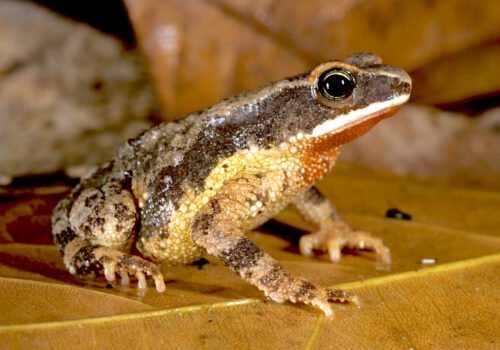
Measuring only around three to four centimeters from snout to vent, the cryptic Silent Valley Toad may seem modest and inconspicuous at first glance, yet closer inspection reveals nature’s polished craftsmanship. Its coloration—a spectrum of mottled browns, greys, and olive tones—is marbled with intricate markings and subtle wart-like protuberances across its skin, providing remarkable camouflage against leaf litter and moist soil. These earthy hues blend seamlessly into their wet, leafy surroundings, allowing effective evasion from both predators and accidental disturbances.
Like other toads, their skin features distinct parotoid glands. Positioned just behind the eyes, these glands can excrete toxins to deter predators, a defense mechanism indispensable for survival in a vibrant yet ruthless ecosystem filled with hungry mammals, birds, and snakes. Compared to related species, the Silent Valley Toad’s glands are relatively smaller, subtly emphasizing its reliance on cryptic behaviors and careful positioning over chemical defenses alone.
Their large, bulbous eyes provide excellent night vision—a crucial advantage for a species predominantly active after dusk. Jelly-soft toe pads, although not highly developed like specialised arboreal frogs, still offer a subtle grip, allowing gentle navigation across mossy rocks and slippery undergrowth near their water-bound habitats.
Behavior and Life Cycle: Living Quietly in the Shadows#
Beneath the lush foliage canopy, the world of Duttaphrynus silentvalleyensis unfolds quietly, shielded from the dynamism of human observation. Primarily nocturnal, these shy toads venture out mostly after dark to forage and socialize, serenaded by the cacophonous musicality of a rainforest evening. Their vocalizations, simple yet intriguing croaks, may at times remain unnoticed amidst louder, more dominant calls from neighboring amphibian species.
Feeding Habits—Masters of the Moonlit Hunt#
The diet of D. silentvalleyensis, like many amphibians, consists mainly of small terrestrial invertebrates—ants, beetles, and other tiny arthropods that venture out onto forest floors, subsequently becoming a crucial nutrient source. Their hunting approach is silent and calculated, relying on quick, targeted tongue flicks designed to capture wary prey under the distraction of darkness.
Reproduction—From Rainfall to Rippling Streams#
Mating behaviors of this enigmatic species hinge closely on the seasonal monsoons that drape the Western Ghats, bringing seasonal rhythm to their reproductive lives. Triggered by heavy rains, males congregate near shallow, slow-moving streams, emitting soft yet persistent mating calls to attract potential mates. After successful courtship, females carefully deposit strings of eggs in quiet pools, shallow vernal puddles, or flowing streams, initiating a new cycle of life.
Eggs mature into tadpoles within weeks, and these tadpoles exhibit remarkable resilience, feeding on microscopic algae and detritus suspended gently in forest pools. After undergoing metamorphosis, juveniles emerge fully formed, ready to adapt swiftly to the cryptic lifestyle of their adult counterparts, perpetuating the quiet survival legacy of their species.
Ecological Role: Hidden Yet Essential in the Ecosystem#
Despite a seemingly modest place within the dense network of rainforest life, the Silent Valley Toad occupies an essential niche as both predator and prey. Their feeding behaviors maintain ecological balance by regulating insect populations, a vital function within tropical forest ecosystems deeply susceptible to imbalances.
Additionally, these amphibians form a critical food source for several predators, including various birds, snakes, and small carnivores. Moreover, amphibians like D. silentvalleyensis often serve as indicator species—early warnings that highlight environmental health status, responding sensitively to chemical pollutants, disease, or climate changes impacting their habitats.
Threats and Conservation Status: Challenges in a Changing World#
Given their extremely restricted habitat and specialized environmental preferences, Silent Valley Toads face multiple threats. Habitat destruction due to deforestation, agriculture, and human encroachment poses the most immediate threat to their survival. Climate change exacerbates these risks by altering rainfall patterns and forest microclimates critical to their reproductive cycles and survival.
In recognition of such threats, the IUCN (International Union for Conservation of Nature) currently classifies Duttaphrynus silentvalleyensis as Endangered, highlighting the urgent necessity of conservation actions aimed at protecting their habitat and ensuring ongoing population monitoring.
Cultural and Scientific Significance: Beyond Biological Borders#
Although relatively unknown culturally compared to larger, more charismatic fauna, frogs and toads traditionally hold significant roles in indigenous folklore, symbolizing renewal, resilience, and adaptability. Scientifically, discoveries related to their unique chemical defenses, physiological adaptations, and climate vulnerabilities continue to offer dynamic research opportunities vital to ecological science and conservation strategies.
Conclusion: Protecting the Precious Heritage of Silent Valley#
The Silent Valley Toad, Duttaphrynus silentvalleyensis, is far more than just another amphibian species—it symbolizes the delicate interplay of biodiversity, habitat specialization, and ecosystem health. Protecting these fascinating creatures means safeguarding the diverse sanctuary they depend upon—a sanctuary also shared by countless other magnificent and equally deserving species. By spotlighting the Silent Valley Toad, we reaffirm our collective commitment to biodiversity, conservation, and the enduring beauty of India’s hidden ecological gems.