- Duttaphrynus scorteccii: Secrets of Arabia's Mysterious Toad
- Taxonomy and Classification
- Natural Habitat: Life on the Edge of a Desert
- Physical Characteristics: Masters of Camouflage and Adaptation
- Behavior and Life Cycle: Survival Strategies in a Hostile World
- Ecological Role: Maintaining Balance in Harsh Environments
- Threats and Conservation Status
- Cultural & Scientific Significance
- Conclusion: Securing a Future for Arabia's Hidden Treasure
Duttaphrynus scorteccii: Secrets of Arabia’s Mysterious Toad#
In the rocky terrain and arid landscapes of southern Arabia, amid rugged valleys and secluded wadis, lives a creature whose existence remains hidden from most casual observers. Its quiet, unassuming presence belies the remarkable life it leads beneath star-speckled desert skies. Meet Duttaphrynus scorteccii, frequently known as Scortecci’s Toad—a unique amphibian adapted to thrive in environments most frogs and toads would avoid.
This fascinating creature, named after Italian zoologist Giuseppe Scortecci, is adapted to incredibly harsh habitats, demonstrating life’s astounding versatility. Yet, despite its subtle charms and intriguing survival strategies, this species remains relatively unknown, quietly inhabiting its niche, largely hidden from human interest or interaction.
Dive into the rugged valleys and secretive ravines of its Arabian homeland as we unravel the captivating natural history, unique adaptations, scientific relevance, and conservation challenges facing this enigmatic amphibian species.
Taxonomy and Classification#
Scortecci’s Toad, scientifically classified as Duttaphrynus scorteccii, belongs to the family Bufonidae, a group commonly referred to as “true toads.” Within the diverse genus Duttaphrynus, it stands uniquely equipped for life in some of the Arabian Peninsula’s driest habitats.
The genus Duttaphrynus comprises species scattered throughout Asia and parts of Arabia, but few have dared to colonize the arid fringes as expertly as D. scorteccii. Closely related species like Duttaphrynus arabicus and Duttaphrynus dhufarensis share some overlapping habitat ranges, but each has adapted subtly different traits, demonstrating an intriguing evolutionary divergence shaped by their challenging environment.
Natural Habitat: Life on the Edge of a Desert#
Scortecci’s Toad occupies a surprisingly specific yet unforgiving niche in the southern Arabian Peninsula, inhabiting regions spanning Yemen, Oman, and parts of eastern Saudi Arabia. Unlike more familiar wetland-loving frogs, Duttaphrynus scorteccii is ideally suited to the semi-arid wadis, rocky canyons, mountain foothills, and temporary streams created by occasional monsoon rains.
A Landscape of Extremes#
The home range of Scortecci’s Toad is characterized by sharp contrasts—intense heat under relentless sun by day, and swift plunges into cool, star-lit nights. Water appears fleetingly during brief rains, quickly trickling through dry riverbeds. Yet against this harsh backdrop, the toads thrive, revealing their extraordinary capacity for survival. They are found often sheltering under rocks or hidden among sparse vegetation, patiently awaiting rarities such as a sudden downpour to initiate breeding.
Its distinctive adaptation to transient landscapes is evident, showcasing the species’ fascinating ability to flourish in a precarious balance between life and death.
Physical Characteristics: Masters of Camouflage and Adaptation#
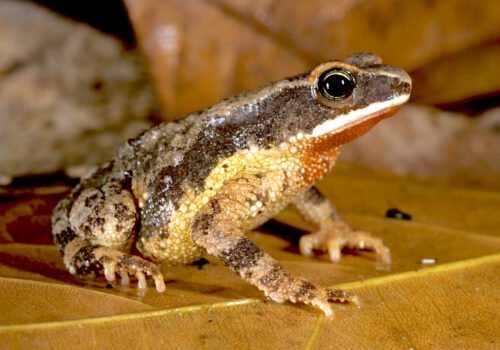
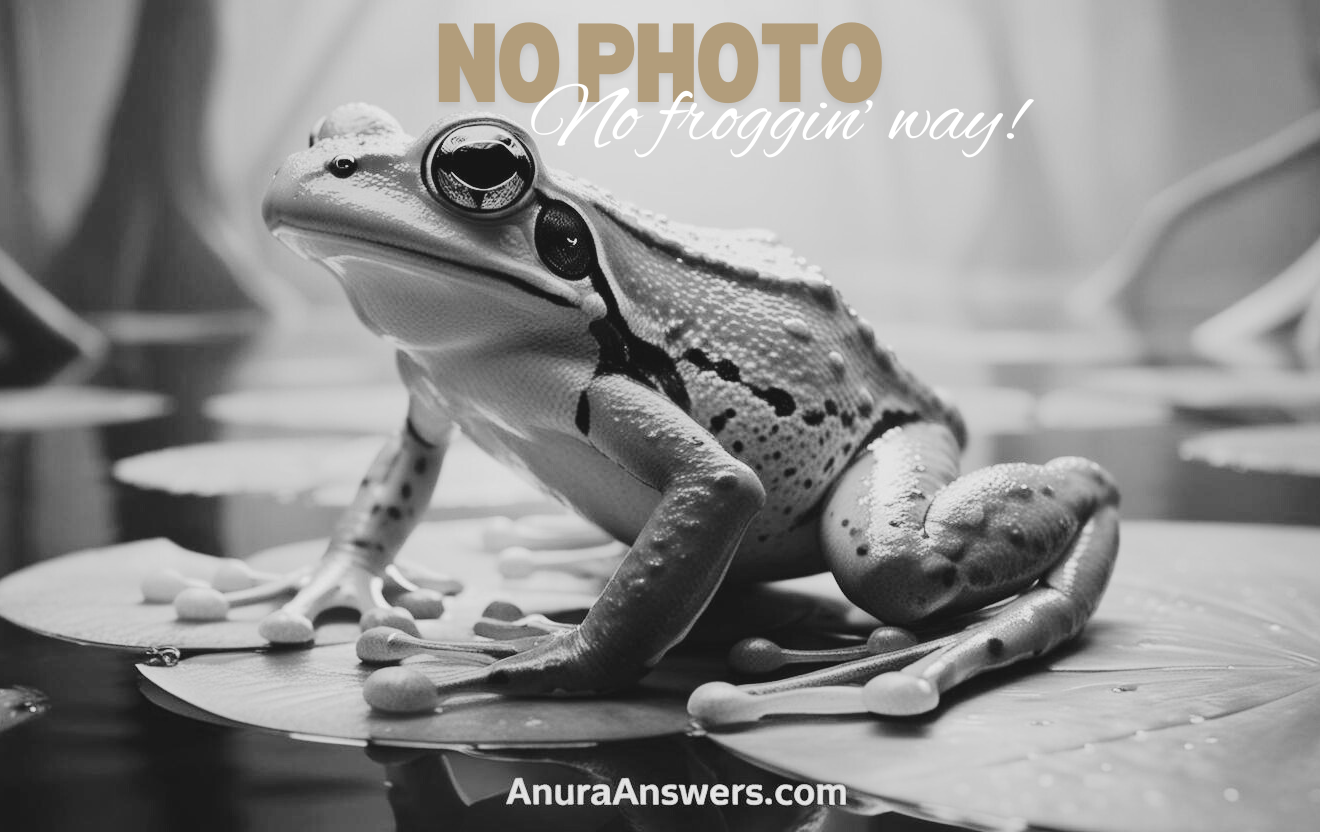
At first glance, Duttaphrynus scorteccii might resemble an unremarkable dusty pebble resting quietly along a dry riverbed. Upon closer inspection, its subtle character emerges. Measuring about 40-60 millimeters—just smaller than the width of a human palm—their robust physique, sturdy limbs and powerful hind legs facilitate swift movement across rocky terrain.
Their coloration further captures their uncanny ability to blend seamlessly into their desert home: pale yellowish-brown and sandy tones dominate their bodies, speckled lightly with darker brown spots. Textured skin enhances camouflage, providing a visual mimicry perfectly suited to avoid the watchful eyes of predators. They often appear coated with fine dust, further diminishing any hint of presence in their surroundings.
Notable for their skin glands known as parotid glands, located just behind their eyes, these glands produce toxins serving as crucial defense mechanisms against predators. While not usually harmful to humans, this chemical protection is essential for their desert survival, warding off predators who might venture too close.
Behavior and Life Cycle: Survival Strategies in a Hostile World#
Duttaphrynus scorteccii has evolved some truly specialized behaviors to cope with severe habitat limitations. Unlike amphibians found in more generous climates, these toads usually remain inactive underground or sheltered beneath rocks by day, significantly reducing water loss and conserving precious energy. Activity increases notably at dusk and dawn, when cooler temperatures prevail and humidity rises slightly.
Feasting Under the Moonlight#
Under cover of twilight or the silvery moonlight, these toads shift from resting mode to active predation, consuming a diverse diet primarily consisting of small invertebrates: ants, beetles, moths, spiders, and scorpions. Their sticky tongues, quick reflexes, and precise eyesight allow effective nighttime hunting. This nocturnal strategy grants them relief from daytime predators and intense desert heat.
A Race Against Time: Breeding in the Desert#
The short-lived and unpredictable rainy season signals a frenzied breeding cycle for Scortecci’s Toad. Males gather in temporary pools formed after heavy rains, where their small yet resonant croaking calls provide a symphony uniquely attuned to desert acoustics.
Once attracted, females deposit strings containing hundreds of small jelly-coated eggs in shallow waters. Tadpoles quickly hatch and have adapted rapid development strategies, needing to metamorphose before the ephemeral pools evaporate completely. This accelerated life cycle reflects the delicate timing required to survive in their challenging habitat.
Ecological Role: Maintaining Balance in Harsh Environments#
In their position as insect-eaters, Duttaphrynus scorteccii maintains a critical ecological function within semi-desert ecosystems. By controlling insect populations, these toads prevent harmful outbreaks of agricultural pests and disease vectors, indirectly benefiting human settlements around their habitats.
As prey animals themselves, they also serve as essential food resources for reptiles, birds, and mammals, thus supporting broader biodiversity within their arid homeland.
Threats and Conservation Status#
Despite their impressive survival mechanisms, Scortecci’s Toad faces substantial threats, primarily due to habitat degradation. Increasing urbanization, infrastructure developments, agriculture expansion, water extraction systems, and climate change are among the significant dangers that challenge its continued existence.
The erratic rainfall pattern alterations triggered by a changing climate may disrupt breeding cycles, reducing opportunities for breeding and larval development. Conservation assessments by the International Union for Conservation of Nature (IUCN) currently classify Duttaphrynus scorteccii as “Data Deficient,” highlighting significant knowledge gaps and underscoring the urgency of further research and monitoring.
Cultural & Scientific Significance#
Historically, toads and frogs held little cultural prominence in the Arabian Peninsula, overshadowed by large mammals and charismatic birds. Yet within indigenous communities, such secretive amphibians have often symbolized endurance, resilience, and caution—virtues exemplified by Duttaphrynus scorteccii.
From a scientific standpoint, the toad’s adaption to extreme aridity holds important insights that could inform broader ecological and evolutionary studies. Understanding this species helps researchers develop conservation strategies applicable to other amphibians globally impacted by climate change.
Conclusion: Securing a Future for Arabia’s Hidden Treasure#
Duttaphrynus scorteccii represents far more than just a toad quietly inhabiting remote desert wadis. It symbolizes nature’s incredible adaptability, perseverance, and beauty—even in the harshest environments. Protecting this modest amphibian means safeguarding entire desert ecosystems and biodiversity within them, highlighting the intricate interconnectedness we all share with nature.
You too can help—by learning more, raising awareness, supporting conservation initiatives, and advocating for respectful coexistence with wildlife. Together, we can ensure species like Scortecci’s Toad persist, inspiring wonder in future generations and reminding us of nature’s extraordinary capacity to flourish against all odds.