- Duttaphrynus scaber: An Intriguing Journey into the Life of the Schneider's Dwarf Toad
- Introduction: A Small Amphibian with a Big Presence
- Taxonomy and Classification
- Natural Habitat: Into the Forest Floor
- Physical Characteristics: Beautifully Textured Adaptations
- Behavior and Life Cycle: Living on Nature's Terms
- Ecological Role: Guardian of Forest Health
- Threats and Conservation Status: Defending Nature’s Hidden Jewels
- Cultural and Scientific Significance: Silent Voices of the Forest
- Conclusion: Celebrating and Preserving Schneider's Dwarf Toad
Duttaphrynus scaber: An Intriguing Journey into the Life of the Schneider’s Dwarf Toad#
Introduction: A Small Amphibian with a Big Presence#
Nestled quietly within the damp, leaf-strewn floor of southern India’s lush forests, a small yet distinctly textured toad patiently awaits nightfall. The Schneider’s dwarf toad (Duttaphrynus scaber), though modest in size, embodies complexity and ecological promise within its tiny frame. Often overlooked compared to larger, flashy wildlife, this unassuming amphibian presents a fascinating case study into nature’s subtle intricacies and interconnectedness.
Duttaphrynus scaber, commonly referred to as Schneider’s dwarf toad, belongs to the Bufonidae family—a diverse group of toads known for their remarkable adaptability and resilience. Though not flashy or extremely colorful, this species captivates observers through its unique adaptations and intriguing behaviors. Did you know this humble amphibian has the ability to camouflage seamlessly against rugged terrain, its skin blending wonderfully into the textured surfaces of rocks and forest debris in which it resides?
Come explore deeper and uncover the hidden wonders that this diminutive yet captivating creature offers, opening our eyes to the overlooked treasures of the amphibian world.
Taxonomy and Classification#
Schneider’s dwarf toad (Duttaphrynus scaber) is part of the large and widespread Bufonidae family, commonly known as “true toads.” This family is characterized by their distinctive warty skin, stocky bodies, and remarkable diversity, boasting over 35 recognized genera and hundreds of individual species worldwide.
Scientifically classified under the genus Duttaphrynus, originally categorized under Bufo, Duttaphrynus scaber underwent systematic taxonomic revisions as molecular studies provided new clarity about its genetic relationships. First described in 1838 by Schneider, it has since fascinated herpetologists and curious nature enthusiasts alike.
In terms of close relatives, Duttaphrynus scaber shares its genus with notable cousins such as Duttaphrynus melanostictus (Asian common toad), though it stands distinct due to its unique combination of physical and ecological adaptations. Such precise taxonomic delineations help conservationists target strategies effectively to preserve biodiversity within amphibian-rich habitats.
Natural Habitat: Into the Forest Floor#
Duttaphrynus scaber inhabits specific regions within South India and Sri Lanka, showcasing an affinity for humid, tropical, and subtropical landscapes. It prefers the moist confines of evergreen and semi-evergreen forests, often making itself inconspicuous among leaf litter, rocky crevices, and shaded stream banks. The damp, shaded wilderness of the Western Ghats—a biodiversity hotspot—is especially favorable, affording the species ample moisture to avoid dehydration, alongside plenty of hiding spots from potential predators.
Throughout its range, Schneider’s dwarf toad thrives at elevations ranging from sea level up to approximately 1,000 meters. This adaptive range indicates the toad’s notable resilience, comfortably maneuvering through diverse microhabitats from the lowland forests to the gentle slopes of hilly terrains.
Within these lush surrounds, Duttaphrynus scaber demonstrates meticulous habitat selection. It often shelters beneath fallen logs, stones, and leaf piles during daylight hours, conserving moisture and energy until twilight descends. Such behavior underscores its exquisite environmental sensitivity—affecting not only its distribution but also its survival in a rapidly changing landscape.
Physical Characteristics: Beautifully Textured Adaptations#
At first glance, Schneider’s dwarf toad may seem rather understated—yet, upon closer inspection, its physical features unfold like an intricate tapestry. Adults typically measure between 30–50 mm in length, defining its dwarf status among toads. Its body is squat and robust, with proportionately short limbs adapted for terrestrial locomotion and rapid leaping over slippery forest litter.
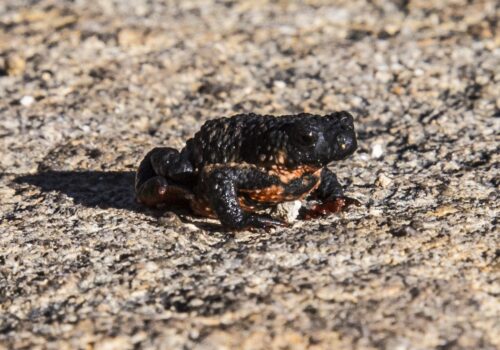
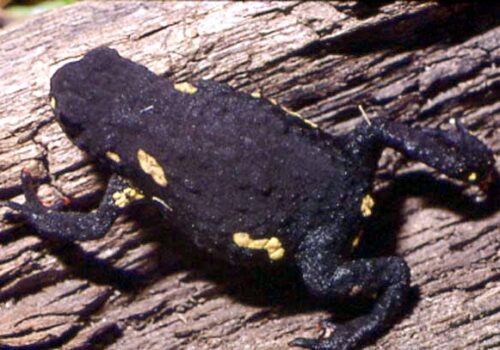
However, it’s the toad’s rough, distinctly granular skin that truly stands out; its scientific name “scaber,” after all, denotes its coarse, roughened texture. The pronounced asperity of its surface is not mere aesthetics—the textured skin functions as a highly effective camouflage mechanism, cleverly mimicking scattered debris, rough bark, and lichen-covered stones.
Schneider’s dwarf toad exhibits coloration ranging from rich browns and dark greys to olive-green tones tinged with scattered flecks of darker pigments. Such muted coloration further enhances camouflage within its shadowy environment. Unlike vividly colored, toxin-laden amphibian relatives, the subtlety of Duttaphrynus scaber’s defenses lies primarily in its stealth, allowing it to remain unseen by predators and prey alike.
Behavior and Life Cycle: Living on Nature’s Terms#
Nocturnal Hunters in the Shadows#
As twilight encloses the forest in gentle darkness, the Schneider’s dwarf toad awakens into its nocturnal pursuit—hunting insects, arachnids, worms, and small invertebrates hidden beneath leaf litter and rocks. Its sharp eyesight, combined with delicate detection of vibrations through soil and air, enables precise and efficient feeding. Employing a sticky tongue like most toad species, it captures prey swiftly, expertly flicking its tongue to seize unsuspecting insects nearly invisible to human observers.
A Season of Song and Courtship#
Breeding typically occurs after seasonal rains herald the onset of the monsoon season. Male Schneider’s dwarf toads emerge at dusk with softly resonant, repetitive calls that sound like gentle creaks or subdued chirping. These serenades, while subtle to human ears, carry clearly through humid nights, attracting receptive females toward shallow water pools and slow-moving forest streams.
Mating embraces, known as amplexus, culminate in the deposition of delicate strings of jelly-like eggs meticulously laid within suitable aquatic habitats. Eggs quickly develop into minute tadpoles, feeding vigorously on algae and detritus along shallow banks. With proper conditions, transformation from tadpole to adult occurs swiftly, allowing younglings to migrate to terrestrial microhabitats protected from predators.
Ecological Role: Guardian of Forest Health#
Duttaphrynus scaber might be small, but its ecological contributions are immense. As effective predators of insects, particularly abundant forest pests, these toads regulate insect populations, aiding in maintaining a balanced ecosystem that nurtures plant diversity and reduces harmful insects.
Simultaneously, Schneider’s dwarf toad serves as an essential prey species. Birds, snakes, larger amphibians, and various forest mammals depend on this amphibian for sustenance, framing the toad as a critical link in the forest food web. Moreover, its presence often serves as a sensitive indicator of habitat health, with declines funneling attention towards conservation priorities and necessary habitat recovery.
Threats and Conservation Status: Defending Nature’s Hidden Jewels#
Despite their resilience, Schneider’s dwarf toads are vulnerable to numerous threats, particularly habitat destruction driven by urban development, agricultural expansion, and deforestation. Climate change also exacerbates the risk, altering rainfall regimes and seasonal variability crucial for the toad’s reproduction and survival.
Presently listed by the International Union for Conservation of Nature (IUCN) as Least Concern, ongoing habitat loss continues to exert considerable pressure on populations. Awareness and proactive measures—such as protecting critical forest habitats, supporting sustainable agriculture, and fostering community-driven conservation initiatives—remain essential to secure their future.
Cultural and Scientific Significance: Silent Voices of the Forest#
While culturally subtle in perception, Duttaphrynus scaber carries significance among local communities and researchers alike. Indigenous practices often recognize amphibians as harbingers of rainfall, seasonal shifts, and environmental fertility. Scientifically, these toads offer intriguing insights into amphibian physiology, ecology, and evolution, particularly in understanding adaptation strategies in variable environments.
Conclusion: Celebrating and Preserving Schneider’s Dwarf Toad#
From their textured skins cleverly adapted to forest floors, to resonant nighttime choruses echoing gently along humid streams, Schneider’s dwarf toads embody the quiet brilliance that nature crafts artfully—yet often escapes notice.
As we appreciate Duttaphrynus scaber, let it serve as a potent reminder of the incredible biodiversity that thrives around us. Take time to explore and advocate for our forests—for hidden beneath leafy canopies lie extraordinary stories of robust resilience and hidden beauty. Your voice can make all the difference, transforming appreciation into dedicated conservation action to protect Schneider’s dwarf toad and countless species sharing this delicate yet vibrant world.