- Duttaphrynus peninsularis: The Enigmatic Peninsula Toad of Southern India
- Taxonomy and Classification
- Natural Habitat of the Peninsula Toad
- Physical Characteristics: Subtle Beauty in Camouflage
- Behavior and Life Cycle: A Life Shaped by Rain and Shade
- Ecological Role: Guardians of Forest Balance
- Threats and Conservation Status
- Cultural and Scientific Significance
- Conclusion: The Quiet Importance of the Peninsula Toad
Duttaphrynus peninsularis: The Enigmatic Peninsula Toad of Southern India#
Beneath the lush, thriving canopies of the Western Ghats in southern India, hidden amidst damp leaf litter and nestled near tranquil forest streams, lives a curious amphibian. Cloaked in understated hues and rarely seen by casual eyes, Duttaphrynus peninsularis, commonly known as the Peninsula Toad, quietly inhabits this biodiversity hotspot, playing subtle yet notable roles in the intricate web of life. Far from flamboyant poison frogs or melodious tree frogs of Central America, this humble toad still captivates herpetologists and naturalists alike for its unique adaptations, intriguing behaviors, and vital ecological contributions. Dive into the understory secrets of Duttaphrynus peninsularis, a charming amphibian worthy of attention and conservation.
Taxonomy and Classification#
To appreciate fully the significance and nuances of this diminutive amphibian, first, we trace its scientific heritage. Duttaphrynus peninsularis belongs to the family Bufonidae, broadly recognized as “true toads”—a diverse and globally distributed group known for their stout bodies, dry warty skin, and parotoid glands known for secreting defensive toxins.
The genus Duttaphrynus, once lumped with the broad genus Bufo, now stands as distinct, comprising a group predominantly found across South and Southeast Asia. Within this genus, Duttaphrynus peninsularis finds its niche as an emblematic resident of India’s biologically rich Western Ghats. Closely related species include Duttaphrynus melanostictus, the common Asian toad, but unlike its cosmopolitan cousin, D. peninsularis strongly prefers specific forested habitats of the peninsula’s western slopes.
Natural Habitat of the Peninsula Toad#
Imagine wandering into a forest of vibrant greenery, where clouds settle gently above hillsides, and mist often cloaks the understory in an ethereal fog. Here in India’s Western Ghats—a UNESCO World Heritage Site recognized for its exceptional biodiversity—you’d find Duttaphrynus peninsularis quietly thriving.
Geographic Distribution#
This toad is endemic to the peninsular regions of southern India, primarily distributed across the states of Kerala, Tamil Nadu, Karnataka, and into slightly higher elevations in adjoining hill ranges. Within these regions, their populations concentrate in mid to high-altitude zones, ranging approximately between 500-1800 meters above sea level.
Preferred Habitats#
Duttaphrynus peninsularis displays a distinct preference for moist, evergreen broadleaf forests, particularly near slow-moving streams and seasonal pools. The subtle rhythms of forest moisture, seasonal monsoons, leaf mulch decomposition, and shifting humidity conditions form their ideal environment. Haunting leaf litter beds along shaded forest trails or burrowing amid damp substrates, these toads have adapted impeccably to the microhabitat conditions of their native terrain.
These habitat conditions offer abundant insect prey, ideal breeding environments, and necessary shelter from predators. Their close affinity to humidity gradients and litter-layer conditions makes them particularly sensitive indicators of habitat health, providing crucial insights into forest ecosystem dynamics.
Physical Characteristics: Subtle Beauty in Camouflage#
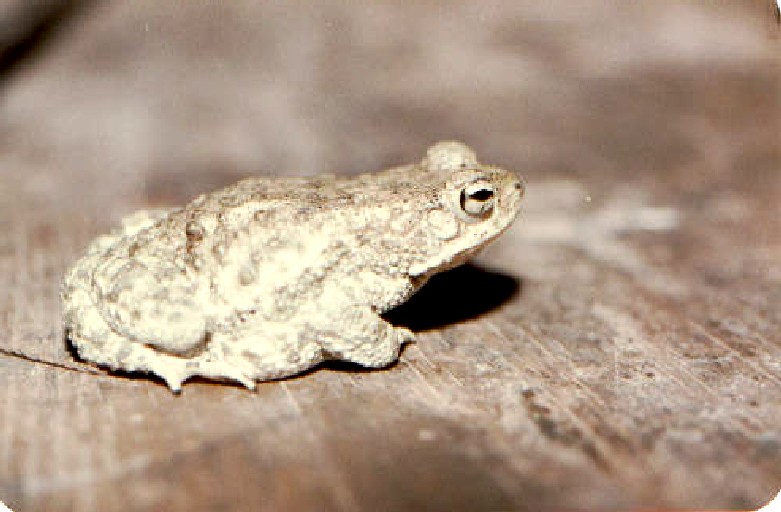
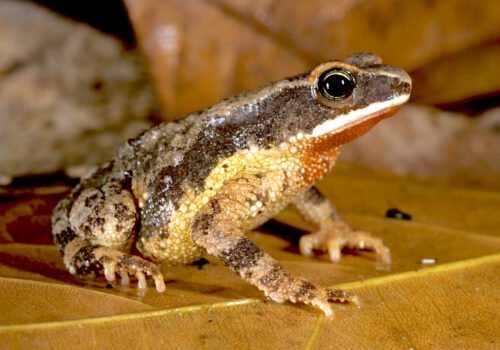
Unlike vividly colored frogs celebrated in wildlife calendars, Duttaphrynus peninsularis‘s charm emerges from subtlety and camouflage rather than obvious flashes of bright pigmentation. Adults average between 40 to 80 mm in length, females typically larger and more robust than males. Their stout bodies are finely adapted, favoring resilience over agility, providing an evolutionary advantage suited to leaf-litter living.
Colorations vary slightly from shades of greyish-brown, olive, or dark ochre, speckled thoughtfully with darker mottling blends. Such patterns perfectly mimic the decaying foliage, moss-covered stones, and soil textures of their surroundings, making these creatures experts in camouflage. Their wart-studded skin is also distinctly leathery, serving dual protective functions—resisting drying during relatively dry spells and secreting mildly toxic compounds acting as a defense against curious predators.
Remarkable Adaptations#
A distinctive physical feature of Duttaphrynus peninsularis lies in prominent parotoid glands located behind their eyes. Like other bufonids, these glands secrete compounds that taste bitter and potentially harmful to potential predators, offering an effective defense against mammals, birds, and large insects. Such toxin glands, although not particularly dangerous to humans, signify an adaptive benefit in predator-rich environments.
Behavior and Life Cycle: A Life Shaped by Rain and Shade#
Duttaphrynus peninsularis lives a predominantly crepuscular and nocturnal lifestyle, peeking out from leaf-covered hiding spots primarily at dusk and dawn. During daylight hours, it seeks quiet refuge beneath rotting logs, among leaf litter piles, or occasionally within rock crevices near water sources. Unlike tree frogs graced with spectacular leaps, these terrestrial amphibians trudge methodically through their environment, relying on concealment over flight.
Feeding Habits#
This species primarily subsists on various invertebrates—beetles, ants, termites, small crickets, spiders, and other insects, using ambush hunting tactics rather than active pursuit. Their visual acuity and sensitive movements allow them to detect minute prey vibrations, quickly extending sticky tongues and consuming prey within seconds.
Breeding and Mating Rituals#
Reproductive behaviors peak during South India’s monsoon months (June to September), when rainfall triggers mass amphibian emergences toward breeding ponds and streams. The males congregate in shallow, vegetative fringes of temporary pools to vocally advertise with distinct, monotonous calls—soft croaks resonating gently through moist tropical evenings.
Females arrive at the choruses, choosing mates selectively based on call quality; their attendance leads to mating embraces known as amplexus. Females then deposit gelatinous strings of eggs within shallow water bodies. Each string may contain hundreds of individual embryos, reflecting an evolutionary strategy of high reproductive output balancing heavy predation pressure upon early life stages.
The resulting tadpoles develop rapidly within weeks—metamorphosis occurring within 4 to 6 weeks post-hatching—transforming from aquatic larvae breathing through gills to small toadlets adapted to terrestrial living.
Ecological Role: Guardians of Forest Balance#
Duttaphrynus peninsularis quietly holds an essential ecological niche within the sensitive ecosystems of the Western Ghats. As insectivorous amphibians, they provide crucial regulators of insect populations, consuming many species known as agricultural pests. They themselves also serve as important prey to various predators, including birds, snakes, rodents, and larger amphibians.
Furthermore, their sensitivity to habitat moisture and forest integrity renders them excellent bio-indicators for researchers gauging forest ecosystem health and stability, offering early signals regarding environmental changes and water quality.
Threats and Conservation Status#
Despite stable populations in relatively undisturbed forest pockets, increasing deforestation, habitat fragmentation, and agricultural expansion threaten their survival status. Wetland drainage, pesticide runoff, and particularly climate change-induced alterations to monsoon regimes increasingly undermine their ecological niche and survival probability.
Currently, the International Union for Conservation of Nature (IUCN) ranks Duttaphrynus peninsularis as “Least Concern”. However, localized populations may already face substantial decline near human habitations, highlighting the importance of continued ecological monitoring and conservation action, including habitat protection and careful management of pesticide use near sensitive ecosystems.
Cultural and Scientific Significance#
Though less prominent in folklore or traditional symbolism compared to more charismatic fauna, Indian indigenous communities historically accorded subtle respect to forest-occupying amphibians, recognizing their roles in maintaining ecological harmony.
Scientifically, studying species like D. peninsularis contributes significantly to our understanding of tropical amphibian adaptation, outreach education efforts igniting curiosity, and amplifying ecological awareness and conservation narratives in communities residing near these critical forest regions.
Conclusion: The Quiet Importance of the Peninsula Toad#
Duttaphrynus peninsularis encapsulates the understated beauty and vital ecological significance inherent in seemingly ordinary members of biodiversity-rich ecosystems. Efforts to protect their forest homes preserve not only this charismatic amphibian but the full tapestry of life intertwined within their habitats. As nature enthusiasts, scientists, students, and conservation advocates, promoting awareness, respecting ecological integrity, and supporting conservation initiatives remain our shared responsibility. After all, beneath their quiet disguise, Duttaphrynus peninsularis embodies iconic biodiversity worth cherishing.