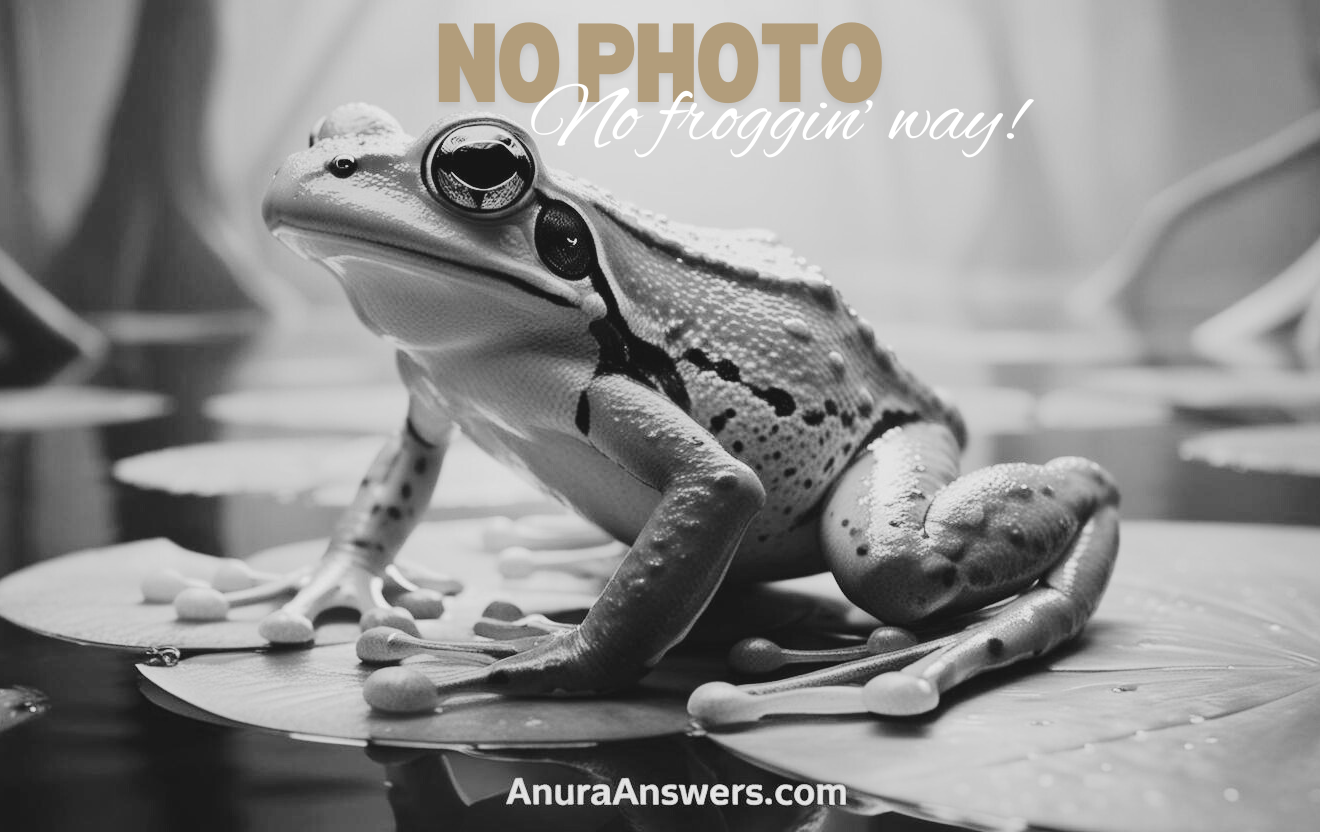
Duttaphrynus parietalis: The Intriguing World of the Indian Wall Toad#
Introduction#
In the quiet, damp corners of India’s lush landscapes, nestled in nooks and crevices, hides an extraordinary amphibian known as Duttaphrynus parietalis, or the Indian Wall Toad. At first glance, these humble creatures might appear ordinary, blending into ancient walls, moss-covered stones, and forest edges without fanfare. Yet, beneath this unassuming exterior lies a captivating story of evolutionary resilience, ecological significance, and adaptation to life amidst human settlements and wild environments alike.
Scientifically referred to as Duttaphrynus parietalis, this species belongs to the Bufonidae family—a lineage of true toads known for their distinctive bumpy skins, squat bodies, and secretive habits. While the Indian Wall Toad may not match the flashy colors of poison dart frogs or the thunderous croaking of bullfrogs, its quiet existence speaks deeply about the intimate balance between nature and civilization, illustrating the capacity for wildlife to adapt to shifting environments alongside human habitation.
One fascinating aspect about these small, rugged toads is their incredible adaptability. Unlike many amphibians that have suffered greatly from habitat decline, Duttaphrynus parietalis has shown remarkable flexibility in finding niches within human-altered landscapes, even staking a quiet claim upon ancient temple walls and weather-beaten garden fences.
Taxonomy and Classification#
Belonging to the expansive amphibian order Anura, more specifically within the family Bufonidae, the Indian Wall Toad, Duttaphrynus parietalis, occupies a fascinating position within amphibian taxonomy. It falls under the genus Duttaphrynus, named in honor of renowned Indian herpetologist Sushil Kumar Dutta, reflecting the species’ geographical roots and contribution to India’s rich biodiversity.
Initially classified under the genus Bufo, this species was reassigned to Duttaphrynus following revisions within amphibian taxonomy that sought clarity regarding evolutionary relationships. Closely related species within the same genus include other South Asian toads such as Duttaphrynus melanostictus—the common Asian toad, which shares overlapping geographical ranges and similar ecological niches.
Natural Habitat#
A true emblem of adaptive versatility, the Indian Wall Toad flourishes predominantly across the Indian subcontinent, with populations abundantly found throughout the states of Maharashtra, Goa, Karnataka, Kerala, Tamil Nadu, and Andhra Pradesh. Their distribution often coincides with the wet, tropical climates blessed with the regular arrival of monsoon showers. The monsoonal humidity and warmth create moist micro-habitats perfect for amphibians like Duttaphrynus parietalis to survive and thrive.
This species favors a diverse mosaic of habitats, from forest edges and cultivated gardens to rural farms, tea plantations, and suburban neighborhoods. Significantly, they’re also known to colonize architectural structures, gaining their common name and reputation from their frequent dwelling within cracks of stone walls, old buildings, and crevices in temple ruins. This affinity for human dwellings provides them not only a refuge from predators but also allows them to exploit insect prey drawn to artificial lights.
Within their preferred terrains, the Indian Wall Toad seeks moisture and cover. During the dry season, they find refuge beneath leaf litter, logs, flowerpots, or even underground burrows dug by other animals. Come the monsoon months, they emerge en masse to breed, filling the air with a chorus of soft, melodious croaks signifying the renewal of life and the vibrant synergy between fauna and rainfall.
Physical Characteristics#
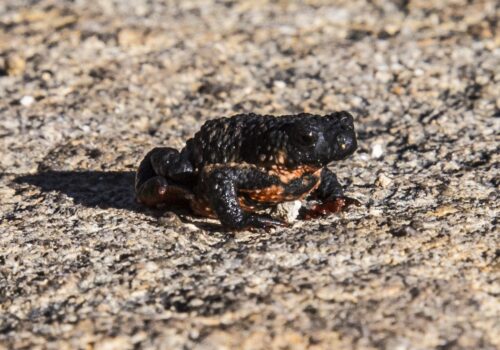
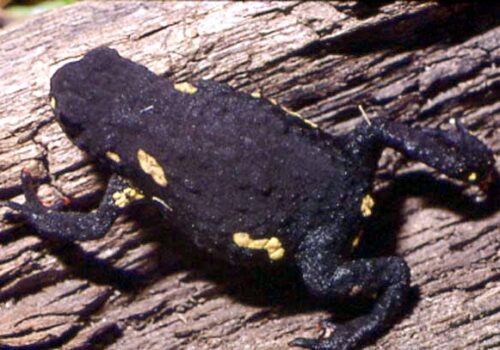
The Indian Wall Toad’s appearance subtly narrates a captivating evolutionary tale of camouflage, resilience, and modesty. Generally reaching modest lengths of roughly 45 to 60 millimeters, their bodies are compact and sturdy, characteristic of true toads. A closer, attentive gaze reveals a charming blend of intricate patterns and earthy hues, frequently comprising shades of olive-brown, yellowish-green, and grey, finely interspersed with subtle darker blotches. These patterns masterfully mimic the textures of weathered stone and lichen-covered walls, allowing the toad to blend seamlessly into its surroundings.
Its skin, rough and wart-covered, exudes an appearance of rugged reliability. Each wart gland serves as a defensive structure, secreting noxious substances that deter potential predators. These secretions ensure safety against curious mammals, birds, and reptiles. Remarkably, despite its defensive skin, this species is not harmful to humans who handle it respectfully, although washing hands afterward remains advisable.
Above their prominent bulging eyes lie conspicuous parotoid glands, secreting toxins as an effective chemical shield. One evolutionary triumph of the Indian Wall Toad is its color-changing capacity. While subtle, this ability to alter skin tone in response to humidity, temperature, or surroundings further enhances survival and blending.
Behavior and Life Cycle#
An Unassuming Hunter: Feeding Habits#
As ambush predators, Duttaphrynus parietalis rely on patience, stealth, and a swift tongue strike to seize their invertebrate prey. Their diet primarily includes beetles, ants, moths, termites, flies, and various other insects, many attracted by anthropogenic light sources. Observers fortunate enough to watch this toad hunt at dusk may marvel at its efficiency, as it sits motionless until a suitable prey comes close enough for it to capture with lightning speed.
Reproduction and Development#
The inaugural rains of monsoon mark a vibrant season of courtship for these resilient amphibians. Males emerge first, making quiet yet melodious calls near shallow pools or temporary rainwater puddles. Though not as robust as larger toads, their calls produce a gentle, harmonious buzzing serenade, heard across gardens and low-lying wetlands. Such vocalizations lure females, facilitating mating rituals in water-rich habitats.
Females lay eggs in gelatinous strings, entwining them delicately around submerged vegetation or debris. As days pass, tadpoles hatch and school together, developing rapidly, their tadpole stage typically spanning mere weeks as they indulge in algae and organic debris. Soon, legs develop, tails recede, and tiny froglets disperse onto land, carrying forward the next chapter of their quiet, yet determined lives.
Ecological Role#
The Indian Wall Toad fulfills vital ecological functions, anchored firmly within the larger tapestry of life. A voracious insect predator, its feeding habits significantly regulate populations of agricultural pests and harmful insects, contributing immensely to ecological balance and human agriculture. As prey, they support predatory species like snakes, birds, and larger mammals, becoming integral to the food web.
Additionally, as amphibians living alongside humans, they are important bioindicators, reflecting the environmental health of a given habitat. Their continued presence and apparent resilience indicate ecosystems where disturbance is present—yet resilience and balance offer these quiet amphibians sanctuary. Consequently, their survival and success or decline often signal ecological trends broader than their modest lives.
Threats and Conservation Status#
Presently, Duttaphrynus parietalis holds a steady population trend and has not yet been categorized as threatened by the International Union for Conservation of Nature (IUCN), although continued monitoring remains essential. However, habitat fragmentation and urbanization pose continual stress, potentially threatening their adaptability. Pollution, agrochemicals, vehicular traffic, and disturbances in breeding sites bear watching, as these pressures can rapidly reduce populations in localized areas.
Conservationists continue advocating habitat preservation and the careful management of agricultural practices to safeguard this species. Educational campaigns raising awareness about amphibians’ ecological significance can foster community-driven conservation approaches, reinforcing a harmonious coexistence.
Cultural and Scientific Significance#
The Indian Wall Toad occupies an intriguing position in Indian cultural narratives, frequently observed near temples, ancient ruins, and homes, accentuating its quiet partnership with human beings. It symbolizes luck, adaptability, and humility in various traditional stories and folk tales.
Scientifically, their resilience in urban habitats has inspired important ecological research, elucidating how species adaptively respond to human influence. These observations broadly inform conservation biology, urban ecology, and adaptive evolutionary studies regarding amphibian survival strategies.
Conclusion#
Unassuming, adaptive, yet immensely important, the Indian Wall Toad, Duttaphrynus parietalis, encapsulates the quiet beauty and profound resilience of wildlife coexisting within human-altered landscapes. With every chirp and camouflage, these amphibians narrate tales of adaptability and highlight human responsibilities toward preserving their delicate, beautiful tapestry of life. By learning, observing, conserving, and appreciating their role, we can deepen our mutual respect and forge greener, healthier ecosystems that benefit both amphibians and human communities.