- Duttaphrynus olivaceus: The Enigmatic Olive Toad of the Western Ghats
- Taxonomy and Classification
- Natural Habitat: A Niche Amidst Cloud-Kissed Forests
- Physical Characteristics: Inconspicuous Elegance
- Behavior and Life Cycle: Whispered Stories of Survival
- Ecological Role: Guardians of Forest Health
- Threats and Conservation Status: Securing Their Survival
- Cultural and Scientific Significance: Amphibians as Messengers
- Conclusion: Protecting Tomorrow's Frogs Today
Duttaphrynus olivaceus: The Enigmatic Olive Toad of the Western Ghats#
Deep within the verdant folds of India’s Western Ghats–a lush haven of biodiversity that sprawls gently along the country’s southwestern coastline–lurks a fascinating amphibian seldom discussed outside specialist circles. Meet the olive-colored marvel, Duttaphrynus olivaceus, affectionately known as the Olive Toad. Unassuming yet surprisingly resilient, this species tells intricate ecological stories through its secretive lifestyle beneath leaf litter, along shaded forest streams, and amidst the moisture-rich undergrowth of its mountain refuge.
Known precisely as Duttaphrynus olivaceus, this striking amphibian belongs to the Bufonidae family, placing it firmly among true toads. Given their cryptic lifestyle and limited geographical distribution, encountering this species in the wild feels akin to uncovering a hidden gem telltale of environmental health. More than just a curiosity to herpetologists, the Olive Toad is increasingly recognized for its bioindicator status—silently warning scientists of changes in forest ecosystems, water quality, and climate patterns long before these signs are evident through other species or environmental measures.
Taxonomy and Classification#
Scientifically classified within the genus Duttaphrynus, the Olive Toad derives its name precisely from its subdued, olive-green coloration. Formerly grouped with the genus Bufo, extensive taxonomic revision in recent decades reclassified several Asian frog species into newly defined genera, reflecting nuanced developments in genetic and morphological research.
Currently categorized as Duttaphrynus olivaceus, this species falls under the Bufonidae family. This broad family includes familiar toads across the globe, ranging from the common toads around temperate zones to the colorful yet toxic harlequin toads of South America. Close relatives within its genus include Duttaphrynus melanostictus, commonly known as the Asian common toad. Despite familial similarities, the Olive Toad exhibits clear distinctions in habitat preference, behavior, and physique, traits shaped by millennia of adaptation to the unique challenges of the Western Ghats environment.
Natural Habitat: A Niche Amidst Cloud-Kissed Forests#
The natural range of Duttaphrynus olivaceus is a relatively constrained one, primarily extending along the rain-drenched slopes of the Western Ghats. These ancient mountains stretch prominently through Kerala, Tamil Nadu, Karnataka, and Maharashtra states—forming a biodiversity hotspot recognized globally. The Olive Toad occupies altitudinal ranges typically from 500 to nearly 2,000 meters above sea level, dominating cool, humid climes that sustain dense evergreen forests and transitional moist deciduous woodlands.
Beneath the Leaf Litter: Microhabitats and Shelter#
Within these mountainous forests, Olive Toads thrive best amidst damp leaf litter, under fallen logs, and within crevices along shaded stream banks. This reliance on moisture-rich, sheltered habitats plays a defining role in their distribution. Duttaphrynus olivaceus avoids more exposed territories, often retreating to the comfort of dark, damp recesses during daylight hours to minimize moisture loss and evade predation.
The Western Ghats forests provide abundant rainfall, steady humidity, and relatively stable temperatures, creating an idyllic enclave nearly tailor-made for amphibian survival. The Olive Toad expertly exploits the region’s microclimatic conditions, demonstrating an intricate evolutionary dance shaped by marker rainfall patterns, forest canopy cover, and soil composition.
Physical Characteristics: Inconspicuous Elegance#
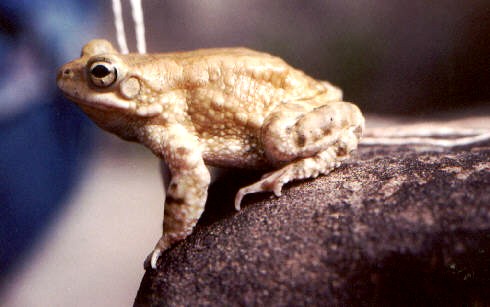
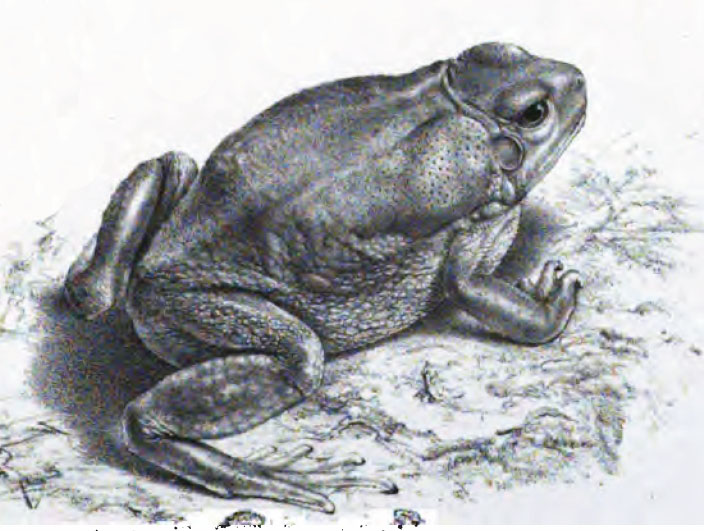
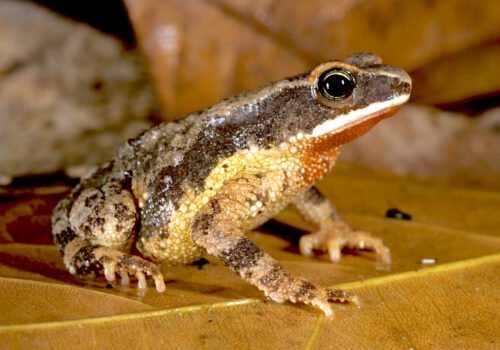
The Olive Toad, while subtle in coloration, commands attention once closely examined. Most adult individuals measure between five to eight centimeters in length, their bodies robust yet notably streamlined compared to other toad species. Their namesake olive coloration varies slightly, often displaying muted hues ranging from dull greenish-brown to distinctly darker olive-black shades depending on camouflage needs and ambient moisture.
One striking aspect of this species is its subtly warted skin, a characteristic common among bufonid toads, offering both camouflage through textural mimicry with leaf litter and protection, releasing mild toxins that deter predators. These skin secretions, while not as potent as those of brightly colored rainforest frogs, provide more than adequate defense against smaller predators native to its habitat.
The eyes of these toads gleam softly in low light, golden irises etched with intricate black pupils—perfectly suited for life under shifting canopy shadows or twilight ventures. Their hind limbs, proportionately modest yet robustly constructed, facilitate effortless navigation through layered forest litter or shallow forest streams, making them agile inhabitants despite their understated presence.
Behavior and Life Cycle: Whispered Stories of Survival#
Duttaphrynus olivaceus leads a predominantly nocturnal lifestyle, emerging under the cover of darkness to hunt and explore. The nocturnal rhythm minimizes exposure to the drying daytime sun, reducing moisture loss fundamental to amphibian survival. Thus, during daylit hours, these secretive amphibians stay safely obscured, quietly conserving energy, moisture, and evading diurnal predators.
Diet and Feeding Behavior#
Though chiefly insectivorous, Olive Toads display impressive dietary adaptability, consuming a vast array of insect prey inhabiting forest floors. Their preference commonly includes delicate moths, beetles, crickets, spiders, and other small arthropods. Equipped with rapid tongues and pinpoint accuracy, Olive Toads adeptly seize fast-moving prey, overcoming limited visibility within dense foliage through acute sensory detection and precise timing.
A Symphony in the Shadows: Breeding Habits and Calls#
With coming monsoons bringing a crescendo to forest streams and renewed breeding possibilities, male Olive Toads converge around temporary bodies of water, orchestrating elaborate vocal choruses to attract females. Their mating chorus represents a hauntingly beautiful blend of low-pitched resonant croaks adapted specifically to propagate through dense vegetation and moisture-laden foliage.
Mating usually takes place within shallow pools, temporary marshes, or slow-moving streams. Females lay small clusters of eggs attached securely to submerged vegetation or placed gently upon the shallow stream bottom. Tadpoles emerge within days, rapidly adapting to their aquatic nursery. They experience metamorphosis into small but fully developed toads within weeks, transitioning smoothly toward adulthood beneath the forest’s vigilant watch.
Ecological Role: Guardians of Forest Health#
An essential member of its ecosystem, Duttaphrynus olivaceus influences delicate community dynamics within the Western Ghats. As effective insect predators, these amphibians regulate insect populations, contributing markedly to the equilibrium of invertebrate biodiversity. Moreover, the presence and health of Olive Toad populations provide valuable insights into ecosystem stability, water quality measures, and overall environmental well-being.
Simultaneously, Olive Toads themselves become prey for various birds, reptiles, and small mammals, underscoring their role in maintaining the ecological balance and facilitating trophic energy transfer within these richly diverse forests.
Threats and Conservation Status: Securing Their Survival#
Despite apparent adaptations and resilience, the Olive Toad faces growing threats, including deforestation-driven habitat loss, watercourse alteration, agricultural encroachment, and climate change. These disruptions threaten populations already narrowly confined throughout their geographic ranges. Presently, the species holds a classification on the IUCN Red List as Least Concern, primarily due to stable habitats in protected reserves across the Western Ghats—but experts caution against complacency.
Encouragingly, prominent conservation initiatives, such as protected area designation, community-based biodiversity monitoring, and habitat restoration efforts, continue to help secure this amphibian’s survival. Such programs emphasize the preservation of crucial breeding habitats, maintaining ecological integrity and improved community awareness, safeguarding not only Olive Toad populations but entire interconnected ecosystems thriving within the Ghats.
Cultural and Scientific Significance: Amphibians as Messengers#
Throughout history and local folklore, amphibians—including species such as the Olive Toad—hold significant symbolic meaning within indigenous cultures. Historically revered for their association with rain and fertility, these small forest dwellers embody timeless connections between human communities and natural ecosystems.
From a scientific perspective, Duttaphrynus olivaceus continues to serve as a powerful ecological sentinel species. Monitoring its population, studying habitat preferences, and responding decisively to observed threats allows scientists a real-time understanding of environmental shifts, climate impacts, and emerging ecological crises.
Conclusion: Protecting Tomorrow’s Frogs Today#
As subtle ambassadors amidst ancient ecosystems, Olive Toads symbolize both the wonder and fragility embedded within our planet’s biodiversity. Ensuring their continued survival safeguards not only their existence but also the myriad lifeforms reliant on interconnected ecological health. By raising awareness, promoting conservation initiatives, and championing informed ecological stewardship, we hold the power to protect these remarkable species—and ultimately preserve the ecological legacies they silently represent.