- Duttaphrynus microtympanum: The Secretive Mountain Toad of the Western Ghats
- Taxonomy and Classification
- Natural Habitat: Hidden Worlds of the Western Ghats
- Physical Characteristics: A Blend of Subtle Beauty and Practicality
- Behavior and Life Cycle: Quiet Rhythms of Mountain Life
- The Ecological Role of Duttaphrynus microtympanum
- Threats and Conservation Status
- Cultural and Scientific Significance
- Conclusion: Guardians of Misty Mountains
Duttaphrynus microtympanum: The Secretive Mountain Toad of the Western Ghats#
Tucked away amidst the mist-covered slopes and lush evergreen forests of India’s Western Ghats lives a creature both humble and fascinating: Duttaphrynus microtympanum, or as it is more commonly known, the small-eared toad. With its unassuming yet intricate appearance, shy demeanor, and vital ecological role, this amphibian quietly symbolizes the delicate interconnectedness of biodiversity in one of the world’s most treasured biodiversity hotspots.
Though predominantly unnoticed by hikers and nature enthusiasts whose gaze often drifts towards larger, charismatic creatures like elephants or tigers, Duttaphrynus microtympanum is an essential indicator species, quietly whispering secrets about the health and integrity of the mountain ecosystems it calls home. Join me as we venture into the misty forests of the Western Ghats to discover the hidden world of this unique amphibian, understanding its biology, unraveling its behaviors, and illuminating the importance of its conservation.
Taxonomy and Classification#
At first glance, the scientific realm of amphibians can appear complicated. However, unraveling the connections between species brings us valuable insights into ecological niches and evolutionary biology. Duttaphrynus microtympanum belongs to the family Bufonidae, commonly referred to as “true toads.” Characterized by their dry, warty skin, parotoid glands secreting toxins for defense, and terrestrial preferences, true toads are distinctly set apart from their moist-skinned, aquatic cousins.
The genus Duttaphrynus, to which our star species belongs, comprises a variety of land-dwelling toads mostly found across South and Southeast Asia. Originally classified within the broad genus Bufo, extensive genetic and morphological studies have led to their current placement within the distinct Duttaphrynus genus. Quite notably, the name “microtympanum” originates from the Greek words ‘mikros,’ meaning small, and ‘tympanum,’ meaning drum—aptly describing its unusually small, barely visible tympanic membrane (the external ear disc).
Close relatives within the genus include Duttaphrynus melanostictus (common Asian toad), widely distributed and abundant across Asia, and others sharing similar habitat niches and behaviors. Nonetheless, D. microtympanum maintains a distinct ecological and evolutionary identity, solidifying its position as a unique representative of Western Ghats amphibian biodiversity.
Natural Habitat: Hidden Worlds of the Western Ghats#
The Western Ghats, a UNESCO World Heritage Site and biodiversity hotspot, snake down India’s western coastline, sheltering lush rainforests, grasslands, and montane woodlands under their verdant canopy. Amid the gentle trickles of mountain streams, amongst fallen leaves and moss-covered rocks, Duttaphrynus microtympanum quietly thrives, perfectly adapted to its specialized habitat.
Geographic Distribution and Altitudinal Range#
Endemic to the Western Ghats, D. microtympanum specifically inhabits mountainous regions primarily situated within the higher-elevation areas—between approximately 1,500 and 2,300 meters above sea level. The valleys of Nilgiris, Palani Hills, Anaimalai Hills, and High Wavy Mountains provide the cool temperatures, abundant rainfall, and lush vegetation needed for these small amphibians to flourish.
Habitat Preferences and Ecosystem Interactions#
The small-eared toad is predominantly terrestrial and nocturnal, preferring shady undergrowth, leaf litter, and damp soil to retain moisture throughout the day. It may occasionally take refuge under stones, logs, or crevices formed by roots and rocks. Quiet microhabitats along gently running streams, boggy marshes, or the edges of montane grasslands provide ideal breeding sites, ensuring both moisture availability and abundant food sources.
In these seemingly quiet corners of forests, verdant with ferns and fallen branches, Duttaphrynus microtympanum finds itself perfectly adapted for survival. Its muted coloring and warty textured skin merge harmoniously with its surroundings, rendering it virtually invisible to passing predators or curious humans alike. Ravaged by ceaseless rains and enveloped in swirling mists, these isolated mountain forests foster a unique evolutionary niche, crafting an animal finely attuned to the rhythms and challenges of its mountainous home.
Physical Characteristics: A Blend of Subtle Beauty and Practicality#
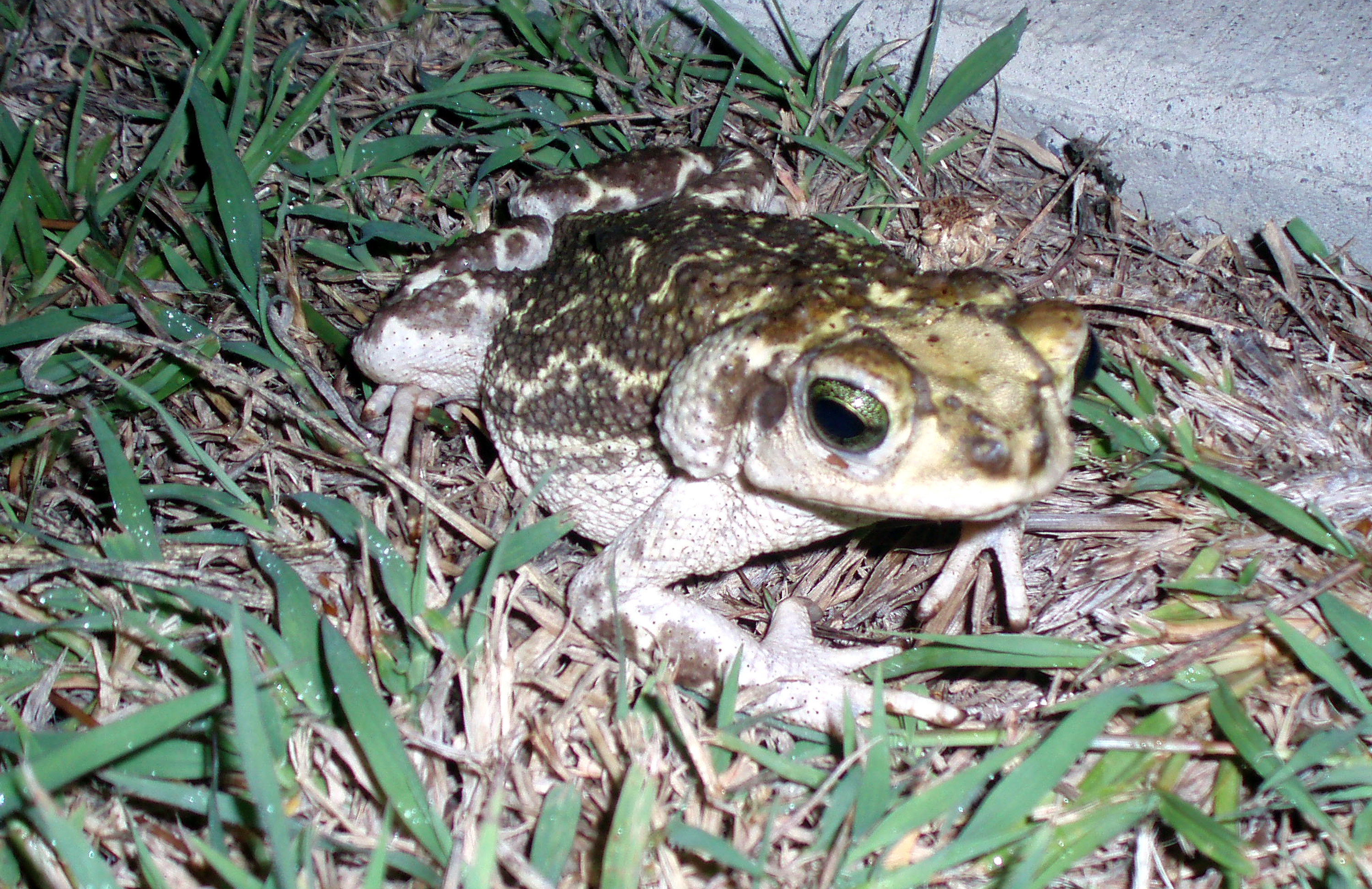
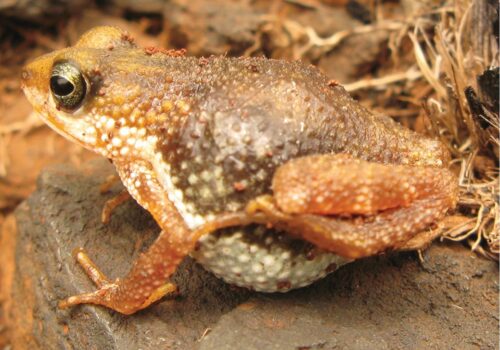
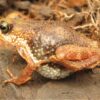
Duttaphrynus microtympanum is relatively modest in size, generally measuring between 2 to 3 centimeters in length. Males are typically smaller and more slenderly built than females. The most distinctive characteristic, as hinted by its scientific name, is undoubtedly its markedly diminutive tympanic membrane. This greatly reduced ear, barely visible to the unaided eye, sets it apart from its close relatives, underscoring a unique evolutionary adaptation possibly linked to its habitat or behavior.
The toad boasts rough, textured, glandular skin that aids in moisture retention and protects against desiccation, crucial at the higher elevations where cool weather prevails despite abundant rainfall. Its dorsal surface ranges in color from shades of dark brown to olive, intricately mottled or marbled, offering excellent camouflage against the decaying leaves, mosses, and moist soils of the forest floor.
Typical for toads, prominent parotoid glands sit prominently behind the eyes. These glands secrete toxins that deter predators, providing an effective defense strategy. With eyes that gleam softly in torchlight during nocturnal walks, this diminutive amphibian exudes a quiet charisma, capturing the curiosity of those fortunate enough to notice its subtle presence amidst its intricate forest home.
Behavior and Life Cycle: Quiet Rhythms of Mountain Life#
Feeding and Hunting Strategies#
Duttaphrynus microtympanum feeds predominantly on small invertebrates: ants, beetles, spiders, termites, and occasionally small crustaceans near wet areas. Hunting occurs primarily at dusk and nighttime, exploiting the lower temperatures and heightened humidity. Wait-and-watch predators, these toads typically remain stationary, relying on excellent camouflage and keen eyesight, lunging swiftly at unsuspecting prey that ventures within range.
Breeding and Tadpole Development#
Beneath the heavy monsoon clouds, the rainy season in the Western Ghats declares the onset of breeding rituals. Males gather at suitable water bodies, emitting soft, repetitive croaks as gentle enticements to attract mates. Females arriving at breeding sites deposit gelatinous egg masses in shallow pools or slow-flowing stream eddies, offering optimal environments for their developing offspring.
Tadpoles emerge as tiny, herbivorous larvae feeding on algae and detritus. Their development proceeds rapidly, driven by the ephemeral nature of their aquatic homes. Within weeks, these tiny aquatic creatures metamorphose into miniature adult toads, quickly adopting terrestrial lifestyles under the protective cloaks of leaf-litter, embarking on solitary journeys across their dynamic mountain homes.
The Ecological Role of Duttaphrynus microtympanum#
As terrestrial predators, these toads significantly contribute to insect population control and nutrient cycling. By consuming vast amounts of insect prey, they maintain ecological balance, indirectly scaling back potential pest outbreaks and disease carrying insects. Moreover, through their sensitivity to environmental changes, Duttaphrynus microtympanum acts as an effective indicator species; fluctuations in their population numbers often signal broader problems in their fragile montane ecosystems.
Threats and Conservation Status#
Despite their extraordinary adaptability, Duttaphrynus microtympanum faces increasing threats primarily due to anthropogenic habitat loss from agriculture, urbanization, and widespread deforestation. Climate change exacerbates these threats, altering the temperature and rainfall patterns crucial to their breeding and survival.
Currently, Duttaphrynus microtympanum is categorized as Endangered by the International Union for Conservation of Nature (IUCN). Protection measures, habitat stewardship, and conservation awareness in local communities are urgently needed to ensure the continued survival of this unique species and the vibrant ecosystems they represent.
Cultural and Scientific Significance#
Amphibians frequently possess cultural symbolism in local communities. While specific cultural narratives regarding Duttaphrynus microtympanum are sparse, its presence enhances Western Ghats biodiversity heritage and underscores the region’s uniqueness. Scientifically, as an endemic indicator species, studying its biology and habitat requirements allows ecologists to assess ecosystem health, understand ecological responses to climate change, and direct conservation actions effectively.
Conclusion: Guardians of Misty Mountains#
Duttaphrynus microtympanum, quiet guardian of misty mountain forests, remains largely unnoticed within its lush ecosystems. Yet uncovering its story reveals a species perfectly adapted to a specialized ecological niche. As we strive to conserve biodiversity hotspots like the Western Ghats, remembering and protecting species like this humble Mountain Toad becomes not merely an ecological responsibility but a testament to our reverence for the diversity, beauty, and fragility of life on Earth.
With knowledge in hand and renewed wonder in our hearts, we must ensure that future generations continue hearing the quiet symphonies of these hidden, irreplaceable creatures.