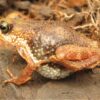
Duttaphrynus mamitensis: Discovering India’s Enigmatic Forest Toad#
Hidden deep within Northeast India’s lush, mysterious forests lives a species rarely encountered, its discrete existence intertwined closely with the pristine ecosystem it calls home. Meet Duttaphrynus mamitensis, the enigmatic forest toad whose story speaks profoundly of nature’s resilience yet vulnerability. This elusive amphibian not only fascinates herpetologists but also reflects the delicate balance between life and environment, and its tale offers an important window into the wondrous yet fragile ecosystems of India’s biodiversity hotspots.
First described in recent scientific literature, Duttaphrynus mamitensis remains largely unknown outside select circles of amphibian specialists, yet possesses qualities worthy of broader attention. Intriguingly adapted, subtly distinctive, and indicative of ecological well-being, the toad’s quiet existence hardly spells insignificance. On the contrary, its apparent modesty hides ecological value and casts a beacon onto the compelling narratives of interdependence and conservation urgency.
Taxonomy and Classification#
Classified scientifically within the family Bufonidae, Duttaphrynus mamitensis belongs to a remarkable group known colloquially as True Toads. The genus Duttaphrynus, separated from the wider genus Bufo in recent taxonomic revisions, emphasizes subtle but critical biological distinctions that define this lineage. Other well-known family members include the widely distributed Indian common toad, Duttaphrynus melanostictus, a familiar sight in urban gardens and rural fields alike. However, unlike its ubiquitous relative, D. mamitensis confines itself to remote subtropical forests, garnering attention for its more elusive lifestyle, limited range, and specialized ecological adaptations.
The species was first scientifically described in 2009 after detailed genetic and morphological studies revealed significant uniqueness, justifying classification as new to science. Its name commemorates the Mamit district of Mizoram, its primary range, underscoring the importance of regional biodiversity studies in revealing nature’s hidden treasures.
Natural Habitat#
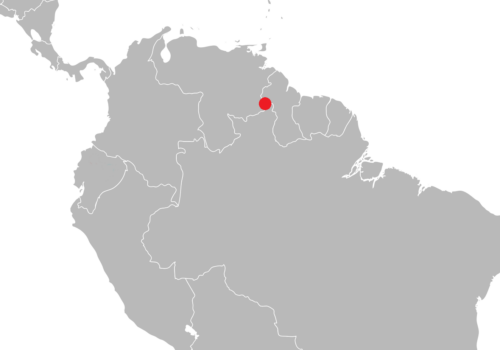
Northeast India’s Mizoram state—a rugged, mountainous land of misty hills, lush greenery, and winding streams—provides an ideal environment for Duttaphrynus mamitensis. The toad is notably particular about its habitat, showing strong preference for shaded forest patches along small perennial streams, carefully hidden under the dense forest canopy. These subtropical evergreen forests, characterized by humid climates, abundant leaf litter, and plenty of insect prey, create a nurturing yet challenging environment.
Here, concealed amid foliage and fallen logs, the toad’s earthly-hued skin perfectly matches leaf litter and damp soil where it spends its days. These shady, moisture-rich forest floors provide optimal protection from predators and harsh climatic conditions. The secretive habitats of D. mamitensis underline subtle specialized adaptations—their choice of hidden microhabitats ensures survival, yet simultaneously renders them susceptible to even minor environmental disruption.
Physical Characteristics#
When encountered against a backdrop of leaf-strewn soil and moss-covered stones, Duttaphrynus mamitensis seems crafted precisely for life in shadows. Typically small-sized, these amphibians seldom exceed three centimeters in length, their modest proportions fitting seamlessly within their discrete existence.
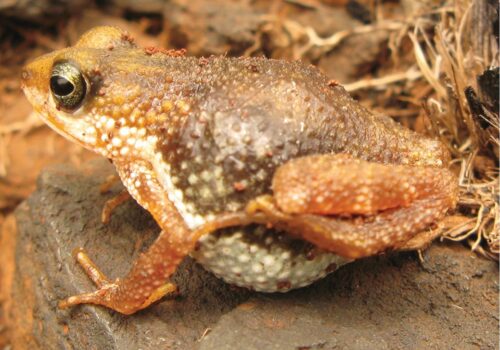
Their robust yet compact body features a broad head, relatively short limbs, and pronounced parotoid glands just behind the eyes—these glands secrete bitter toxins that deter predators, a hallmark trait of true toads. The toad’s skin possesses warty, tubercled textures, a characteristic evolutionary adaptation providing both camouflage and defense mechanism.
Coloration, another notable adaptation, varies subtly from shades of earth-brown to dark gray, often flecked with lighter-yellowish patches resembling decomposing leaves—a perfect mimicry for this forest-floor specialist. Camouflage aids tremendously in predator evasion, demonstrating nature’s mastery of concealment as a survival strategy.
Behavior and Life Cycle#
Feeding Habits#
Duttaphrynus mamitensis practices nocturnal hunting, emerging cautiously at dusk to feed, navigating through leaf-litter and forest microhabitats in search of prey. Its diet primarily comprises small insects—ants, beetles, termites, and occasionally small spiders—which it captures deftly using its slightly sticky tongue. Its predatory role emphasizes intricate ecological connections, highlighting the subtle balancing act within the toad’s ecosystem.
Reproductive Strategies#
Breeding coincides closely with monsoon rains, triggered by temperature shifts and increased humidity. As rainfall intensifies, males congregate around streams, vocalizing a gentle yet persistent call, meant to attract females from surrounding forested habitats. This tranquil sound—a soft trill melding gracefully into the twilight chorus of cicadas and crickets—illustrates the understated charm of this amphibian life cycle.
After successful courtship, females deposit gelatinous strands of tiny dark eggs attached carefully beneath submerged vegetation in slow-flowing forest streams. The tadpoles develop rapidly, benefiting from nutrient-rich waters and protection offered by abundant submerged foliage. Metamorphosis occurs within weeks, producing miniature toads capable of surviving the forest interior, completing the cyclic miracle of survival renewed with each monsoon season.
Ecological Role#
In their specialized forest ecosystem, D. mamitensis both consume and are consumed; embodying dual roles as predator and prey, they help regulate insect populations, contributing indirectly toward pest control. Consequently, they’re valuable ecological indicators—any decline in their population often denotes heightened environmental stress or habitat degradation.
Predators, limited due to habitat concealment and toxin defenses, still occasionally include snakes, larger amphibians, or certain mammals adept at tolerating these chemical defenses. Thus, Duttaphrynus mamitensis represents a critical ecological link, underscoring the delicate dynamics among diverse forest inhabitants, each dependent on the intricate balance nature meticulously maintains.
Threats and Conservation Status#
Due to its recent description, the IUCN has not yet formally assessed D. mamitensis, but its specialized habitat and restricted range certainly heighten vulnerability. Mizoram’s forests face increasing anthropogenic pressures, particularly from expansion of agricultural lands, timber extraction, road building, and infrastructure projects. These activities fragment and continually reduce the healthy forest pockets this toad needs to thrive.
Additionally, climate change exacerbates environmental instability, bringing unpredictable weather variations, altered monsoon patterns, and hydrological disruptions affecting breeding cycles. As local conditions shift, ecological adaptability becomes paramount—an uncertain prospect for highly specialized amphibians.
Fortunately, raising awareness and initiating early conservation actions offers hope. Establishing protected areas prioritizing biodiversity, promoting sustainable land-use practices, and conducting ongoing monitoring research represent vital immediate steps. Conservationists advocate strongly for local community inclusion, critical to ensuring affairs balance ecological preservation with cultural and economic well-being.
Cultural and Scientific Significance#
The discovery and research of species like Duttaphrynus mamitensis convey powerful lessons. They demonstrate nature’s endless nuances, invisible yet profound. Locally, toads often feature prominently in folklore and tradition, viewed both positively as indicators of ecological richness and occasionally negatively due to misunderstandings around their perceived toxicity. Cultural education thus represents a crucial vehicle in conservation advocacy, emphasizing these amphibians’ harmless, vital roles.
Scientifically, the toad’s existence enriches biodiversity heritage, providing crucial insights into ecosystem health and resilience. Continuing studies help unravel ecological complexities, guide effective conservation policy, and potentially yield valuable findings, e.g., novel biochemical compounds within their powerful toxins, potentially useful medicinally—another compelling reason behind broader appreciation and protection efforts.
Conclusion: Protecting India’s Forest Jewel#
Duttaphrynus mamitensis, cryptic and specialized, quietly embodies the magnificent subtleties of India’s invaluable biodiversity. Although remote and overlooked by popular attention, its existence matters immensely, offering glimpses into the fragile balance sustaining diverse life forms within increasingly pressured forests. For enthusiasts, students, and practitioners committed to conservation, its story underscores both urgency and optimism—urging us to advocate, engage, and act decisively to preserve such irreplaceable species and ecosystems.
By learning more about this fascinating forest toad, we recognize our shared responsibility toward safeguarding Earth’s interconnected tapestry of life. Let it inspire action—explore, protect, and celebrate India’s hidden forest jewels. The future of these quiet yet invaluable creatures depends resolutely upon our informed compassion and dedication to nature’s future.