- Duttaphrynus hololius: Unveiling the Enigmatic Marbled Toad of India's Forests
Duttaphrynus hololius: Unveiling the Enigmatic Marbled Toad of India’s Forests#
Hidden among the leaf litter and rugged terrain of India’s dry forests and rocky habitats lies a creature as intriguing as it is elusive—the Marbled Toad, scientifically known as Duttaphrynus hololius. Far from the commonplace image most have of amphibians, this subtly ornate toad captivates naturalists and conservationists alike with its unique beauty and cryptic habits. Despite its intriguing nature and subtle elegance, it remains starkly understudied, its biology quietly woven into the fabric of its native habitats. Indeed, while this amphibian may not make headlines like its brightly colored rainforest cousins, the Marbled Toad embodies a vital link within its ecosystem that demands our attention.
In this comprehensive journey, we step quietly into the verdant yet rugged homes of this fascinating species; exploring vivid details of its life, habitat preferences, intriguing adaptations, ecological roles, threats faced, and the conservation outlook. As we peer deeper into the intricate tapestry of life that Duttaphrynus hololius represents, we find a narrative rich with hidden charm and ecological significance—urging us toward greater appreciation and protective stewardship.
Taxonomy and Classification#
Duttaphrynus hololius belongs to the family Bufonidae, a diverse and widespread grouping commonly referred to as “true toads”. Originally described by Günther in 1876, the species was once placed under the genus Bufo and later reassigned to Duttaphrynus based on comparative morphological and genetic studies. The genus Duttaphrynus, endemic primarily to South Asia, encompasses numerous other toad species, often adapted to arid and semi-arid niches. Among its closest relatives are species such as Duttaphrynus melanostictus, the common Asian toad—an adaptable species widely recognized in its extensive range.
Natural Habitat and Distribution#
The Marbled Toad favors dry, deciduous forests, rocky outcrops, scrub-covered hills, and semi-arid woodland throughout southern and central India, extending its enigmatic presence into pockets of Sri Lanka. Unlike moisture-dependent frogs often celebrated for lush rainforest locales, Duttaphrynus hololius thrives in remarkably dry, rocky terrain. Its cryptic coloration and texture, resembling the earthy tones of leaf litter and weathered stone, reflect and complement this ecological preference.
This species predominantly inhabits elevations ranging from sea level up to approximately 700 meters, with sightings carefully documented in various states such as Tamil Nadu, Andhra Pradesh, Karnataka, Maharashtra, Kerala, Telangana, and Gujarat. Forest fringes, rocky hillsides, and partially disturbed habitats like orchards and plantations also serve as its refuge, showcasing its adaptability and resilience in the face of human-altered ecosystems.
Physical Characteristics#
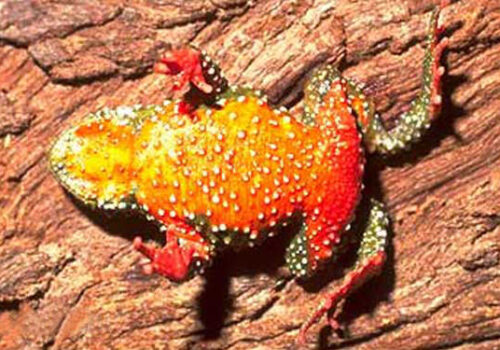
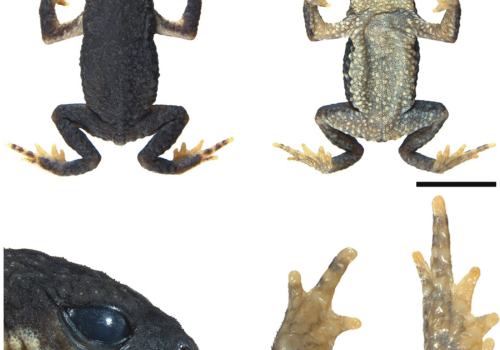
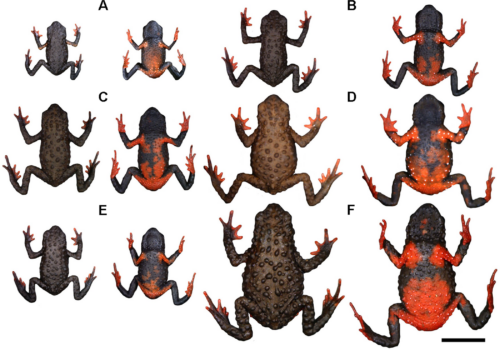
Subtle yet strikingly patterned, the Marbled Toad possesses an unmistakable appearance, guiding its nomenclature. Adults typically measure between 5 to 7 centimeters in length, placing them among relatively smaller to medium-sized Indian toads. Their robust bodies showcase a combination of intricate dark patterns, varying shades of brown, greyish-olive, and occasionally muted greens. This cryptic coloration provides remarkable camouflage against dry leaf litter, rocky substrates, and tree bark, enabling the toad to seamlessly vanish at the slightest hint of danger.
Characteristic warty skin texture, synonymous with most bufonid species, not only enhances their disguise but also facilitates moisture retention in their dry habitats. Widely set apart large eyes, crowned by slightly pronounced cranial crests, grant this toad unique facial characteristics supplemented by a blunt snout. Specialized glands present near the head, known as parotoid glands, can secrete mild toxins—an effective evolutionary defense mechanism deterring would-be predators.
Behavior and Life Cycle#
A Life of Quiet Vigilance#
Primarily nocturnal and highly secretive, the Marbled Toad spends daylight hours concealed in shaded spots beneath rocks, leaf layers, tree trunks, or within crevices of fallen logs. With the cool embrace of twilight, the toad emerges, embarking on methodical, deliberate forays in search of prey. Its diet predominantly consists of insects and other arthropods, efficiently captured using a sticky tongue swiftly projected at unsuspecting insects passing within striking range. Ants, beetles, spiders, and crickets comprise most of its menu, highlighting its crucial role in managing insect populations.
Annual Rhythms and Reproductive Rituals#
As the arrival of monsoon rains softens the parched earth, Marbled Toads awaken from periods of inactivity with an urgency driven by their intrinsic biological rhythm. This seasonal renewal triggers synchronized breeding events, where males congregate around shallow pools, seasonal streams, and rain-filled depressions, echoing rhythmic calls whose gentle yet persistent chorus fills the moistening nightscape. Females, responding to these beckoning calls, arrive to complete the breeding ritual, laying strings of gelatinous eggs within the safety of temporary pools.
Eggs swiftly hatch into tadpoles, which develop rapidly due to the ephemeral nature of the breeding grounds. Tadpoles thrive on algae and detritus, quickly maturing within a matter of weeks—an adaptation allowing them to survive in habitats vulnerable to rapid drying. Soon they metamorphose into miniature toadlets, exhibiting remarkable resourcefulness as they disperse, seeking sheltered locations conducive to their growth and survival.
Ecological Role and Significance#
Duttaphrynus hololius occupies a central place within its ecosystem, embodying the dual role of both predator and prey. By preying upon insects and other arthropods, the Marbled Toad significantly regulates populations of species recognized as pests, thereby contributing to ecological balance within its habitats. Simultaneously, its own vulnerability as prey to snakes, birds, and small mammals integrates it fully into the broader food web.
Moreover, its sensitivity to changes in habitat and water quality lends this humble amphibian notable status as an indicator species. Its presence or absence provides crucial signals regarding the health of its specific ecosystems, adding urgency and relevance to ongoing conservation monitoring.
Threats and Conservation Status#
Despite its adaptability to semi-arid conditions and moderate habitat disturbances, Duttaphrynus hololius is not impervious to external pressures. Rampant habitat loss caused by deforestation, agricultural expansions, and urban sprawl continues to fragment and degrade vital habitats. Increased usage of pesticides and agrochemicals further threatens its reproduction and survivability, given its amphibian sensitivity to environmental contaminants.
Currently listed as “Least Concern” by the IUCN Red List, the Marbled Toad nonetheless faces mounting ecological challenges that could drastically shift its conservation status if left unaddressed. Conservation initiatives focusing on ecosystem protection, responsible agricultural practices promoting reduced chemical use, and public education about this delicate balance are increasingly essential in safeguarding the survival of this remarkable species.
Cultural and Scientific Impact#
Throughout global cultures, amphibians have often symbolized fertility, regeneration, and ecological harmony. Although explicit traditional mention of Duttaphrynus hololius remains rare, indigenous communities often honor amphibians indirectly, respecting water sources, forest habitats, and associated wildlife as sacred. Scientifically, the Marbled Toad offers crucial insights into amphibian survival strategies in arid and semi-arid habitats, informing ecological resilience research vital in understanding climate change impacts and habitat adaptations.
Celebrating and Conserving India’s Marbled Jewel#
The Marbled Toad, Duttaphrynus hololius, quietly enriches India’s natural tapestry with its ecological roles, distinctive adaptations, and fascinating life cycle. While its colors blend harmoniously into its surroundings, its unique existence provides a nuanced yet profound commentary on ecological balance and interconnectedness. As guardians of the natural world, we hold the solemn duty to protect and preserve species like the Marbled Toad—to ensure they continue gracing the twilight forests with quiet but vital presence. Engage with conservation initiatives, advocate sustainable living, and cherish the marvels of biodiversity like this elusive amphibian. Together, we can preserve the integrity and wonder of habitats that sustain creatures large and small, seen and unseen alike.