- Introduction: Stepping into the World of Duttaphrynus cyphosus
- Taxonomy and Classification: Understanding Its Heritage
- Natural Habitat: Life amidst Misty Hills and Evergreen Forests
- Physical Characteristics: Art of Camouflage in a Changing Forest
- Behavior and Life Cycle: Nocturnal Symphony and Forest Charms
- Ecological Role: Guardians of Forest Balance
- Threats and Conservation Status: Fragile Lives Beneath Forest Canopies
- Cultural and Scientific Significance: Connecting People and the Environment
- Conclusion: Celebrating the Unseen and Advocating Conservation
Introduction: Stepping into the World of Duttaphrynus cyphosus#
Among the lush foliage and mist-shrouded valleys of India’s famed Western Ghats dwell a multitude of fascinating creatures, many uniquely adapted and largely unexplored. Hidden among them is a modest yet intriguing amphibian, Duttaphrynus cyphosus, commonly known as the Malabar Hill Toad or Nilgiri Toad. Despite its unassuming presence within dense forest leaf litter, this endemic species holds extraordinary secrets regarding the region’s ecological balance and health. First described scientifically in 1882, the Malabar Hill Toad remains mysterious, and its captivating tale offers a window into the vibrant tapestry of life within one of the world’s biodiversity hotspots.
With eyes glinting in moonlit undergrowth and skin intricately adorned to blend effortlessly with fallen leaves, Duttaphrynus cyphosus exemplifies nature’s subtle mastery. Let us journey deep into the heart of the Western Ghats to uncover the life, behaviors, and conservation story of this remarkable amphibian.
Taxonomy and Classification: Understanding Its Heritage#
The Malabar Hill Toad is scientifically classified within the family Bufonidae, a large taxonomic group encompassing what we commonly refer to as true toads. Specifically, Duttaphrynus cyphosus belongs to the genus Duttaphrynus—a genus native to South and Southeast Asia—and shares lineage with several close relatives, such as the Common Indian Toad (Duttaphrynus melanostictus). Its scientific journey began with its first description in the late 19th century by George Albert Boulenger, a prominent Belgian-British zoologist renowned for contributions to herpetological studies.
Studying its lineage unveils insights into the rich evolutionary history of amphibians in South Asia, underscoring how geographical isolation contributes to distinctive biodiversity—particularly along the wet, tropical ecosystems in India’s Ghats.
Natural Habitat: Life amidst Misty Hills and Evergreen Forests#
Duttaphrynus cyphosus occupies a specific and relatively narrow geographical range, endemic solely to the Western Ghats of southwestern India. This biodiversity hotspot stretches along the western peninsula of India, boasting lush forests, rivers, streams, hillocks, and valleys draped in mist for much of the year. Within this mosaic landscape, the Malabar Hill Toad primarily thrives within evergreen forests, moist deciduous woodlands, and subtropical montane forests at elevations typically ranging between 500 and 1,500 meters above sea level.
The amphibian is frequently discovered within the leaf litter and soft earth, near perennial streams and temporary freshwater pools created during the monsoon season. This precise choice of microhabitat—cool, shaded forest floors near running water—offers the ideal environment, maintaining humidity levels for hydration, breeding, and successful development of their young. Its reliance on pristine habitat underscores its sensitivity to ecological disturbances, making Duttaphrynus cyphosus an important indicator species for assessing the ecological health of the Western Ghats.
Physical Characteristics: Art of Camouflage in a Changing Forest#
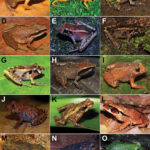
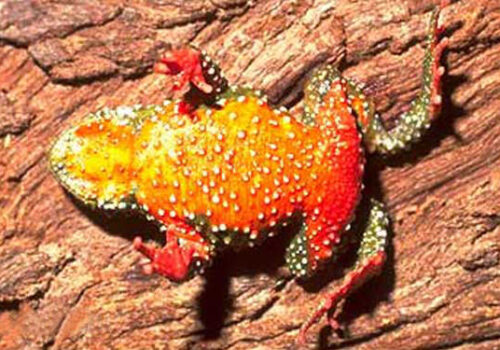
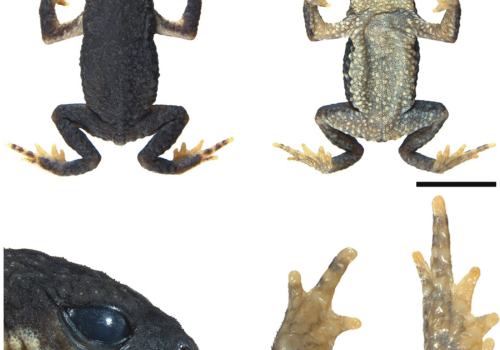
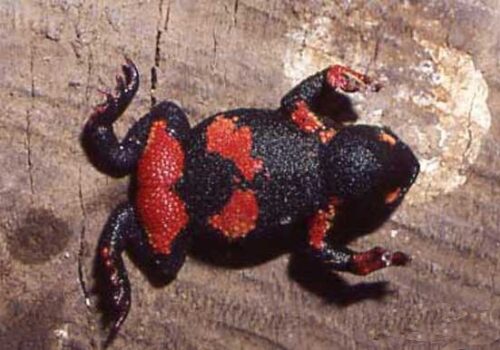
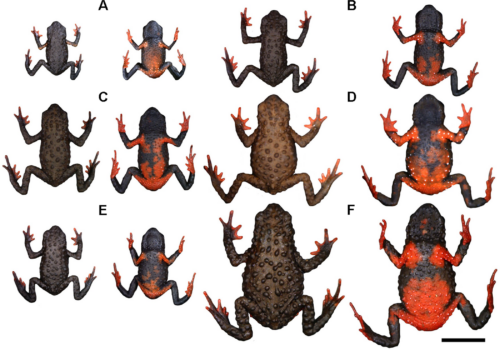
The Malabar Hill Toad is modestly sized, typically measuring between 4 and 6 centimeters from snout to vent. What immediately captures any observer’s attention, though subdued in palette, is its intricate patterning. Shades of olive, cocoa-brown, and rustic grays dance together across its rough-textured skin. These irregular markings render the toad impeccably camouflaged among forest leaves and bark, an adaptation intricately crafted by evolutionary pressures from predation and environmental factors.
Its eyes are large, expressive, and gold-tinted—perfectly suited to nighttime and low-light conditions, their elliptical pupils adeptly deciphering movement amidst discreet shadows. Noticeable wart-like glands along its back and behind the eyes, characteristic of true toads, secrete mild toxins—deterring predators from making a meal of it. While not a cause for concern to humans, this toxin proves vital to its survival in a forest teeming with potential predators like snakes, birds, and small mammals.
Behavior and Life Cycle: Nocturnal Symphony and Forest Charms#
Feeding Habits and Foraging Behavior#
As night cloaks the Western Ghats, the Malabar Hill Toad springs to life, driven by hunger and instinct. Its menu primarily consists of insects and other small invertebrates, capturing prey adeptly with a swift and precise flick of its sticky tongue. It patiently waits amidst leaf litter, utilizing its cryptic coloration as a superbly effective hunting strategy, ambushing unsuspecting prey that passes by.
Mating Calls and Breeding Rituals#
With monsoon rains draping the forests in verdant renewal from June to September, a chorus emerges in the night, marking the onset to mating rituals. Male Malabar Hill Toads vocalize persistently from temporary water pools or shallow forest streams, creating a medley of soft, high-pitched calls, gently echoing through humid forest glades. Females respond to these melodious invitations, guided by distinct acoustic patterns.
After courtship, females deposit gelatinous strings of eggs submerged beneath calm waters. Subsequently, the tadpoles emerge swiftly, well-adapted to dietary requirements available within their small aquatic world. Over the ensuing weeks, through nature’s wondrous metamorphosis, these tadpoles steadily transition into miniature replicas of their parents, venturing out to continue the cycle in surrounding forests.
Ecological Role: Guardians of Forest Balance#
Every creature, however small, fulfills crucial roles in maintaining ecological equilibrium, and Duttaphrynus cyphosus is no exception. As predators, the species helps regulate insect populations—controlling pests and indirectly benefiting forest vegetation and agriculture. Concurrently, as prey, it sustains higher trophic-level predators, including snakes, birds, and mammals, providing a vital food source that maintains the food web equilibrium.
Additionally, amphibians are renowned bioindicators, and the Malabar Hill Toad’s sensitivity to environmental change makes it valuable for scientists studying forest health, especially when assessing impacts of deforestation, climate change, and pollution. A vibrant population signifies a thriving habitat—making this toad not merely a resident species but a barometer for ecosystem wellness.
Threats and Conservation Status: Fragile Lives Beneath Forest Canopies#
Currently assessed by the International Union for Conservation of Nature (IUCN) as Least Concern, Duttaphrynus cyphosus nonetheless faces subtle yet mounting pressures. Its habitat, the Western Ghats, experiences significant anthropogenic threats, including deforestation driven by agriculture, tea plantations, road constructions, urbanization, and infrastructure development. Pollution of water resources and climate change further heighten vulnerability.
While not currently critically endangered, the fragmented habitats and rapid human expansion raise legitimate concerns about future sustainability. Conservationists strongly advocate for careful habitat monitoring, sustainable land use policies, education initiatives, and ongoing research to secure the longevity and thriving existence of this unique species.
Cultural and Scientific Significance: Connecting People and the Environment#
The Malabar Hill Toad symbolizes the rich biodiversity of India’s Western Ghats. Locally, amphibians are often steeped in folklore—perceived as harbingers of rainfall or signals of ecosystem health. The presence and prevalence of this species underscore the interconnectedness between culture, folklore, and forest ecosystems.
Scientifically, Duttaphrynus cyphosus provides insights into subjects ranging from evolutionary biology and ecology to climate sensitivity. Understanding their life histories, behaviors, and ecological roles continues to offer crucial clues toward broader ecosystem health management.
Conclusion: Celebrating the Unseen and Advocating Conservation#
The modest Malabar Hill Toad, Duttaphrynus cyphosus, exemplifies the understated beauty and ecological complexity hidden within the Western Ghats. Encouraging further research, sustainable practices, and increased ecological awareness ensures its protection and promise. Each one of us can contribute, through conscious efforts and increased awareness, towards safeguarding this exquisite tiny dweller of India’s lush forests and the biodiversity treasure they represent.
Let the subtle nighttime songs of the Malabar Hill Toad inspire us to champion the ecosystems upon which we all depend—a call to conservation echoed softly, yet persistently, throughout the mist-laden hills of the Western Ghats.