- Duttaphrynus Crocus: Secrets of the Golden Toad of Southeast Asia
- Taxonomy and Classification
- Natural Habitat and Geographic Distribution
- Physical Characteristics: The Golden Beauty of the Forest Floor
- Behavior and Life Cycle: Rhythms of Night and Rain
- Ecological Role: Guardians of Rainforest Health
- Threats and Conservation Status
- Cultural and Scientific Significance
- Conclusion: Preserving Nature’s Golden Treasure
Duttaphrynus Crocus: Secrets of the Golden Toad of Southeast Asia#
Nightfall unfolds slowly over the dense, humid forests of Southeast Asia. Beneath a lush tapestry of tropical vegetation, hidden within rivulets of fallen leaves and mossy logs dripping with moisture, a subtle yet melodious croak echoes gently through the night. The source? An enigmatic amphibian wearing a cloak of distinctive golden-yellow hues—Duttaphrynus crocus, the elegant yet elusive Golden Toad of Southeast Asia.
Relatively obscure in the eyes of the world beyond its rainforest home, this unique toad has carved out an important niche in the complex ecosystems of its habitat. Though lesser known than its vibrantly colored poison-dart cousins in South America or the iconic Red-Eyed Tree Frogs of Central America, the Golden Toad offers a compelling tale meriting equal admiration and conservation awareness.
Taxonomy and Classification#
Duttaphrynus crocus, commonly known as the Golden Toad, belongs to the family Bufonidae, a widely diverse group known for their rugged skin, stout bodies, and intriguing adaptability. Within its genus, Duttaphrynus, the species stands alongside closely related toads such as Duttaphrynus melanostictus (Common Asian Toad) and others distinctly adapted to various niches throughout Asia.
Initially described by scientists upon recognition of its distinctive coloration, the name “crocus” aptly derives from Latin, reflecting the remarkable saffron hue reminiscent of the bright floral petals it shares its name with. Although sharing similarities with other species in morphology and general habits, careful genetic analysis sets Duttaphrynus crocus apart, distinguishing it as a distinct species worthy of detailed study and protection.
Natural Habitat and Geographic Distribution#
The natural range of Duttaphrynus crocus predominantly spans parts of Southeast Asia, specifically distributed within lush, humid lowland forests and adjacent highland regions in countries such as Myanmar, Thailand, India’s northeastern states, and Bangladesh. Deeply dependent on pristine ecosystems, the Golden Toad thrives within undisturbed tropical habitats where its vivid colors harmonize inconspicuously with fallen leaves and worn-down rocks.
In these rain-shadowed expanses, the Golden Toad typically resides in shaded forest floors beneath dense canopies illuminated in gentle, filtered rays of sunlight. Leaf litter carpets the ground, moist and abundant, creating ideal microhabitats to shelter from daytime heat and predators. Frequenting slow-moving streams and shallow pools during their breeding seasons, these hidden pockets of freshwater become vibrant nurseries upon the arrival of monsoon rains.
The unique microclimates and nuanced availability of prey and protection contribute fundamentally to the toad’s habitat preferences. As human encroachment and climate fluctuations alter these delicate environments, the species becomes more vulnerable, highlighting the urgent necessity of habitat preservation.
Physical Characteristics: The Golden Beauty of the Forest Floor#
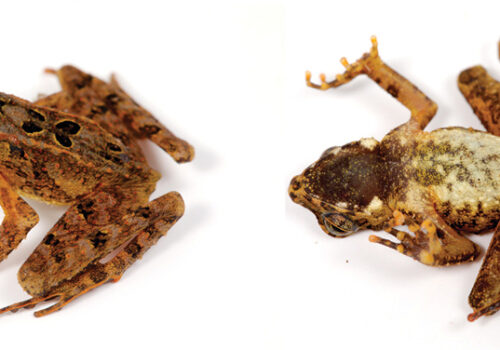
At first glance, the most striking feature of the Golden Toad is undoubtedly its brilliant saffron-yellow coloration, setting it apart from surrounding habitats in remarkable fashion. Adult individuals measure between 5 to 7 centimeters in length, their compact, sturdy build typical of many Bufonidae. The striking golden shade of their skin, punctuated with irregular dark brown or black spots across the dorsal surface, ensures precise camouflage amid dappled sunlight filtering through the dense foliage overhead.
Unlike the smooth skin often associated with tree-dwelling frogs, Duttaphrynus crocus is cloaked in warty skin filled with small, toxin-producing parotoid glands located just behind their eyes. Although not lethally poisonous to humans, these glands secrete mild toxins, primarily serving as effective deterrents against predators seeking a quick amphibian meal. These protective adaptations secure the toad’s continued survival amongst an array of rainforest predators.
Another notable characteristic includes prominent eyes with horizontally elliptical pupils, ideally adapted for low-light environments. Nighttime exploration rather than daytime activity suits their biology well, enabling the toads to evade predators and uncover preferred diets beneath the forest’s thick vegetation.
Behavior and Life Cycle: Rhythms of Night and Rain#
As twilight seamlessly transforms thick jungle shades into inky darkness, the Golden Toad emerges cautiously from daytime refuges. Nocturnal by nature, this reserved approach limits predation risks and provides prime opportunities to forage and reproduce unseen. Soft rustling movements alert attentive ears, revealing the presence of these elegant amphibians slowly maneuvering their territory in search of food.
Dietary Preferences and Hunting Strategies#
Duttaphrynus crocus subsists primarily on insects, arachnids, and various invertebrates abundant within their forested homes. Their tongues, rapid and precise, flick out swiftly to capture prey ranging from ants and beetles to spiders skittering across damp leaves. Opportunistic in practice yet selective in habit, the toad patiently waits, utilizing its cryptic coloration to blend seamlessly into leaf litter before striking with speed and accuracy.
The Seasonal Symphony of Breeding#
Life rhythms pivot dramatically with the onset of monsoon rains. The arrival of abundant moisture signals resident males to emerge from hiding, congregating around serene forest pools and slow-flowing rainforest streams, their guttural mating calls echoing softly into the humid night air. Each male ambitiously legislates a small section of water territory, diligently warding off rival suitors with vocal assaults and occasional physical scuffles.
Females descend toward these symphonic publics, responding selectively to suitable mating partners. During briefly intimate pairings (amplexus), eggs are carefully laid and fertilized in clutches numbering from hundreds to several thousand, densely packed into gelatinous strands submerged safely beneath aquatic vegetation. Tadpoles hatch soon after, quickly maturing in nutrient-rich waters before metamorphosing into miniature versions of adult toads, completing the remarkable life cycle of the Golden Toad.
Ecological Role: Guardians of Rainforest Health#
Amphibians, universally acknowledged as ecological indicators, notably apply to the case of Duttaphrynus crocus. Their presence signifies intact, healthy forests, indicating balanced populations of prey species, minimal pollution, and controlled predator-prey dynamics. Serving dual roles as both predator and prey, this notable amphibian directly influences insect populations, thus shaping forest dynamics from the bottom up.
Conversely, predators such as birds, larger reptiles, and mammals that inhabit the region depend on amphibians like the Golden Toad as critical dietary elements. By maintaining balance within intricate predator-prey cycles and contributing to nutrient cycling within forest ecosystems, Duttaphrynus crocus quietly fulfills a critical ecological role that underpins broader environmental health and stability.
Threats and Conservation Status#
As our impact upon ecosystems intensifies, the delicate equilibrium inhabited by the Golden Toad is increasingly disrupted. Rapid deforestation, agricultural encroachment, and pollution severely fragment viable habitats, driving alarming population declines. An additional growing threat arises from climate change—altered rainfall patterns disrupt the precise breeding rhythms the toad has finely evolved over millennia.
Currently classified by IUCN with a status of Data Deficient due to insufficient observational records and population data, precise conservation measures urgently depend upon comprehensive field studies and surveys. Local and international conservation organizations endeavor to preserve habitats critical for amphibian survival, highlighting efforts in environmental education, and initiating breeding programs to aid declining population recovery.
Cultural and Scientific Significance#
Although less storied in folklore compared to charismatic megafauna or vividly toxic amphibian counterparts elsewhere, Duttaphrynus crocus remains celebrated subtly within local communities across the landscapes it inhabits. Some indigenous ethnic groups historically associate golden-hued amphibians with prosperity, fertility, and environmental stability. Such cultural reverence indirectly contributes to habitat protection motivations.
From a scientific viewpoint, this species provides ongoing opportunities to explore amphibian biology, evolutionary adaptations, and ecosystem health assessments. As natural laboratories reflecting environmental integrity, Golden Toad habitats enable nuanced study, ultimately benefiting broader global conservation objectives.
Conclusion: Preserving Nature’s Golden Treasure#
Through gentle nocturnal choruses and intricately adaptive behaviors, the Golden Toad of Southeast Asia embodies the mysterious beauty and ecological complexity innate to pristine rainforest ecosystems. Its continued survival symbolizes broader ecological health, silently yet profoundly emphasizing our collective responsibility toward natural preservation.
Our increasing awareness, conservation actions, and heartfelt appreciation can ensure that this golden amphibian, a humble guardian of biodiversity, continues quietly and unwaveringly within its twilight world. We each bear a personal and collective duty—to cherish, understand, and protect the extraordinary gifts of the natural world, safeguarding the future of remarkable species like Duttaphrynus crocus.