- Duttaphrynus beddomii: Unveiling the Secrets of Beddome's Toad
- Taxonomy and Classification
- Natural Habitat: A Life Beneath the Canopy
- Physical Characteristics: Masterfully Adapted to Forest Life
- Fascinating Behaviors and Life Cycle
- Ecological Significance: Indicators of Forest Health
- Threats and Conservation Status
- Cultural Importance and Scientific Interest
- Conclusion: Advocates for Amphibians, Protectors of Biodiversity
Duttaphrynus beddomii: Unveiling the Secrets of Beddome’s Toad#
The forest floor pulses with life beneath a dense canopy, echoing the rhythmic symphony of insects, birds, and amphibians. Among them, blending seamlessly into the humid tapestry of the Southern Western Ghats in India, thrives an enigmatic amphibian: Duttaphrynus beddomii, affectionately known as Beddome’s Toad. Named in tribute to Richard Henry Beddome, a pioneering British naturalist who explored the rich biodiversity of southern India, this intriguing amphibian boasts both fascinating adaptations and curious behaviors, making it a delightful subject for study and observation.
Despite its inconspicuous nature, this modestly sized yet richly compelling toad plays a significant ecological role, and one cannot help but marvel at the evolutionary journey that shaped its unique niche in one of the world’s biodiversity hotspots. For those passionate about wildlife and conservation, understanding more about this elusive creature will shed light not only on the species itself, but also on the fragile state of the tropical ecosystems where it dwells.
Join us on this immersive journey deep into the world of Duttaphrynus beddomii, where science blends gracefully with storytelling to reveal the hidden wonders of the Western Ghats’ secretive amphibian resident.
Taxonomy and Classification#
Duttaphrynus beddomii belongs to the family Bufonidae—a diverse group commonly recognized as true toads. Within the genus Duttaphrynus, this species occupies a distinct evolutionary path shaped by millions of years of adaptation to particular ecological niches within southern India’s lush landscapes. The genus Duttaphrynus itself contains numerous species, each exhibiting specialized adaptations suitable to India’s varied ecosystems.
First described scientifically in 1876 by renowned herpetologist Albert Günther, Beddome’s Toad was named after Richard Henry Beddome, a celebrated naturalist whose diligent efforts in surveying and documenting India’s biodiversity significantly contributed to zoological knowledge during British colonial rule. Günther’s initial descriptions highlighted physical traits that still help researchers today—including its unique coloration, subtly disguised within leaf litter, and its diminutive stature.
Natural Habitat: A Life Beneath the Canopy#
To truly grasp the world of Duttaphrynus beddomii, one must journey into the biologically rich Western Ghats—the rolling chain of mountains and forests that form a humid cradle of life along India’s western coast. This biodiversity hotspot supports an abundance of unique species precisely adapted to the rainforest’s moist, sheltered environment—a delicate ecosystem susceptible to external disturbances yet brilliantly vibrant in its untouched state.
Geographic Range and Distribution#
The range of Duttaphrynus beddomii is relatively confined, restricted primarily to pockets of tropical evergreen forests in the southern stretch of the Western Ghats. It dwells within regions identified scientifically as Kerala, Tamil Nadu, and parts of southern Karnataka. Within these landscapes, the toad is neither abundant nor common; rather, careful observers find them discretely hidden beneath leaf litter or nestled among moist forest debris.
Preferred Habitats and Microhabitats#
Beddome’s Toad emerges most often at dusk or during periods of increased humidity, favoring the forest floor among decaying vegetation, fallen logs, and damp earth. Its elusiveness owes largely to its perfectly adapted camouflage—a strategic coloration that mimics shades of decayed leaves and soil. Melting seamlessly into the earthy carpet that lines evergreen forest floors, this retreat helps it evade predators and ambush prey, creating an almost ghostly presence revered by scientists and naturalists.
Through millions of years, it has evolved to thrive among the moisture-dependent surroundings, meaning the toad is particularly vulnerable to habitat changes that diminish canopy cover or reduce ground humidity. Consequently, its presence often signals the health and integrity of the forest itself.
Physical Characteristics: Masterfully Adapted to Forest Life#
Beddome’s Toad is a testament to the remarkable adaptability of amphibians, showcasing evolution at its finest. Adult specimens typically measure between 20 and 30 millimeters, placing them among smaller members of the true toad lineage. Their modest size allows easy concealment beneath fallen leaves, hidden away from a host of predators, from serpent to bird.
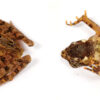
Interestingly, coloration varies considerably. Shades range from rich olive-brown to reddish-brown and rusty-orange hues—a palette strikingly similar to surroundings of fallen leaves or moist marcelling soil. Such cryptic coloration acts as their first line of protection, effectively blending them into their forest surroundings. Some toads exhibit subtle markings across their skin; random patches of darker pigmentation and variable textures reinforce disruptive camouflage.
Other physical features include characteristic parotoid glands—a defensive adaptation common among Bufonidae. These glands, positioned behind the eyes, secrete a substance that deters predators. Although not particularly dangerous to humans, predators consuming these toads experience irritation, thus learning quickly to avoid subsequent encounters.
Fascinating Behaviors and Life Cycle#
Uncovering details about the behaviors of this secretive amphibian requires patient observation. Despite limited prolonged studies, naturalists and researchers who have spent time perched quietly on damp forest floors have documented intriguing behaviors, including precisely calculated hunting methods and eloquent breeding calls.
Dietary Habits and Hunting Tactics#
Beddome’s Toad primarily preys upon small, ground-dwelling insects such as beetles, ants, termites, and other arthropods. Ambush tactics serve its natural instincts—remaining immobile among leaf litter until prey ventures close enough for a swift strike. Once within range, the toad seizes prey using rapid tongue movements, supported by keen vision adapted to spotting the slightest movements in dim forest floor lighting.
Breeding and Reproduction Cycle#
During monsoon season, intensified rainfall signposts the frogs’ breeding cycle. Sporadically, males begin a melodic chorus from hidden forest pools or ephemeral wetlands, calling softly to attract females. Eggs are laid in jelly-like strings within shallow pools or slow-moving water bodies. Tadpoles hatch swiftly, developing rapidly to remain synchronized with quick-drying pools. Upon metamorphosis, they leave the water to occupy terrestrial habitats, completing the cycle—a testament to evolutionary harmony with their seasonal environment.
Ecological Significance: Indicators of Forest Health#
In ecology, sensitive amphibians like Beddome’s Toad are vital indicators of environmental wellness. Their permeable skins readily absorb harmful pollutants or toxins present in their surroundings, rendering amphibians particularly susceptible to human-induced environmental changes. A thriving population of Beddome’s Toad symbolizes balanced ecological health within their habitat, making their conservation and monitoring invaluable.
This species also plays critical ecological roles—managing insect populations and acting as a key food source for higher predators, including snakes, birds, and small mammals, forming a delicate and interconnected web of life that sustains the rich biodiversity of the Western Ghats.
Threats and Conservation Status#
Beddome’s Toad faces multiple pressures derived from ongoing human activities, mindful of habitat degradation stemming primarily from deforestation, fragmentation, agricultural expansion, and pollution. Climate change further exacerbates threats, intensifying unpredictable weather patterns and altering rainfall regimes necessary for timely and suitable breeding events.
Presently, the International Union for Conservation of Nature (IUCN) classifies Duttaphrynus beddomii as a species of Least Concern, yet underlying threats remain undeniably present. Continued habitat loss, for example through tea and coffee plantations encroaching on natural forests, could escalate conservation priorities soon, illuminating the need for proactive intervention and monitoring.
Cultural Importance and Scientific Interest#
Although not culturally iconic as certain charismatic megafauna, Beddome’s Toad reflects the scientific heritage and biodiversity values of its region. Beddome himself was instrumental in documenting India’s unique wildlife, his legacy remaining embedded among conservationists and natural historians who continue this vital work today.
Conclusion: Advocates for Amphibians, Protectors of Biodiversity#
Through the tale of Duttaphrynus beddomii, we glimpse a broader narrative: a multitude of life intricately woven into India’s vibrant forests, delicately balanced yet increasingly fragile. Befriending and cherishing such overlooked creatures awakens us to the profound beauty, resilience, and vulnerability of amphibians, inspiring renewed conservation engagement and stewardship.
By embracing deeper awareness and advocating for sustainable practices, each one of us can support vital habitats that continue to nurture unique species such as Beddome’s Toad. Let us recognize our shared responsibility to preserve and celebrate the quiet voices amid our planet’s chorus—the chorus where Duttaphrynus beddomii softly sings its hidden song.