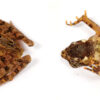
- Dendrophryniscus stawiarskyi: Discovering the Enigmatic Toad of Brazil's Atlantic Rainforest
- Taxonomy and Classification: Understanding Its Place in Nature
- The Rainforest Realm: Natural Habitat and Distribution
- Physical Features and Adaptations: Survival through Camouflage and Grace
- Behavioral Insights: The Secret World of Stawiarsky’s Tree Toad
- Ecological Significance: The Crucial Importance of Small Creatures
- Threats and Conservation: Protecting a Vulnerable Amphibian Wonder
- Cultural and Scientific Importance: Underscoring Nature’s Intricate Network
- Conclusion: A Call to Preserve Nature’s Hidden Wonders
Dendrophryniscus stawiarskyi: Discovering the Enigmatic Toad of Brazil’s Atlantic Rainforest#
Beneath the emerald canopy of Brazil’s lush Atlantic rainforest, hidden among leaf litter and moss-covered roots, lives a small yet mesmerizing creature whose name alone invokes curiosity and wonder—Dendrophryniscus stawiarskyi. Though you may never have encountered its name before, its story is one deeply intertwined with the very fabric of rainforest ecology and conservation.
Commonly referred to as Stawiarsky’s tree toad, Dendrophryniscus stawiarskyi wears the earthy colors of its habitat, masterfully blending into the undergrowth. But appearances deceive—this diminutive amphibian has far more significance and complexity than first meets the eye. Beyond the intrigue of its cryptic camouflage lies a story of precarious survival, sophisticated adaptations, and ecological interconnectedness. Follow along as we journey into the misty depths of this unique frog’s world.
Taxonomy and Classification: Understanding Its Place in Nature#
Taxonomy is more than scientific jargon; it’s a map of identity, connections, and evolution. For Dendrophryniscus stawiarskyi, its classification reveals fascinating details about its evolutionary journey and ecological role. Placed within the family Bufonidae—commonly known as true toads—this extraordinary species is part of the genus Dendrophryniscus, a small, specialized group of rainforest-adapted toads known for their arboreal tendencies and unusual behaviors.
The genus name “Dendrophryniscus” translates roughly to “little tree toad,” highlighting the unique adaptations these creatures possess for life above ground level. Closely related species, such as Dendrophryniscus brevipollicatus and Dendrophryniscus minutus, share similar habitats, showcasing fascinating evolutionary adaptations enabling life in Brazil’s dense forest ecosystems. Each species, however, serves a subtly different role, with unique behaviors, sounds, and ecological niches. Stawiarsky’s tree toad is particularly compelling for its relative rarity and specialized habitat preferences.
The Rainforest Realm: Natural Habitat and Distribution#
The shimmering coastal belt of the Atlantic rainforest—a globally recognized biodiversity hotspot—is a realm of almost endless adaptation and ecological complexity. Here, beneath cascades of verdant vegetation and towering trees draped in orchids, bromeliads, and mosses, Dendrophryniscus stawiarskyi finds its optimal habitat. Endemic to Brazil, this specific frog species has been recorded primarily from the state of Paraná, inhabiting montane and subtropical forests.
Unlike more widely familiar rainforest amphibians, this frog is not easily spotted near broad rivers or ponds. Instead, it thrives in wet microhabitats such as damp leaf litter, moss-covered logs, and beneath dripping, shaded forest foliage. Moisture and shade are crucial; these conditions maintain the humidity necessary for their sensitive skin and reproductive needs. Because of this specialized habitat preference, even subtle ecological disturbances can dramatically affect their delicate populations.
Stawiarsky’s tree toads act as highly sensitive ecological barometers, helping conservationists monitor environmental health and changes in moisture balance caused by factors such as climate change, deforestation, and habitat fragmentation.
Physical Features and Adaptations: Survival through Camouflage and Grace#
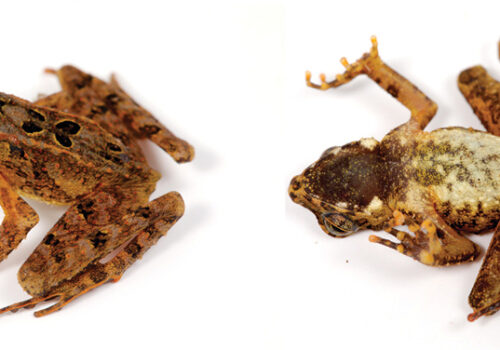
At first glance, Dendrophryniscus stawiarskyi may seem understated. Measuring just about two centimeters in length, they are easily overlooked, purposefully so. Nature has endowed these creatures with a blend of subtle colours—rich browns, gentle greens, and occasional splashes of orange and bronze—which meld seamlessly with rainforest floor debris. This camouflage serves as their first line of defense against predators such as birds, snakes, and small mammals.
A closer inspection reveals remarkable adaptations. Their skin is slightly granular, adorned with tiny bumps that mimic the texture of decomposing leaves and soil. Large, expressive eyes enable them to detect predators and potential prey in dimly lit, shadow-followed niches. The digits of their feet, complete with small pads, improve grip as they navigate uneven terrain and occasional low branches.
Such meticulous evolutionary detail is critical to their survival in the rainforest understory, upholding nature’s principle that even the smallest creatures employ perfectly tuned ecological adaptations.
Behavioral Insights: The Secret World of Stawiarsky’s Tree Toad#
Feeding Habits and Diet#
Deep within Brazil’s humid undergrowth, tiny hunters prowl quietly, waiting with patience and precision. Dendrophryniscus stawiarskyi sustains itself primarily on small arthropods, insects, and micro-invertebrates active among leaf litter. Equipped with a swift and sticky tongue, these unassuming amphibians catch swift prey, feeding predominately in moments of twilight and low visibility. Their diet reflects their position in the forest ecosystem, naturally regulating insect populations, thus helping maintain the balance vital to rainforest health.
Breeding and Reproduction#
The breeding behaviors of this tiny toad reveal nuances uniquely adapted for rainforest conditions. Their melodic yet faint vocalizations—a soft and rhythmic trill—punctuate the rainforest, especially during rainy seasons. Male frogs emit calls from sheltered perches, signaling females and carefully guarding small territories hidden beneath fallen logs, roots, and leaves. When mating occurs, females deposit their jelly-like clutch of eggs in small pools or rain-soaked depressions within leaf litter.
Tadpoles develop rapidly—an adaptation suited perfectly to the ephemeral nature of shallow depressions. They metamorphose quickly, necessary for survival in an environment where standing water recedes swiftly after rains. The life cycle, from egg to juvenile froglet, reportedly takes weeks to a few months, depending greatly on seasonal rainfall, food availability, and ambient temperature.
Ecological Significance: The Crucial Importance of Small Creatures#
Amid lush tropical landscapes filled with charismatic fauna such as jaguars, toucans, and monkeys, it might seem small frogs could easily be overlooked. Yet, they play utterly crucial roles. Stawiarsky’s tree toads maintain the delicate balance of forest insect populations and conversely serve as prey for predators higher up—in essence, their presence signals and maintains the overall biodiversity and structural integrity of their habitat.
As sensitive bio-indicators, their health and population numbers closely track broader environmental well-being. Any decline or sudden population change offers scientists valuable early-warning indicators suggesting environmental disruptions such as heightened pollution, climate shifts, or habitat disturbance.
Threats and Conservation: Protecting a Vulnerable Amphibian Wonder#
Despite their captivating behavior and impressive adaptations, Stawiarsky’s tree toads face severe and urgent threats. Habitat destruction via deforestation, driven primarily by timber harvesting, agriculture, and urban expansion, places immense pressure on the fragile microhabitats needed for their survival.
Climate change is compounding habitat loss pressures, shifting rainfall patterns and threatening to permanently alter the delicate moisture balances these amphibians rely upon. Disease too, notably chytrid fungus infecting amphibians globally, could threaten their limited populations. Presently, Dendrophryniscus stawiarskyi is listed on the IUCN Red List as Data Deficient, emphasizing how critical more detailed ecological studies and surveys are for informed conservation action.
Fortunately, conservationists tirelessly work to understand their status better, protect habitats, and raise awareness about the intricate ecological webs sustaining these amazing creatures. Community-based efforts, environmental education, protected area creation, and targeted conservation projects thus represent essential strategies we must adopt with urgency.
Cultural and Scientific Importance: Underscoring Nature’s Intricate Network#
Throughout Brazilian cultural history, amphibians frequently symbolize rain, regeneration, and prosperity. More recently, the global scientific community increasingly acknowledges the importance of obscure frog species like Dendrophryniscus stawiarskyi in medical and ecological research, recognizing that untapped potential remains locked in studying their behaviors, chemical defenses, and remarkable adaptation mechanisms.
These small, cryptic creatures contain within their existence secrets still unrevealed—potential breakthroughs in biochemistry, conservation science, or environmental monitoring that urgently call for greater exploration and protection.
Conclusion: A Call to Preserve Nature’s Hidden Wonders#
Dendrophryniscus stawiarskyi may remain hidden in the shadowed leaf litter of Brazil’s rainforests, out of sight from most humans. Yet the significance of these tiny frogs transcends their humble appearances. Let their story inspire reverence for biodiversity’s complexity—every organism, however small or obscure, plays profound ecological and scientific roles. To protect them, we must amplify awareness and engage in meaningful conservation actions, ensuring this enchanting toad continues its quiet yet vital existence in the heart of the Atlantic Rainforest.