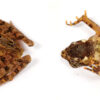
- Introduction: Meet the Enigmatic Dendrophryniscus skuki
- Taxonomy and Classification
- Natural Habitat: A Tiny World Beneath the Forest Canopy
- Physical Characteristics: Tiny Jewel of the Forest Floor
- Behavior and Life Cycle: A Silent Symphony in the Dampness
- Ecological Role: Small Species, Big Impact
- Threats and Conservation Status: Fragile Existence on the Edge
- Cultural and Scientific Significance
- Conclusion: Protecting a Rare Treasure and Its Forest Home
Introduction: Meet the Enigmatic Dendrophryniscus skuki#
Hidden deep within the lush and humid Atlantic Forest of Brazil lives a small and intriguing amphibian, barely known outside specialist circles. This toad, known scientifically as Dendrophryniscus skuki, is a creature of mystery, beauty, and ecological significance. First described only recently in comparison to other amphibians, this elusive species exemplifies the remarkable biodiversity harbored within these ancient rainforests.
Despite its diminutive size and secretive nature, Dendrophryniscus skuki has received increasing scientific attention, serving as an important indicator of habitat health, biodiversity, and the overall resilience of rainforest ecosystems. Yet, away from strict research articles, very little narrative has emerged about the day-to-day existence and fascinating life strategies this tiny toad employs to survive in a competitive natural world.
Taxonomy and Classification#
Belonging to the family Bufonidae, which includes true toads, Dendrophryniscus skuki shares lineage with various species adapted to diverse life strategies across the world. Within this broad family, this distinct amphibian occupies the genus Dendrophryniscus, known specifically for small, brightly colored frogs adapted to moist, dense forest environments.
The genus name Dendrophryniscus hints at their ecological preference—originating from Greek roots meaning “tree” (dendro) and “little toad” (phrynisco). Although the species tends to inhabit leaf litter and forest substrates, its arboreally influenced naming speaks volumes of its habitat proximity to densely vegetated areas with complex microclimates. Closely related species, such as Dendrophryniscus brevipollicatus and Dendrophryniscus carvalhoi, share many behavioral and ecological characteristics, reinforcing their collective role as critical, yet often overlooked, forest inhabitants.
Natural Habitat: A Tiny World Beneath the Forest Canopy#
Dendrophryniscus skuki is endemic exclusively to Brazil’s lush Atlantic Forest biome, particularly confined to specific regions within the states of Bahia and Minas Gerais. Scientists have documented sightings primarily in pristine or near-pristine forest areas, characterized by dense shade, high humidity, and a mosaic of moss-covered trees, tangled creepers, fallen logs, and trickling forest streams.
The habitat preference of D. skuki is clearly defined by strict ecological needs. Preferring damp leaf litter on shaded forest floors, the species thrives in microhabitats where moisture levels remain consistently high throughout the year. Beneath towering hardwood trees and layers of canopy that often block out most direct sunlight, the humidity nurtured by frequent rainfall and heavy dew offers prime environmental conditions indispensable for the toad’s physiological well-being.
Within this shaded ecosystem, D. skuki moves elegantly, navigating a labyrinth of fallen branches, verdant moss patches, and decaying organic matter, to forage, breed, and nurture its offspring. Each tiny movement of this amphibian represents an essential dance with its environmental backdrop, an interaction honed through millennia to ensure survival in an ever-changing world.
Physical Characteristics: Tiny Jewel of the Forest Floor#
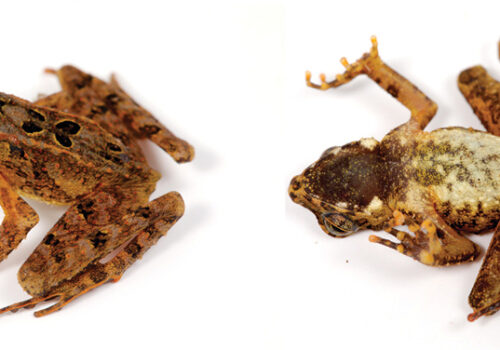
At first glance, Dendrophryniscus skuki may be overlooked due to its modest size—typically measuring no more than 15 to 20 millimeters from snout to vent. But closer inspection reveals a delicate beauty. A rich mosaic of shades, their skin displays vibrant yet cryptically patterned hues, adorned in varying combinations of rich brown, dark green, muted yellows, and occasionally splashes of rusty red. This coloration is essential, allowing efficient camouflage against the forest litter’s heterogeneous backdrop.
The body shape of this species is proportionally distinctive. Its slender limbs end in delicate digits adeptly designed for grasping slippery substrates and adhering to damp foliage. Their heads are flat and triangular, providing aerodynamics and maneuverability as they leap efficiently through densely vegetated forest layers. Another noticeable trait is the subtle but distinct granular texture of their skin—a trait linked to moisture regulation and protection from various microbial threats abundant within humid environments.
Behavior and Life Cycle: A Silent Symphony in the Dampness#
Feeding Strategies and Habits#
The dietary preferences of Dendrophryniscus skuki remain fascinatingly diverse, incorporating countless tiny invertebrates that flourish in moist leaf litter. Ants, mites, springtails, and various other minute arthropods constitute key nutritional sources. The amphibian hunts primarily through ambush predation, leveraging its camouflaged appearance to position itself strategically within heavily trafficked trails created by smaller forest insects. Silent and patient, it waits until prey ventures close enough, striking swiftly with its sticky, agile tongue.
Reproduction and Breeding Patterns#
Little is known extensively about the mating rituals of D. skuki, yet the species displays breeding behaviors typical of forest floor-dwelling amphibians. Breeding occurs in association with temporary water pools or water-filled tree holes, generally formed from rain events. Male vocalizations, subtle but melodically rhythmic, help attract potential mates. Eggs are laid discreetly, often placed strategically amidst moist substrate or within these temporary aqueous nurseries, their development timed perfectly with seasonal rains.
Tadpoles emerge soon after, delicately equipped to survive temporary habitats that may shift drastically due to weather conditions. Remarkably equipped with fast growth rates and a rapid metamorphosis timetable, the tadpole stage is brief, allowing young frogs promptly adapt terrestrial habits beneficial to long-term survival amid fluctuating water availability.
Ecological Role: Small Species, Big Impact#
Though diminutive, Dendrophryniscus skuki performs essential ecological roles. Due to its particular sensitivity to habitat changes, this species acts as a reliable indicator species, signifying ecosystem health. Reduced sightings or declining numbers often signal environmental disturbances, including altered precipitation patterns, loss of vegetation cover, and pesticide contamination—alerting biologists and conservationists to broader concerns facing the region’s biodiversity.
As both predator and prey, this toad forms integral connections between trophic levels. While controlling insect populations, it itself becomes food for various smaller snakes, birds, and larger invertebrates, functioning as a critical link within the complex forest food web.
Threats and Conservation Status: Fragile Existence on the Edge#
Currently, limited data is available specifically identifying detailed threat assessments for this recently described species. Still, like many Atlantic Forest amphibians, habitat destruction poses a significant risk. Agricultural expansion, logging, road construction, and urban development have fragmented once contiguous forest stretches, isolating populations, reducing genetic diversity, and increasing vulnerability to disease.
Climate change compounds these concerns. Given the species’ dependence on moisture stability, shifts in precipitation patterns, and rising temperatures threaten to disrupt reproductive timing and reduce adult survival.
Despite these apparent threats, the species has yet to be thoroughly assessed by the International Union for Conservation of Nature (IUCN). Because they reside primarily in protected reserves where habitat conservation measures exist, a hopeful scenario still emerges—that increased awareness, research, and conservation action might fortify their future.
Cultural and Scientific Significance#
Beyond their ecological roles, species like D. skuki significantly enrich humanity’s understanding of biodiversity itself. To scientists, they represent evolutionary stories utterly unique to Brazil’s rainforest environment, holding significant potential for medical research—particularly studying amphibian toxins and skin peptides that might inspire critical biomedical discoveries.
Conclusion: Protecting a Rare Treasure and Its Forest Home#
As we journey together through the luxurious depths of Brazil’s Atlantic Forest, discovering the enigmatic life of Dendrophryniscus skuki, we glimpse a broader truth. This tiny gem of a toad symbolizes how deeply intertwined our lives remain with Earth’s fragile biodiversity. Ensuring the survival of such remarkable amphibians demands awareness, education, and active conservation partnerships.
Let the fascination sparked by the hidden, humble toad Dendrophryniscus skuki awaken within you a deeper appreciation and an urgent conviction—to advocate boldly for ecosystems rich with irreplaceable life.