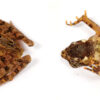
Dendrophryniscus Organensis: The Hidden Jewel of Brazil’s Atlantic Forest#
Nestled within the misty foothills of Brazil’s Serra dos Órgãos mountain range, a small yet captivating inhabitant lives in quiet obscurity. Known to science as Dendrophryniscus organensis, this enchanting little frog is as endearing as it is elusive. Beneath a dense canopy of emerald leaves, among damp leaf litter and moss-covered tree roots, it thrives largely unseen. With its vibrant coloration and secretive life, D. organensis holds the power to charm every nature enthusiast lucky enough to encounter it in the wild.
A native jewel of Brazil’s biodiverse Atlantic Forest ecosystem, D. organensis not only captures the imagination but exemplifies the richness, mystery, and fragility of one of Earth’s most vital ecosystems. Its conservation story beckons us to listen, to care, and ultimately to preserve the delicate balance that nature so painstakingly maintains. Let’s explore the life, habits, threats, and the essential role of this remarkable creature.
Taxonomy and Classification#
Dendrophryniscus organensis belongs to the family Bufonidae, known commonly as true toads. Within this family, it is placed specifically within the genus Dendrophryniscus, a group of miniature, colorful toads uniquely adapted to life in humid, montane environments of the South American forests. Described scientifically in 1956 by renowned herpetologist Bertha Lutz, this species was named in tribute to its distinctive habitat, Brazil’s Serra dos Órgãos—translating literally to “Range of the Organs,” a nod to the towering, pipe-organ-shaped peaks characterizing its home.
Closely related species share similar ecological niches, exhibiting vivid patterns and small statures; nonetheless, each species in this genus is distinguished largely by localization, coloration nuances, and unique call patterns. D. organensis, warmly referred to among naturalists as the Organ Mountains Toadlet, exemplifies how even small creatures can reveal profound truths about biodiversity and ecological resilience.
Natural Habitat#
A Mountainous Refuge: Serra dos Órgãos#
The spectacular Serra dos Órgãos National Park, stretching across areas near Rio de Janeiro, hosts densely occupied stands of Atlantic forests, lush tropical ecosystems interwoven with crystal-clear streams, secluded waterfalls, and expansive canopies. Here, in altitudes ranging typically between 800 and 1500 meters, D. organensis finds its ideal environment.
These cool, damp forests feature an inherent moisture critical for amphibian species requiring constant skin hydration. The perpetual mist present year-round provides the perfect backdrop for mosses, fungi, and a biodiversity boom that enables ecological balance. The species thrives specifically on shaded forest floors with thick leaf litter, dominating in damp, humid spots sheltered from direct sunlight and harsh environmental factors.
The intertwining roots, leaf litter, and moss of forest floors cradle this frog among their folds, offering camouflage from predators. This secretive lifestyle is an evolutionary masterpiece, allowing D. organensis to elude common predators and live a safer, more discreet existence.
Physical Characteristics#
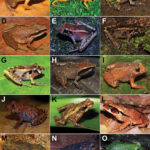
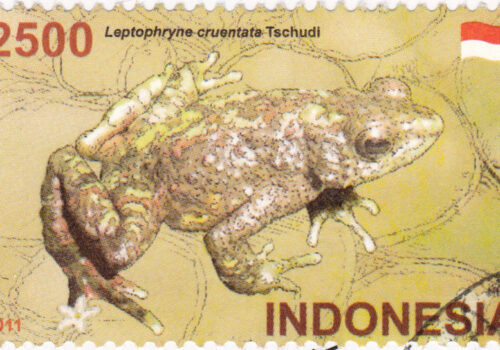
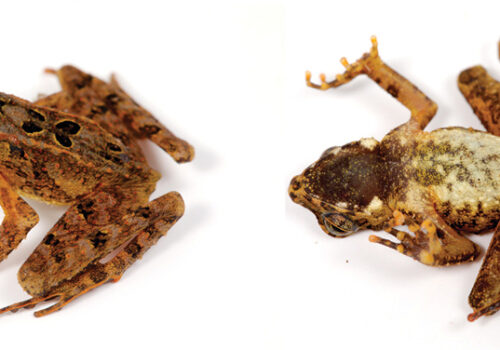
At a mere 2 to 3 centimeters in length, Dendrophryniscus organensis exemplifies beauty in miniature. Its diminutive size grants it advantages within its microhabitat: seamlessly hiding under fallen leaves, inside bark crevices, or nestled beneath forest-floor debris. Indeed, its small frame belies its charm—any naturalist lucky enough might marvel at its striking yet subtle coloration.
The species exhibits an alluring and varied color palette, predominantly reddish-brown, deep orange, or bronze. Delicate yet distinct markings often adorn the toad’s back and limbs, subtly blending into forest floor hues, while its ventral surface reveals lighter shades ranging from shades of pale yellow to creamy whites.
Aside from aesthetics, these colors serve vital ecological functions. Subdued earth-tones effectively camouflage individuals from birds and predatory arthropods, allowing for stealthy movement to hunt and avoid becoming prey themselves. The species’ skin texture, typically smooth with faintly granular areas, retains moisture efficiently, a necessary adaptation for survival during drier periods.
Behavior and Life Cycle#
The Quiet Predator of the Leaf Litter#
D. organensis spends much of its life hidden beneath leaf litter and wet logs, rarely emerging to open spaces. A patient predator, it nourishes itself primarily on the abundant microfauna dwelling within its damp micro-ecosystem. Ants, termites, mites, and occasionally small beetles constitute its favored menu, drawn swiftly into their mouths with a skilled, darting calculated strike of the tongue.
Observations suggest that this species shows greatest activity during twilight hours or when rainfall invigorates their leafy habitats. Rainfall itself signals a time of increased prey activity and moisture conditions ideal for hunting, socializing, and, crucially, reproduction.
A Delicate Dance: Reproduction and Development#
During wetter months primarily from October through March, male D. organensis frogs produce soft trills that harmonize humbly within forest’s ambient soundtrack. Unlike louder, lowland species that advertise far and wide, this mountain dweller emits subtle mating calls designed for close-range communication within densely wooded environments.
Females respond cautiously, assessing and choosing mates strategically based on vocal intricacy and physical robustness—traits indicative of health and genetic strength. After careful mating rituals, clusters of transparent, gelatinous eggs appear adhered discreetly beneath moist leaves or in small, shallow pools collected near tree roots and low plants.
The ensuing tadpoles, modestly sized themselves and adapted for rapid developmental periods in temporary waters, metamorphose within weeks into terrestrial juveniles. These tiny amphibians immediately blend seamlessly into the adult population, perpetuating generation after generation of skillfully adapted forest specialists.
Ecological Role#
Dendrophryniscus organensis provides an essential ecological function within the Atlantic Forest ecosystem. As insectivores, these toads effectively regulate populations of small invertebrates, providing balance in the microhabitats they inhabit. Simultaneously, they serve an integral role in the food web, providing nutrition for various birds, large arthropods, small snakes, and mammals.
Moreover, frogs and toads, including D. organensis, are valuable bioindicators whose population health can provide broader insights into environmental stability. Any decline in amphibian numbers often signals detrimental changes in local ecosystems—a canary in the coal mine alerting conservationists to unseen threats such as emerging diseases, pollution, or climatic shifts.
Threats and Conservation Status#
Despite its seeming obscurity, D. organensis faces tangible, significant threats. Rampant deforestation for coffee plantations, urban developments, logging, and expanding roads has severely fragmented the Atlantic Forest. Climate change, too, threatens to shift temperature and rainfall patterns crucial for larval development and adult survival. Additionally, emerging amphibian diseases, notably chytridiomycosis, present increasingly concerning threats.
The International Union for Conservation of Nature (IUCN) currently categorizes the species as “Data Deficient,” reflecting a need for exhaustive population studies and comprehensive ecological research to assess true conservation urgency.
Fortunately, local Brazilian preservation efforts within Serra dos Órgãos National Park provide critical habitat protection. Dedicated researchers and conservation NGOs strive to track populations, identify threats, and propose essential conservation strategies, urging community involvement and environmental education as keystones in comprehensive protection plans.
Cultural and Scientific Significance#
Although culturally less prominent than charismatic megafauna, Dendrophryniscus organensis symbolizes the irreplaceable richness and fragility of tropical biodiversity. Scientifically, this species contributes substantially as a model for studying amphibian biology, adaptation, and climate vulnerability.
Its presence sparks fascination among naturalists and students alike, providing a focal point for exploration into tropical ecology, biodiversity studies, and conservation education. Indeed, studying amphibians like D. organensis aids humanity’s broader understanding of ecosystems’ inner workings and the intimate connections binding species together.
Conclusion#
Dendrophryniscus organensis is more than a small amphibian hidden in Brazil’s misty mountains—it’s a testament to nature’s incredible adaptability, a living indicator of ecological health, and a vibrant jewel to protect. Its humble existence teaches us invaluable lessons about ecosystems’ interconnection, biodiversity’s inherent worth, and humanity’s deep responsibility for safeguarding our shared natural treasure.
By exploring and understanding the Organ Mountains Toadlet’s story, we can inspire renewed passion, learning, and most importantly, action. Let us embrace this opportunity to champion wildlife conservation, celebrate biodiversity, and ensure a thriving future for Dendrophryniscus organensis and its forested home.