- Dendrophryniscus izecksohni: The Hidden Gem of Brazil's Atlantic Rainforest
- Taxonomy and Classification
- Natural Habitat: Life Amidst the Misty Forest
- Physical Characteristics: A Jewel of Colors and Adaptations
- Behavior and Life Cycle: Silent Survivors of the Wet Wilderness
- Ecological Role: Guardians of the Forest Floor
- Threats and Conservation Status: Fragile Life Hanging in the Balance
- Cultural and Scientific Significance
- Conclusion: Celebrating and Protecting Rainforest Treasures
Dendrophryniscus izecksohni: The Hidden Gem of Brazil’s Atlantic Rainforest#
Deep within Brazil’s lush Atlantic Rainforest cloud forests, nestled among moss-laden trunks and concealed beneath vibrant leaf litter, dwells a tiny yet remarkable creature—a frog that often escapes even the keen eye of ardent naturalists. Known scientifically as Dendrophryniscus izecksohni, or popularly referred to as Izecksohn’s tree toad, this minute amphibian exemplifies the rich biodiversity and ecological significance hidden within one of the world’s most celebrated yet threatened biomes. Despite its diminutive stature, this species captivates researchers with its vibrant intricacies and the critical ecological niche it occupies.
Named after acclaimed Brazilian herpetologist Eugênio Izecksohn, who dedicated his life to uncovering the mysteries of amphibian diversity, Dendrophryniscus izecksohni represents not only a living tribute but also serves as a poignant reminder of how much remains to be learned—and protected—in South America’s rapidly vanishing forests. Its discovery was relatively recent, underscoring the countless undiscovered or poorly understood species still lurking quietly in biodiversity hotspots like the Brazilian coastal forests.
Taxonomy and Classification#
As a member of the cosmopolitan Amphibia class, Dendrophryniscus izecksohni belongs to the order Anura, encompassing frogs and toads worldwide. Within Anura, it finds its home in the Bufonidae family, widely recognized for their terrestrial habits and characteristically glandular skin. More specifically, this species is placed neatly within the genus Dendrophryniscus, a collection of diminutive, often colorful toads, primarily known to inhabit damp forested habitats across South America.
First recognized by scientists as recently as 1994, Dendrophryniscus izecksohni quickly emerged as unique among its relatives due to its specific habitat preferences, coloration patterns, and behaviors. Closely related species include Dendrophryniscus brevipollicatus and Dendrophryniscus minutus, yet subtle morphological and genetic variations set D. izecksohni distinctly apart.
Natural Habitat: Life Amidst the Misty Forest#
The Atlantic Forest, an ecosystem renowned globally for biodiversity, sets the stage for Dendrophryniscus izecksohni‘s fragile dance of existence. Restricted in distribution predominantly to southeastern Brazil, this species’ known range is highly localized within Rio de Janeiro and adjacent states. The presence of such specialized creatures marks the rainforest’s health and intricacy while simultaneously highlighting vulnerabilities linked to habitat fragmentation and continued logging pressures.
Preferring higher altitude cloud forests, often between elevations of 800–1200 meters, these miniature amphibians thrive amidst dense vegetation, thick moss carpeting rocks and trunks, and perpetually wet conditions provided by persistent mists and rain clouds. Moisture is an absolute necessity for this species, facilitating essential skin respiration and reproduction activities. These toads frequently take refuge among leaf litter, under fallen logs, or embedded within crevices at tree bases, their brilliant coloration camouflaged amid the intense greens, browns, and miniature microcosms adorning cloud-blanketed hillsides.
Physical Characteristics: A Jewel of Colors and Adaptations#
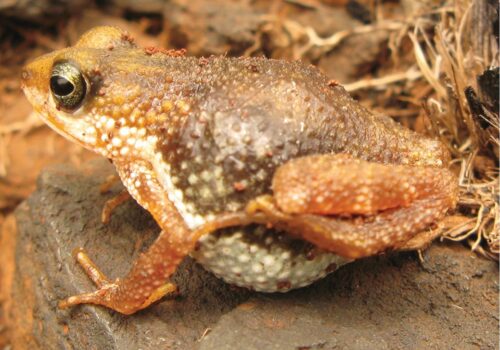
Measuring scarcely more than two centimeters in length, Dendrophryniscus izecksohni is among the smallest toads inhabiting the Brazilian rainforest, yet it boasts an unparalleled visual appeal. Its tiny frame exhibits a dazzling display of vibrant colors, blending deep blacks with splashes of bright yellows, oranges, and reds—often arranged in fascinating patterns that differ slightly between individual toads.
Such vivid coloration serves as a vital evolutionary adaptation. Known as aposematic coloration, these bright hues provide distinct warnings to potential predators about the toxic alkaloids harbored in glands beneath their warty skin. When threatened, the toad can secrete these potent chemical defenses to discourage predation, thereby reinforcing the vital ecological balance of predator-prey interactions within its rainforest home.
Behavior and Life Cycle: Silent Survivors of the Wet Wilderness#
Unlike many other frogs and toads, Dendrophryniscus izecksohni rarely engages in loud choruses or dramatic mating displays. Instead, these diminutive frogs adopt quiet, elusive habits, communicating subtly through gentle chirping calls and silent postures. Typically nocturnal, they emerge cautiously as dusk envelops the rainforest in humid darkness, foraging stealthily amongst leaf litter and decaying vegetation for their diet of tiny invertebrates, predominantly small insects, mites, and springtails.
Mating and Life Cycle#
Seasonal rainfall dictates much of their reproductive timing and behavior. Following reflections of the first heavy rains after the dry season, males seek sheltered microhabitats—usually small temporary puddles, damp moss, or miniature leaf depressions—for breeding purposes. Rather than the conventionally loud choruses often associated with rainforest amphibians, these males issue gentle, barely audible advertisement calls. Females, guided more through subtle auditory and possibly chemical cues, arrive to lay tiny clutches of eggs.
Tadpoles are even more elusive, developing quietly within minuscule water pools hidden amongst moss and leaf litter. They thrive exclusively in these ephemeral nursery habitats, metamorphosing into froglets well-suited for life amid damp undergrowth, ready to perpetuate their concealed niche within the rainforest mosaic.
Ecological Role: Guardians of the Forest Floor#
Despite their humble size and quiet demeanor, the ecological value of these toads cannot be overstated. Acting as significant insectivores, they help regulate populations of arthropods, maintaining the delicate balance within this tropical habitat. Additionally, their toxicity provides a notable checkpoint within complex food webs, influencing predator behaviors and interactions within their ecosystem.
Beyond their trophic position, these amphibians serve as key biological indicators. Due to their strict habitat specialization and reliance on pristine moisture conditions, a stable population of Dendrophryniscus izecksohni signals a healthy rainforest environment, free from invasive species, harmful pollutants, or excessive human disturbance.
Threats and Conservation Status: Fragile Life Hanging in the Balance#
Unfortunately, this species’ close relationship with highly specialized habitats sharply contrasts their vulnerability as human pressures intensify. The ongoing loss and degradation of Brazil’s Atlantic Forest through urban expansion, agricultural spread, logging, climate change, and pollution weigh heavily upon populations. Although this species is not widely studied enough to feature in popular conservation discussions, its localized occurrence and narrow habitat demands situate it squarely within the ranks of vulnerable amphibians.
The International Union for Conservation of Nature (IUCN) currently lists Dendrophryniscus izecksohni as Data Deficient, underscoring an urgent requirement for targeted research and habitat monitoring. Conservation actions underway, including habitat preservation and ecological research programs, seek to better understand this creature and guide effective measures tailored to ensure its continued survival within Brazil’s threatened rainforests.
Cultural and Scientific Significance#
Named to honor revered Brazilian herpetologist Eugênio Izecksohn, the species symbolizes a broader narrative: humanity’s profound dependency on understanding and protecting biodiversity. Beyond mere biological curiosity, these colorful amphibians have increasingly become symbols rallying conservationists to protect fragile ecosystems in Brazil and worldwide.
Scientifically, the species has drawn attention to the role amphibian toxins play, lending crucial insights into chemical ecology and pharmaceutical research possibilities. At a cultural level, highlighting the plight and hidden beauty of such unseen forest denizens reinforces broader narratives about environmental protection, risks posed by deforestation, and humanity’s ethical obligations toward preserving Earth’s diversity.
Conclusion: Celebrating and Protecting Rainforest Treasures#
Though rarely seen and often overlooked, Dendrophryniscus izecksohni embodies remarkable beauty, unique evolutionary adaptations, and critical ecological roles. Its story, intimately connected to Brazil’s diminishing rainforests, serves as a powerful testament to the need for deeper scientific inquiry, conservation advocacy, and public awareness.
May this tiny amphibian inspire continued exploration, appreciation, and passionate defense of the invaluable, irreplaceable heart of our natural world.