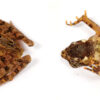
- Moonlight Mountains: The Secretive Life of the Capensibufo selenophos Frog
- Taxonomy and Classification: Understanding Capensibufo selenophos
- Natural Habitat: Living Among Misty Peaks
- Physical Characteristics: A Creature of Camouflage and Mystique
- Behavior and Life Cycle: Mysterious Nights and Secretive Ways
- Ecological Role: Tiny but Indispensable
- Threats and Conservation Status: Facing Fragile Futures
- Cultural and Scientific Significance: More than Mere Amphibians
- Conclusion: Conserving Moonlight Mountains, One Frog at a Time
Moonlight Mountains: The Secretive Life of the Capensibufo selenophos Frog#
In the remote, mist-shrouded mountain landscapes of South Africa, there exists a small, enigmatic frog whose very existence seems woven from moonlight. Known scientifically as Capensibufo selenophos, this intriguing amphibian, aptly named from the Greek words “selene” meaning moon, and “phos” meaning light, embodies the mysterious allure of its habitat—a damp, moonlit terrain cloaked in shadows and echoes. Though largely overlooked by casual observers, this elusive frog has quietly gained the attention and fascination of herpetologists and nature lovers for its intriguing behaviors and critical ecological role.
This article journeys deep into the mossy earth of its upland homes, exploring how Capensibufo selenophos lives, thrives, and survives within its environment. From its vividly camouflaged skin to its peculiar reproductive habits, uncovering the mysteries of this enigmatic frog will paint a picture not only of its fascinating existence but also of the delicate ecological balance it represents and the conservation challenges ahead.
Taxonomy and Classification: Understanding Capensibufo selenophos#
The Capensibufo selenophos belongs to the family Bufonidae—the true toads—which comprises hundreds of species adapted to diverse habitats around the globe. Within the genus Capensibufo, this species stands out, both biologically and geographically, because of its restricted range and intriguing evolutionary adaptations.
First described scientifically only recently, the species draws its name and identity from highly specific characteristics. Taxonomic genetic analysis suggests a close relation with other species within the genus Capensibufo, yet its distinct traits and genetic divergence signify evolutionary isolation occurring over millennia. Such separation, influenced largely by historical geological processes and geographic isolations, has led the species to evolve independently, creating a niche specially adapted to the delicate balance of its montane ecosystem.
Natural Habitat: Living Among Misty Peaks#
The delicate landscapes inhabited by Capensibufo selenophos are confined primarily to mountainous regions in the Western Cape of South Africa. Often shrouded by billowing clouds that roll solemnly over steep mountain flanks, their habitat evokes an almost mystical presence—forests wrapped in mist and carpets of emerald moss appearing to glow gently beneath lunar rays.
Specifically, these frogs occupy damp montane fynbos and patchy grasslands found between elevations of approximately 700 to 1600 meters above sea level. Here, the terrain is characterized by seasonal wetlands, seepages, ephemeral streams, and deep, humid layers of leaf litter, moss, and decomposing vegetation. It is within these shadowy, moisture-laden recesses that the frog finds reprieve from sun exposure and protection against predators, blending seamlessly into its environment with remarkable camouflage.
A Life in Microhabitats#
Observation indicates that this species has strong microhabitat preferences, frequently sheltering under logs, stones, and thick layers of moss and organic litter. Their narrow tolerance range to changing moisture levels combines with an acute sensitivity to environmental disturbances, underscoring how fragile and specialized their habitats truly are.
Adaptations to these mist-bound environments allow the frogs to endure fluctuations in moisture, temperature, and humidity—factors amplified by altitude and frequent sudden shifts in weather. In turn, maintaining the integrity of these diverse habitats contributes strongly to the frogs’ survival, as they form a fine-tuned interdependency with their biophysical surroundings.
Physical Characteristics: A Creature of Camouflage and Mystique#
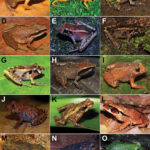
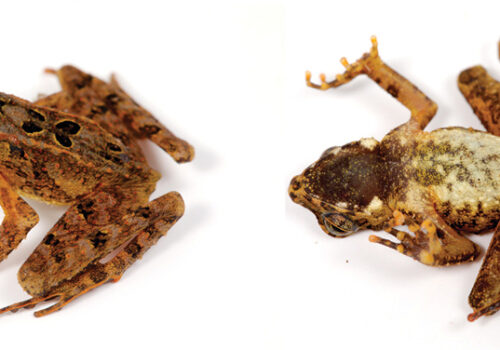
Measuring only 20 to 40 millimeters long, Capensibufo selenophos is a relatively small frog. Nevertheless, what it lacks in size, it more than compensates for in uniqueness and beauty. At first glance, this frog’s coloring might be dismissed as drab—a rich blend of earth tones ranging from dark olive greens, mottled browns, to subdued russet. Yet upon closer inspection under soft moonlit conditions—when these creatures are most active—their camouflage appears almost poetic, reflecting subtle hues reminiscent of moonlit rock and mossy earth. Small granular bumps and ridges punctuate their skin’s surfaces, capturing and scattering moonbeams, adding to their uncanny ability to remain unseen and protected against predation.
An Ingenious Array of Adaptations#
Their textured skin, an essential adaptive element, helps them conserve moisture critical for survival in resource-limited mountain environments. Furthermore, the granular surface aids in blending seamlessly within their moss-laden surroundings, mimicking textures of rock, bark, and lichens.
A closer examination reveals subtle but robust limbs with strong digits, adapted explicitly for navigating the rugged, slippery terrain characteristic of their humid mountain domains. Observant eyes will also notice the presence of large, expressive eyes, optimized for dim twilight and nocturnal activities necessary for their dietary and mating behaviors.
Behavior and Life Cycle: Mysterious Nights and Secretive Ways#
If their appearance intrigues, the daily rhythms and behaviors of Capensibufo selenophos are positively captivating. As primarily nocturnal amphibians, their lives unfold beneath the comforting blanket of twilight and moonlight. Active mostly during wetter months, their life histories intricately correspond with seasonal rainfall patterns and environmental moisture levels.
Dietary Habits and Keeper of Populations#
As skilled insectivores, these frogs hunt meticulously for a diverse diet comprising small invertebrates, including ants, beetles, mites, and springtails. Employing stealth combined with ambush techniques, they maintain important regulation of invertebrate populations within their habitat, showcasing a stark understanding of their ecological role.
Breeding and Reproductive Strategies#
The frog’s breeding habits reveal even deeper layers of complexity. During early wet seasons, often aligned with the rising moon phases—living up to the evocative nature of its name—males emit soft, enigmatic calls, their murmurs blending harmonically within the night chorus of mountain fauna. Females approach potential mates, prompting pairs to seek temporary pools, seepages, or moist depressions where eggs can thrive. Depositing small egg clusters attached to submerged vegetation, they ensure offspring remain hidden and insulated from predators until hatching.
Tadpoles, quickly adapted to ephemeral water sources, have accelerated developmental cycles, completing transformation rapidly before these temporary pools evaporate. Such adaptive life cycles serve as a testament to hundreds or thousands of years of finely tuned natural selection—balancing life and survival on narrow margins of ecological stability.
Ecological Role: Tiny but Indispensable#
While modest in size and number, the ecological significance of Capensibufo selenophos cannot be overstated. Amphibians such as this species frequently serve as key indicator organisms, signaling the overall health of their ecosystems. Their presence, stability, and reproductive success directly reflect the condition of their delicate montane habitats, making them irreplaceable biological barometers.
Furthermore, their participation in controlling insect populations and providing essential prey to higher trophic levels illustrates their intrinsic status within local food webs, reinforcing the interconnectedness of mountain ecological networks.
Threats and Conservation Status: Facing Fragile Futures#
Sadly, these delicate and specialized adaptations place Capensibufo selenophos at significant risk from environmental disruptions. It is currently listed as Near Threatened according to the IUCN Red List due to habitat loss and fragmentation primarily driven by human activities—particularly mountain tourism expansion, infrastructure developments, invasive species, changing climatic conditions, and pollution.
Current Conservation Efforts and Future Steps#
Conservationists, alongside governmental and non-governmental organizations, actively monitor population trends, advocate for habitat protection policies, manage invasive species, and initiate scientific research studies identifying critical intervention opportunities. Public education programs likewise highlight the frog’s plight, urging ongoing conservation engagement and responsibility from the local and broader communities.
Cultural and Scientific Significance: More than Mere Amphibians#
Species like Capensibufo selenophos often hold subtle yet profound cultural significance, symbolizing resilience, hidden beauty, and ecological integrity. Eco-tourism and local cultural values, emphasizing respect for natural habitats, benefit directly from the presence and conservation of this frog and others like it.
Scientifically, studying frogs contributes invaluable insights into the state and health of indigenous mountain ecosystems, climate patterns, and biological diversity, enhancing overall environmental awareness and action.
Conclusion: Conserving Moonlight Mountains, One Frog at a Time#
The existence of this amphibious marvel on the moonlit slopes of South Africa’s highlands stands, ultimately, as a quiet reminder of the intricate beauty—and profound vulnerability—of our shared natural world. Our protectorship, fueled by admiration and dedicated conservation advocacy, possibly remains the very key that ensures the gentle calls of Capensibufo selenophos echo through generations to come.