- The Mysterious World of Bufotes pseudoraddei: Ecology, Behavior, and Conservation
The Mysterious World of Bufotes pseudoraddei: Ecology, Behavior, and Conservation#
In the rocky hillsides and lush valleys of southern Asia, nestled within landscapes of rugged beauty and ecological wonder, dwells a frog whose intriguing presence often goes unnoticed. Bufotes pseudoraddei, affectionately referred to as the Pseudoraddei Toad, is an amphibian cloaked in subtle mystery and ecological significance. Its scientific distinction emerges from a delicate interplay of evolutionary biology, environmental adaptation, and regional biodiversity.
With its distinctive colorations and secretive behaviors, Bufotes pseudoraddei is quietly captivating, challenging both researchers and nature enthusiasts alike to explore deeper into its hidden world. A compelling example of nature’s subtle artistry, this toad offers glimpses into broader ecological narratives and conservation challenges.
Taxonomy and Classification#
Bufotes pseudoraddei belongs to Bufonidae, the diverse and widespread family of true toads, whose members occupy ecosystems across continents. Within the Bufotes genus—comprised of green toad species spread across Eurasia—Bufotes pseudoraddei is part of a genetically distinct lineage native primarily to Central and Western Asia. Described scientifically relatively recently, this species stands out in a complex cluster of closely related toads.
Closely related to Bufotes raddei, with which it was once often confused, Bufotes pseudoraddei gained official recognition as a separate species after meticulous genetic analysis. Such discoveries are a testament to the fine-grained work scientists undertake to better understand amphibian biodiversity and conservation priorities worldwide.
Natural Habitat#
Bufotes pseudoraddei inhabits a geographic mosaic stretching from mountainous terrains in northeastern Iran into areas of southern Turkmenistan and adjacent territories. This region, rich in diverse ecosystems, offers defined habitat conditions that the toad has uniquely adapted to. From rocky slopes above lush valleys to semi-arid shrublands intersected by temporary freshwater streams, this species shows remarkable ecological adaptability.
Preferred Habitat and Ecological Niches#
The toad’s habitat preferences include semi-arid landscapes with occasional water availability—a necessity for breeding. They often favor rocky hillsides interspersed with patches of abundant vegetation, lending concealment and refuge from predators. Shaded crevices beneath rocks, scattered thorny shrubs native to the region, and temporary ponds formed by seasonal rains characterize typical Bufotes pseudoraddei habitats.
The cyclic nature of these environments demands that Bufotes pseudoraddei exhibit flexible behaviors to thrive. Remarkably resistant to the harsh environmental conditions prevalent in these regions, this species epitomizes resilience amidst an often unforgiving landscape.
Physical Characteristics#
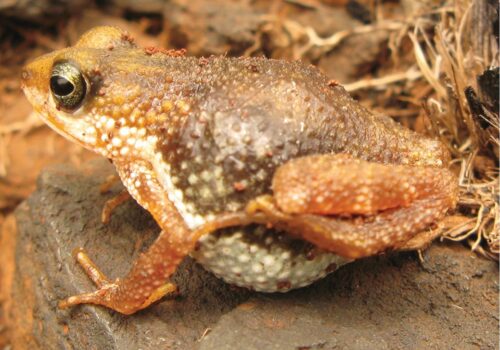
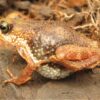
At first glance, Bufotes pseudoraddei captivates observers with its intricate mosaic of emerald-green markings scattered upon a background of dull olive-gray hues. Adults typically measure between 6 to 8 centimeters in length, placing them within an average size range for members of their genus. Yet it is their color patterns, unique to each individual like a fingerprint, that truly hint at their remarkable evolutionary journey, finely attuned to their ecological surroundings.
Adaptations for Survival#
Bufotes pseudoraddei possesses adaptations perfectly engineered for survival within its specific habitats. Its granular skin, permeated by small wart-like glands, releases toxins that discourage would-be predators. Although typically mild, these bufotoxins serve as an effective chemical defense, allowing the toad to thrive in predator-rich environments.
Further, their coloration and patterns offer communication cues, mate attraction, and remarkably effective camouflage—blending seamlessly into surroundings composed predominantly of rocky substrates, grasses, and low-lying vegetation. Such characteristics illustrate the fascinating ecological precision guiding the evolution of amphibians in specific ecosystems.
Behavior and Life Cycle#
In the secretive twilight hours beneath Central Asian skies, Bufotes pseudoraddei stirs from its daytime refuge. Encountering one in its natural element is to witness agility blended with patience. They forage methodically among shrubs, capturing insects such as beetles, ants, and moths with a swift strike of their sticky tongues.
Mating Rituals and Calls#
Come the rainy seasons, the hillsides echo gently with the songs of male Bufotes pseudoraddei. Their vocalizations, deliberate and rhythmic, serve both as territorial proclamations and irresistible invitations to potential mates. Breeding often occurs where freshwater pools have formed after seasonal rains, creating a joyous congregation of individuals intent on continuing their lineage.
The female lays hundreds of eggs in gelatinous strings carefully entwined among aquatic vegetation or submerged stones, ensuring optimum conditions for safety and oxygen availability. Over several weeks, tadpoles emerge, navigating their watery worlds cautiously. Metamorphosis into juvenile toads marks the beginning of terrestrial life, opening a new, intricately challenging passage into adulthood.
Ecological Role#
Bufotes pseudoraddei plays a pivotal role within its ecosystem, significantly influencing insect populations as voracious predators. Their diet, diverse and abundant, helps sustain ecological balance across trophic levels. This species simultaneously serves as an indicator of ecological health, sensitive as they naturally are to habitat changes and environmental contaminants.
Interactions and Predation#
Naturally part of a larger ecological network, Bufotes pseudoraddei provides critical sustenance for various predators, including birds of prey, snakes, and small carnivorous mammals. This delicate role as both predator and prey places the species at the heart of a complex web of life, demonstrating nature’s intricate interdependencies.
Threats and Conservation Status#
Bufotes pseudoraddei faces threats common to many amphibians worldwide—most prominently habitat degradation and climate-related disturbances. Agricultural expansion, irrigation practices altering landscapes, and habitat fragmentation due to urban development are gradually impacting regional populations.
The International Union for Conservation of Nature (IUCN) currently lists Bufotes pseudoraddei as Least Concern; however, careful monitoring and ongoing assessments are crucial, given the rapidly changing ecosystems and increasing human-induced pressures. Climate change scenarios project further habitat alterations, threatening amphibians whose reproduction so closely ties to seasonal rainfall patterns and sensitive habitats.
Current Conservation Efforts#
Regional conservation programs prioritize habitat protection and sustainable land-use policies to safeguard Bufotes pseudoraddei and their delicate ecosystems. Encouraging multidisciplinary collaborations between conservationists, community stakeholders, and local authorities represents a positive effort towards broader amphibian conservation goals.
Cultural and Scientific Significance#
In Central Asia, amphibians such as Bufotes pseudoraddei often symbolically signify ecological connection and renewal—their seasonal appearances aligned traditionally with agricultural cycles. Scientifically, Bufotes pseudoraddei remains significant for researchers studying evolutionary processes, toxin chemistry within amphibians, and climate adaptation mechanisms.
The genetic importance extends beyond taxonomy, as understanding this species can inform on ecological resilience strategies, conservation biology, and the broader impacts of environmental change.
Conclusion: Protecting an Overlooked Jewel of Nature#
Bufotes pseudoraddei symbolizes the subtleties of conservation biology—quietly beautiful, ecologically essential, scientifically intriguing, yet easily overlooked. Understanding its ecology and embracing conservation measures is paramount not only for this toad’s survival but for preserving complex ecosystems in regions experiencing increased environmental stress.
As awareness grows regarding the fascinating life of Bufotes pseudoraddei, may we persevere in conservation efforts, ensuring the enduring harmony between humanity and the natural world. By supporting amphibian research, habitat preservation, and recognizing the immense value of biodiversity, each one of us contributes to safeguarding the delicate balance of nature.
Explore further, support conservation initiatives, and become advocates for the lasting protection of Bufotes pseudoraddei and amphibians worldwide—our planet’s subtle gems and vital indicators of ecological health.