- Bufotes cypriensis: Unveiling the Secretive Life of Cyprus' Endemic Amphibian Jewel
- Taxonomy and Classification: Understanding Bufotes cypriensis
- Natural Habitat: The Last Wetlands of Cyprus
- Physical Characteristics: A Masterpiece of Camouflage and Efficiency
- Behavior and Life Cycle: Songs, Courtships, and Amphibian Vigilance
- Ecological Role: Guardians of Balance and Bio-indicators
- Threats and Conservation Status: Preserving a Hidden Treasure
- Cultural and Scientific Significance: An Amphibian Ambassador of Cyprus
- Conclusion: Protecting Cyprus' Living Legacy
Bufotes cypriensis: Unveiling the Secretive Life of Cyprus’ Endemic Amphibian Jewel#
The cool twilight breeze whispers through the coastal marshes of western Cyprus. Beneath the rustling grass and moist earth, a series of high-pitched trills rise and fall in rhythmic chorus, each note vibrant with the promise of renewal. These sounds, emanating from one of Europe’s most enigmatic amphibians, belong to a frog deeply embedded in the island’s very identity—the Cyprus Green Toad, scientifically known as Bufotes cypriensis.
Although seldom seen, this charming amphibian has captured the fascination of herpetologists and nature lovers alike. Its handsome blend of jade and spotted emerald patterns decorates the landscape under moonlit nights, and yet, despite this striking exterior, it remains a little-known protagonist of Cyprus’ complex and delicate natural balance. Journey with me into the hidden wetlands and rocky niches where life teems quietly beneath our feet, and learn about the weird, wonderful, and wholly essential life of Bufotes cypriensis.
Taxonomy and Classification: Understanding Bufotes cypriensis#
At a glance, you may mistake this small amphibian for the common European green toad, but closer observation reveals significant differences that have established Bufotes cypriensis as a distinct species in recent decades. Classified within the family Bufonidae, the species belongs to the genus Bufotes, famed for its charismatic greenish patterns and adaptability across Eurasian habitats. Originally lumped together with its closely related mainland cousins, detailed genetic and morphological studies confirmed its unique evolutionary path, shaped by centuries of isolation on Cyprus.
The recognition of Bufotes cypriensis exemplifies why taxonomy matters beyond names alone—it underscores Cyprus’s history as a biodiversity hotspot, revealing layers of evolutionary journey hidden within these amphibians. Their closest relatives, such as Bufotes viridis and Bufotes boulengeri, reveal fascinating comparative insights that allow us to piece together the biogeographic history of the Mediterranean region.
Natural Habitat: The Last Wetlands of Cyprus#
Embarking on a nocturnal exploration through Cyprus, you may be lucky to encounter Bufotes cypriensis. This species favors diverse yet increasingly fragmented environments, from coastal marshlands, seasonal pools, and riverbanks to even farmlands and gardens where human activity intersects lightly with nature’s rhythms. Historically, Cyprus boasted extensive wetland areas and river systems that provided sanctuary for countless wildlife forms. Today, with much of the island modified by agriculture and urban development, the remaining habitats become ever more precious refuges for this amphibian.
A perfect evening unfolds among reed beds, where gentle condensation drips from leaves, and muddy banks sparkle in the waning moonlight. It’s here that Cyprus Green Toads await nightfall, emerging slowly from hiding places beneath stones, vegetation, and shallow burrows excavated during the dry heat of daytime. Water is essential to this species—it lays its gelatinous egg masses only in shallow, still, freshwater bodies, particularly ephemeral waters that form after rare Mediterranean rains. Thus, their lifecycle is intimately tied to seasonality, a dance choreographed by the island’s unique climate.
Physical Characteristics: A Masterpiece of Camouflage and Efficiency#
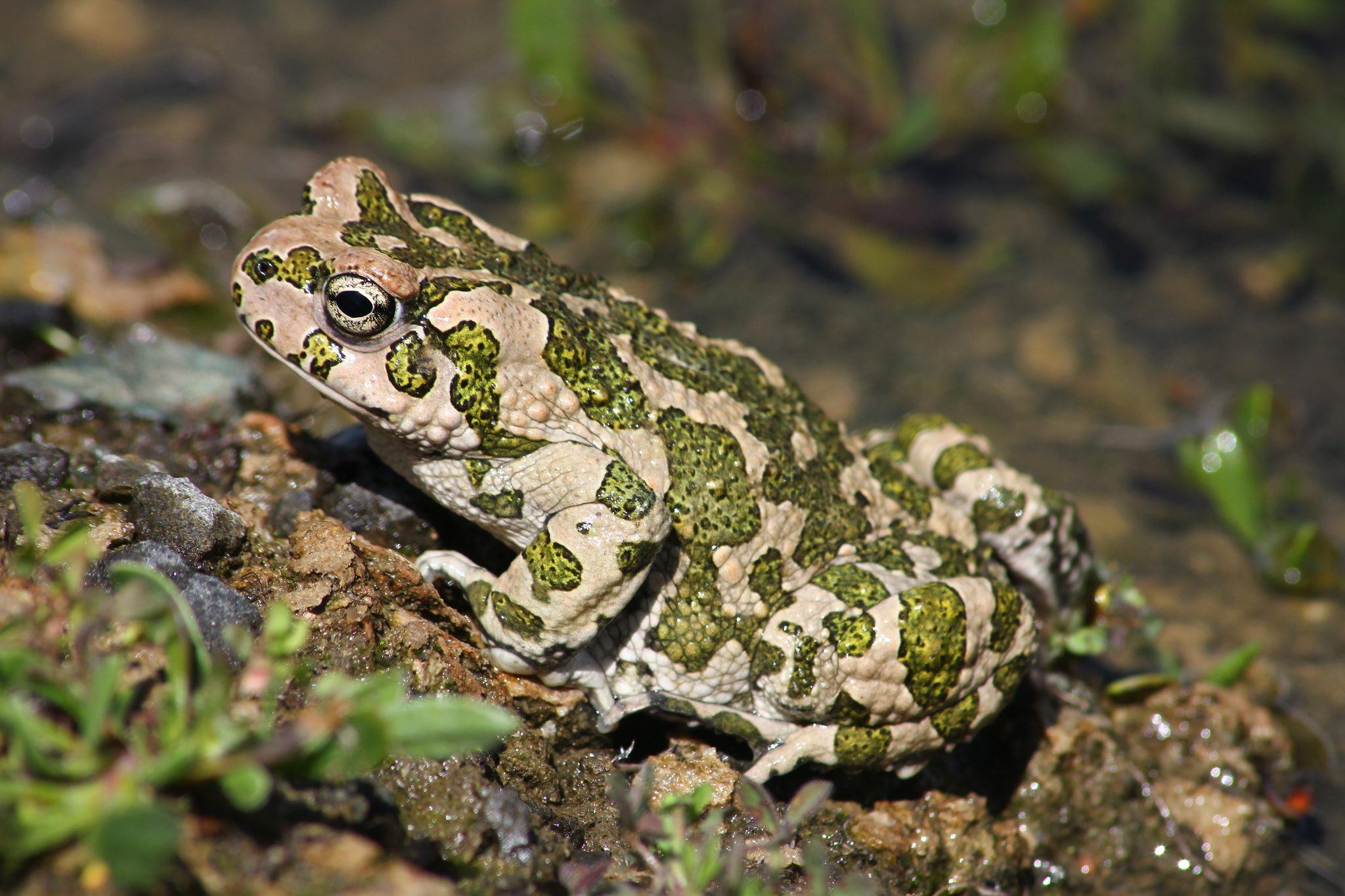
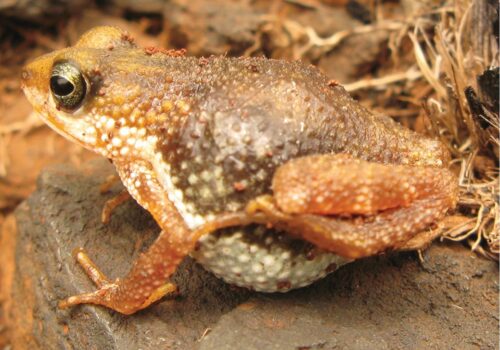
The charm of Bufotes cypriensis lies undoubtedly in its appearance, a dazzling artistic expression by evolution itself. Adult individuals measure between 5 to 9 centimeters, their semi-robust bodies crowned by a distinctively proportioned head and large, enticing eyes. Shades of olive-green punctuate underbellies and limbs, splashed generously with emerald blotches edged delicately in pale cream. These irregular yet symmetrical patterns form a mosaic not unlike sun-dappled foliage, offering perfect escape through camouflage—a vital adaptation for a small, vulnerable creature living in a predator-rich Mediterranean environment.
But coloration, exquisite as it is, isn’t merely decorative. Subdued patterns and granular warts covering their dorsum conceal poison glands, subtle chemical laboratories beneath the skin producing secretions toxic enough to discourage predators. Skin texture ranges across damp to dry, adapting gracefully to Cyprus’ fluctuating moisture conditions—an essential trait enabling survival even during prolonged drought. Instinctively elusive and retiring, the Cyprus Green Toad possesses the elegance and practicality of an animal perfected over millennia.
Behavior and Life Cycle: Songs, Courtships, and Amphibian Vigilance#
Night-Hunting in the Grass: Feeding Habits#
With twilight thickening into darkness, something remarkable occurs—feeding hours begin. Beneath innumerable stalks and leaves, these amphibians quietly stalk their insect prey, their movements methodical and controlled. Beetles, ants, spiders, and earthworms fill their diets, both nourishing their compact bodies and maintaining balance among the insect populations. Using rapid-reflex tongues, they snatch prey in a solitary, unceremonious strike before retreating again into shadow.
Courtship and Reproduction: A Melodic Affair#
What truly captivates observers are the melodious nights when Bufotes cypriensis gathers to breed. Initiating courtship in early spring, males assemble in choruses at communal breeding sites, their unceasing melodic trills resonating across tranquil waters. This performance attracts females to favored wetlands, and mating commences soon after. Females carefully deposit hundreds to thousands of eggs in shallow areas, forming translucent strands draped beneath aquatic vegetation or along submerged stones.
Tadpoles pursue rapid development fueled by warm waters and abundant food sources. Within weeks, these aquatic larvae transform—remarkably, swiftly—into diminutive toadlets that disperse onto land, seeking shelter among moist soils and dense vegetation. Their lifecycle is a frustratingly fleeting glimpse for wildlife enthusiasts: young amphibians quickly leave visible habitats and blend seamlessly into their environments, silent sentinels vital to ecosystem integrity.
Ecological Role: Guardians of Balance and Bio-indicators#
Amphibians like the Cyprus Green Toad are key bio-indicators, alerting us of environmental health and wellness. Their permeable skin responds sensitively to slight alterations in water quality, toxins, pesticides, or climate conditions. Their presence signals ecosystems flourishing with healthy biodiversity, while sudden declines can raise early warnings, affording conservationists precious opportunity to intervene strategically.
Moreover, Cyprus Green Toad contributes significantly as predator and prey within local food webs. Predominantly insectivorous, they manage populations of insect pests, limiting potential damage to agriculture and human settlements. Concurrently, they serve as prey for larger birds, snakes, and occasionally mammals. Each facet of their existence illustrates intricate linkages shaping Cyprus’ ecosystem equilibrium.
Threats and Conservation Status: Preserving a Hidden Treasure#
Despite their resilience and adaptability, Bufotes cypriensis populations face escalating threats, predominantly arising from habitat loss, water pollution, climate change-driven droughts, and excessive urbanization. With increasing temperatures and unreliable rainfall, breeding sites become scarce, endangering successful reproduction and population continuity. Though not extensively researched, it is currently classified as “Least Concern” on the IUCN Red List because of its relatively wide distribution—but ongoing changes indicate that complacency poses a genuine risk of sudden decreases.
Fortunately, ongoing conservation efforts, such as habitat restoration, wetland preservation initiatives, and public awareness programs hold considerable promise. Engaged local communities now play increasingly prominent roles, exemplifying direct impacts from grassroots actions on species conservation.
Cultural and Scientific Significance: An Amphibian Ambassador of Cyprus#
As Cyprus nurtures its cultural heritage and ecological legacy, Bufotes cypriensis emerges symbolically significant. While amphibians rarely occupy prominent places in traditional narratives, the presence of this endemic species reinforces local identity, underscoring Cypriots’ connection to their environment. Scientific interest also deepens, illuminating understandings of evolutionary biology, speciation, and amphibian adaptability.
Conclusion: Protecting Cyprus’ Living Legacy#
In the delicate fabric of Cyprus’ ecosystems, Bufotes cypriensis threads invisibly but indispensably. By cherishing and safeguarding this species, we uphold a legacy spanning thousands of years and safeguard biodiversity for future generations. Remembering their nocturnal chorus echoing gently across moonlit wetlands, the story of Cyprus’ green toad is clear: preserving these amphibians ensures we truly understand and respect our shared home.
It now falls to all of us—to naturalists, students, conservationists, and enthusiasts—to champion amphibian conservation. Let us ensure the resonant calls of Bufotes cypriensis continue to herald Cyprus’ restorative evenings long into future nights.