- Boulenger’s Green Toad (<em>Bufotes boulengeri</em>): Jewel of the Mediterranean Ecosystem
- Taxonomy and Classification
- Natural Habitat: Secrets of the Mediterranean Landscape
- Physical Characteristics: A Mosaic of Green, Grey, and Gold
- Behavior and Life Cycle: Resilience and Rituals under the Stars
- Ecological Significance: Guardians of Ecosystem Balance
- Conservation Challenges: Navigating a Changing World
- Cultural and Scientific Significance: More Than Just a Frog
- Conclusion: A Jewel Worth Protecting
Boulenger’s Green Toad (Bufotes boulengeri): Jewel of the Mediterranean Ecosystem#
Tucked away in the fragrant maquis shrublands and hidden within damp, shaded valleys of the Mediterranean lies a small yet captivating amphibian—the Boulenger’s Green Toad (Bufotes boulengeri). The gently resonant croak of this modest-sized frog often paints summer evenings with a sense of calm nostalgia—evocative of warm nights near southern European coastlines and storied North African hillsides.
While frogs in general captivate nature enthusiasts with their peculiar looks and distinctive calls, B. boulengeri holds a unique place among them. Endowed with resilient adaptability and intriguing behaviors, this frog serves not only as a compelling subject of scientific inquiry, but also as a key player in its local ecology and a charming symbol of delicate habitats increasingly threatened by human activity.
Taxonomy and Classification#
Belonging to the family Bufonidae, known commonly as the true toads, Bufotes boulengeri is part of a colorful genus (Bufotes) characterized by vibrant coloration and unmistakable patterns. First described scientifically in 1909 by zoologist Fernand Lataste, the species’ original classification underwent revisions over decades as additional knowledge has clarified its genetic and ecological distinctiveness from closely related species.
Its closest kin, such as the European Green Toad (Bufotes viridis) and the Variable Green Toad (Bufotes variabilis), share similar habitats and appearances, causing some historical confusion in identification. However, recent molecular analyses have unequivocally separated this jewel-like amphibian into its own distinct species—highlighting nuances that appreciative naturalists and rigorous biologists alike find endlessly fascinating.
Natural Habitat: Secrets of the Mediterranean Landscape#
Bufotes boulengeri inhabits an expansive, yet often overlooked, geographic range spanning several Mediterranean countries, including regions of North Africa—particularly Morocco, Algeria, Tunisia—and some southern areas of Spain. The species thrives primarily in semi-arid to temperate landscapes, relying heavily on habitats that provide sufficient moisture and shelter.
The Ideal Environment: From Ephemeral Ponds to Rocky Hideaways#
Unlike aquatic specialists, Boulenger’s Green Toad is impressively adaptable, navigating comfortably through varied ecological niches. Typically, it seeks out transient pools, shallow streams, marsh-edge ecosystems, and even human-made structures such as cisterns and stone wells. These ephemeral water bodies are crucial breeding sites, providing safe havens for their delicate aquatic larvae.
During hot daylight hours, this elusive amphibian retreats beneath rocky crevices, logs, or dense vegetation, conserving precious moisture and conserving energy until sunset triggers their nocturnal activities. Their remarkable ability to survive in habitats that alternate between wet abundance and prolonged drought underscores an impressive resilience evolved over millennia.
Physical Characteristics: A Mosaic of Green, Grey, and Gold#
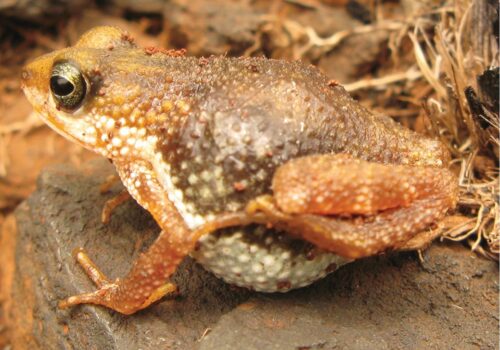
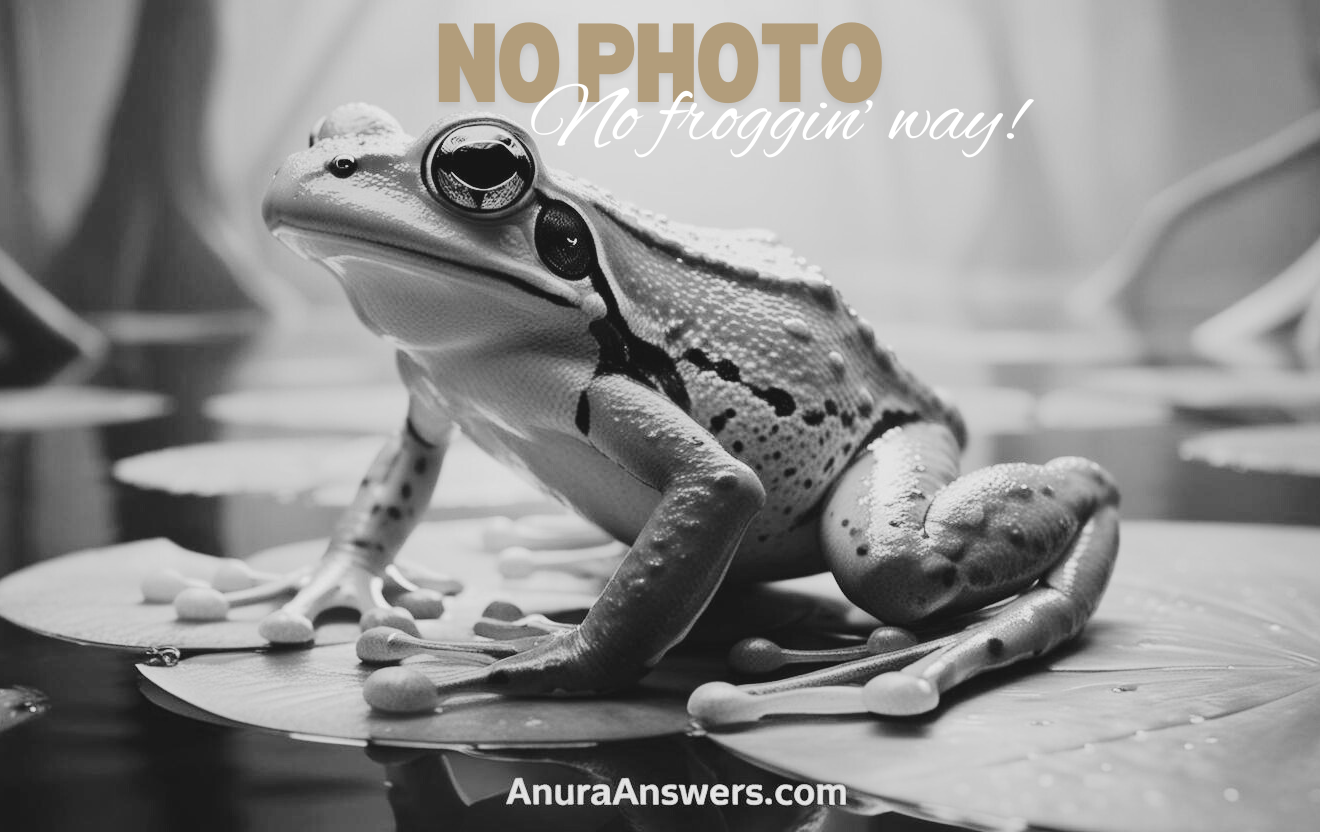
A mosaic of striking emerald, olive, grey, and gold shades intertwined with darker mottles distinguishes the Boulenger’s Green Toad as one of the Mediterranean’s most attractive amphibians. Sparse rust-colored spots sometimes adorn their warty backs and limbs, adding a further layer to their natural camouflage amid rocky terrains and leaf-littered shadowy floors.
Adults typically measure between five to nine centimeters, exhibiting sexual dimorphism where females often slightly surpass males in size. Their granular, rough skin—notable among bufonids—harbors secretory glands that produce mild toxins effective at deterring smaller predators, underscoring the remarkable chemical defenses inherent to this exciting group of organisms.
Large, expressive copper-hued eyes grant this species remarkable night vision, essential for their predominantly crepuscular activity patterns. Powerful hind limbs allow agile leaps, suitable for evading predators and skillfully navigating their rough terrains.
Behavior and Life Cycle: Resilience and Rituals under the Stars#
As the first warm rains of spring awaken dormant Mediterranean landscapes, a beautiful nocturnal chorus emerges from shady wetland edges and temporary pools. Male B. boulengeri produce characteristic musical trills— a gentle, buzzing sound that resounds across their habitats, advertising their fitness to prospective mates and warding off rivals. These vocalizations play a pivotal role in their annual reproductive rituals.
Mating Rituals and Life in Transition#
Females respond to the males’ persistent serenades by carefully selecting their suitor and entering breeding waters. There, they lay long strings containing hundreds to thousands of eggs, anchoring them amidst aquatic vegetation or floating them gently at the water surface. These ephemeral pools provide small windows of opportunity that tadpoles must quickly exploit, racing against evaporation and predation in their quest for metamorphosis.
The aquatic larval stage is brief yet demanding, lasting approximately four to six weeks. Tadpoles, darkly pigmented and agile, rapidly develop limbs and steadily lose their tails, transitioning from water-bound herbivores to terrestrial carnivores. Juveniles that successfully mature leave water just as temporary ponds dry up—entering terrestrial habitats to begin their nocturnal terrestrial lives.
Survival Strategies: Masters of Opportunity#
Eagerly opportunistic feeders, adult Boulenger’s Green Toads adapt their diets to the surrounding availability. Primarily insectivorous, they regularly consume ants, beetles, spiders, fly larvae, and occasional-earthworms—regulating insect population levels significantly within their ecosystems.
Notably defensive and cryptically attuned to their surroundings, these small yet resilient creatures exhibit remarkable survival tactics. Upon threat detection, they quickly retreat into cracks or burrows, inflating their bodies and secreting mildly toxic skin excretions as deterrents against predators—even proving moderately effective against birds, snakes, and mammals.
Ecological Significance: Guardians of Ecosystem Balance#
Boulenger’s Green Toad, like many amphibians, fulfills multiple vital roles within their Mediterranean ecosystems. Serving as prominent bioindicators, their populations directly reflect the health of their habitats. Sharp declines in their numbers often signal environmental contamination, habitat degradation, or climate alterations.
Moreover, these frogs significantly regulate invertebrate populations, keeping insect communities balanced and helping maintain ecological harmony. Conversely, as prey, they form essential dietary components for native snakes, birds, and mammals, solidifying their interconnectedness within natural food webs.
Conservation Challenges: Navigating a Changing World#
Despite its natural resilience, B. boulengeri faces significant anthropogenic threats threatening local populations across their entire distribution. Urbanization, agriculture intensification, habitat loss, and widespread water contamination through pesticides repeatedly undermine their breeding habitats. Increasing drought frequency, driven by climate change, has exacerbated shrinking water availability and shortened wet periods necessary for successful reproduction.
IUCN Status and Conservation Efforts#
Currently categorized by the International Union for Conservation of Nature (IUCN) as Least Concern due to their wide range and abundance, scientists cautiously stress that local populations may be far more sensitive than populations across their global range might suggest. Conservation projects emphasizing wetland restoration, sustainable agriculture, and public education programs to raise awareness about amphibian conservation are increasingly crucial.
Cultural and Scientific Significance: More Than Just a Frog#
In several Mediterranean cultures, amphibians like the Green Toad hold symbolic meanings: harbingers of rain, good luck charms, or indicators of seasonal changes. Folklore often associates them positively with fertility, renewal, and water abundance—illustrating humans’ intuitive appreciation for frogs as natural environmental barometers.
Scientifically, frogs like Bufotes boulengeri have provided insights into chemical ecology, helping researchers explore amphibian skin secretions possessing medicinal and antimicrobial potential. Herpetologists frequently employ these amphibians as model species to understand the implications of environmental threats, particularly climate-induced stressors and habitat transformations.
Conclusion: A Jewel Worth Protecting#
The Boulenger’s Green Toad embodies nature’s ingenuity and adaptability, thriving gracefully within some of the Mediterranean region’s most delicate ecosystems. Each evening’s gentle chorus echoes critical roles—ecological regulator, scientific ally, cultural emblem — reminding humanity of our intertwined destinies and responsibility toward wildlife stewardship.
To protect these captivating amphibians, urgent actions are required. Support your local wetlands, participate in conservation initiatives, and share the story of Bufotes boulengeri. In preserving their habitat, we safeguard not merely frogs, but also the vibrant ecological tapestry to which frogs, humans, and all living beings intrinsically belong.