- Bufotes baturae: The Enigmatic Frog of Pakistan's High Mountains
- Introduction: An Amphibian in the Clouds
- Taxonomy and Classification
- Natural Habitat: Life at the Edge of Altitude
- Physical Characteristics: Built to Survive in Extremes
- Behavior and Life Cycle: Thriving in Fragility
- Ecological Role: Guardians of Alpine Ecosystems
- Threats and Conservation Status: An Uncertain Future
- Cultural and Scientific Significance: Bridging Nature and Community
- Conclusion: Preserving the Enigma for Generations
Bufotes baturae: The Enigmatic Frog of Pakistan’s High Mountains#
Introduction: An Amphibian in the Clouds#
In the secluded valleys and rugged slopes of Northern Pakistan, hidden beneath blankets of mist and alpine vegetation, lives a remarkable frog whose existence remained largely unknown until recent decades. Bufotes baturae, known colloquially as the Batura Toad, is a species uniquely adapted to some of the world’s most demanding conditions. While frogs and toads typically conjure thoughts of humid rainforests and swampy wetlands, Bufotes baturae breaks this stereotype boldly, thriving in the chilly, windswept elevations of the mighty Karakoram range.
First scientifically described in 1999, Bufotes baturae has quickly become an intriguing subject of study due to its fascinating adaptations to high altitudes and harsh environments. Despite its elusive nature and remote habitat, this little-known amphibian has inspired biologists and conservationists alike as a symbol of resilience in one of Earth’s most challenging landscapes.
Taxonomy and Classification#
Bufotes baturae belongs to the family Bufonidae, commonly referred to as the “true toads.” It falls within the genus Bufotes, renowned for its hardy species adept at survival in challenging climates and terrains. The genus encompasses several green toads famed for their mottled coloration and distinctively resilient ecological flexibility, traits well exemplified by Bufotes baturae.
Closely related to species such as Bufotes viridis (the European green toad), and Bufotes latastii, our subject of study shares certain taxonomic characteristics, yet exhibits key divergences due to its specialized habitat. Combining morphological clues and genetic sequencing, researchers distinguished Bufotes baturae as a distinct species, underscoring once again the significance of thorough scientific exploration even in remote corners of our planet.
Natural Habitat: Life at the Edge of Altitude#
High among snow-capped summits, glacier-fed rivers, and alpine meadows, Bufotes baturae resides chiefly in Pakistan’s Gilgit-Baltistan region, particularly within and around the famous Batura Glacier area of Hunza Valley. This extraordinary amphibian holds its own in remarkable altitudinal ranges, inhabiting elevations typically between 2,500 to nearly 3,500 meters above sea level.
Bufotes baturae exhibits a preference for rocky slopes, alpine scree fields, and mountain stream edges. The stark landscape in its region includes a mosaic of short grasses, cushion plants, mossy stones, and dense tussock vegetation. These habitats, though seemingly austere, provide necessary shelter and moisture pockets essential for amphibian survival.
The rugged Karakoram terrain, notorious for unpredictable weather conditions ranging from blistering summers to brutal winters, serves not only as backdrop but actively shapes this species’ behavior and physiology. Temperatures can rapidly fluctuate, and amphibians here must carefully balance exposure and shelter, moisture preservation, and adaptations for freezing temperatures.
Physical Characteristics: Built to Survive in Extremes#
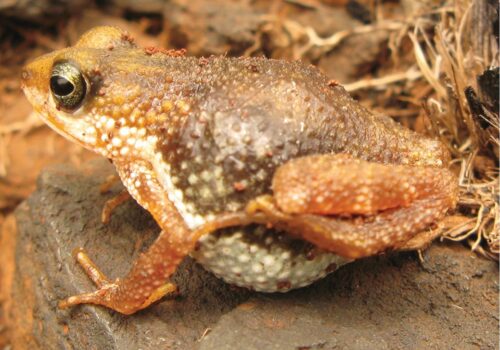
Bufotes baturae possesses an elegantly adaptive physicality, seemingly sculpted by its demanding environment. Adult toads fluctuate noticeably in size, typically measuring between 4 to 7 centimeters from snout to vent. Their compact bodies are robust, covered by distinctive warty skin common to members of the Bufonidae family. These characteristic bumps serve a critical purpose: enabling moisture retention while deterring potential predators by secreting mild toxins.
Perhaps the most fascinating and visibly striking feature is Bufotes baturae’s coloration. Their skin exhibits a subtle yet intricate pattern of olive-green to dark gray blotches contrasted against lighter shades of yellowish-cream or pale gray bases. This mottled camouflaging makes them nearly invisible against the alpine rocks and moss clumps. Such coloration provides vital protection from predation by birds of prey, rodents, and other high-altitude predators lurking within this lofty ecosystem.
Additionally, their limbs are surprisingly muscular—and hind limbs especially developed—to maneuver across steep slopes and rocky incline agility. Equipped with robust digits and gripping pads, Bufotes baturae moves efficiently across its precarious habitat, showcasing the remarkable versatility and adaptability of amphibians in extreme ecosystems.
Behavior and Life Cycle: Thriving in Fragility#
Feeding Habits#
Bufotes baturae primarily feeds upon insects and small invertebrates abundant in their mountainous habitats, including flies, beetles, spiders, and ants. Employing ambush tactics, these toads conserve energy by remaining hidden and motionless, their camouflaged bodies blending seamlessly into the environment until prospective prey ventures too close. A sudden flick of the sticky tongue quickly secures a nourishing meal before the frog resumes its measured, furtive routine.
Breeding and Reproduction#
With the arrival of the Himalayan summer, as snow melts into crystal-clear streams and pools, Bufotes baturae awakens from its winter dormancy. This period witnesses territorial males finding suitable water bodies for calling, their soft yet persistent croaks echoing through the alpine air. Females arriving in response select mates, and couples deposit eggs in shallow pools or gently flowing streams.
Egg laying is carefully synchronized to ensure survival. Shallow water pools, warmed by daytime sun, provide ideal conditions for eggs and tadpoles to develop rapidly—a critical factor at such high altitudes where growing seasons remain comparatively short. Tadpoles transform swiftly, completing metamorphosis within mere weeks. Juvenile toads are then able to leave aquatic nurseries, equipped with survival instincts necessary for the demanding conditions awaiting them on land.
Survival Strategies and Dormancy#
When autumn brings plunging temperatures, Bufotes baturae seeks underground burrows, clefts beneath boulders, or sheltered shallow caves, initiating a deep hibernation phase that continues through harsh mountain winters. During this prolonged dormancy, these toads rely on stored fat reserves and minimal movement, significantly slowing their metabolic rate until warmer months return.
Ecological Role: Guardians of Alpine Ecosystems#
Bufotes baturae plays a significant ecological role within its montane environment. As insectivorous predators, they effectively maintain insect populations in check, thus regulating the delicate balance within high-altitude ecosystems. Equally importantly, these toads serve as prey for larger predators, from birds of prey such as kestrels and eagles, to small mammals adapted to mountain habitats.
In addition, amphibian sensitivity to environmental changes means Bufotes baturae acts as an essential bioindicator species. Healthy populations signal a thriving, balanced ecosystem, while declining numbers ring alarming environmental distress signals demanding urgent attention.
Threats and Conservation Status: An Uncertain Future#
Despite its resilience, Bufotes baturae faces looming threats. Climate change poses particularly troubling implications, as warming temperatures alter precipitation patterns and reduce suitable breeding pools. Destructive flooding events caused by accelerated glacial melt threaten amphibian breeding sites, while more frequent weather phenomena like landslides and avalanches disrupt their fragile mountainous ecosystems.
Beyond climate impacts, increasing human encroachment and development in Gilgit-Baltistan add another layer of stress. Infrastructure initiatives, uncontrolled tourism, and agricultural expansion shrink available habitat, fragmenting populations and limiting potential movement.
Currently classified by the International Union for Conservation of Nature (IUCN) as “Data Deficient,” conservationists urgently call for updated assessments and dedicated studies to adequately grasp population health and threats impending on this high-altitude frog.
Cultural and Scientific Significance: Bridging Nature and Community#
While little-known globally, Bufotes baturae holds growing local significance within communities of northern Pakistan. Local folklore and cultural appreciation for wildlife increasingly bring Bufotes baturae into community consciousness, offering opportunities for inclusive conservation initiatives that balance biodiversity protection with socio-economic development and nature tourism, fostering stewardship of these unique amphibians.
Scientifically, Bufotes baturae contributes invaluable insights into how amphibians physiologically and behaviorally adapt to extreme conditions, informing conservation biology broadly and offering clues into ecosystem-wide responses to mounting global climate challenges.
Conclusion: Preserving the Enigma for Generations#
Bufotes baturae’s fascinating existence amidst dramatic mountain environments captures the imagination, illustrating nature’s incredible adaptability and resilience. Yet, this species’ silent presence amidst towering peaks remains critically vulnerable.
By deepening our understanding, increasing public awareness, and encouraging conservation stewardship within both local and global contexts, we may yet secure a sustainable future for Bufotes baturae. In doing so, we honor life’s impressive capacity to flourish in challenging corners of our planet—reminding us poignantly of our responsibility to protect even its most enigmatic inhabitants.