- Discovering the Enigmatic Meghalaya Toad: Bufoides meghalayanus
- Taxonomy and Classification: Unveiling Identity Within Biodiversity
- Natural Habitat: Life Within Meghalaya's Cloud Forests
- Physical Characteristics: Small Wonders of Evolutionary Design
- Behavior and Life Cycle: Subtle Rhythms of Survival
- Ecological Role: Keystone Miracles of Small Scale
- Threats and Conservation Status: A Species on the Brink
- Cultural and Scientific Significance: Guardians of Meghalaya's Forest Mysteries
- Conclusion: Ensuring Bufoides meghalayanus's Enduring Legacy
Discovering the Enigmatic Meghalaya Toad: Bufoides meghalayanus#
It was amidst the gentle whisper of mist-covered tropical forests, concealed within the enchanting landscape of northeastern India’s Meghalaya region, that a curious discovery first caught scientific attention in recent years. Cloaked by abundant foliage, moss-covered stones and the gentle trickle of mountain rivulets, the elusive Bufoides meghalayanus patiently awaited human curiosity.
Known commonly as the Meghalaya Toad, Bufoides meghalayanus is exceptionally rare, poorly studied, and fascinating for its subtle mysteries. Discovered and scientifically recognized only recently in 2016, this diminutive toad has rapidly captivated nature enthusiasts, conservationists, and biologists alike, unveiling questions about biodiversity, ecological health, and the importance of preserving fragile natural ecosystems.
But what precisely makes this species so intriguing? What stories could it share if we had the chance to understand its life within the lush, perpetually damp, cloud-engulfed habitats of Meghalaya’s forested hillsides?
Taxonomy and Classification: Unveiling Identity Within Biodiversity#
At first glance, one might mistake Bufoides meghalayanus for another toad species, yet beneath its humble exterior lies a lineage shaped by millions of years of evolutionary persistence. It belongs to the family Bufonidae, the extensive amphibian group commonly referred to as true toads, renowned for their adaptability, toxin-based defenses, and diverse ecological niches.
Bufoides—a genus that currently comprises only this one recognized species—marks a unique taxonomic position established after careful genetic and morphological examinations. Initially classified under a more familiar genus, further molecular analyses compelled biologists to reclassify and eventually christen a new genus, highlighting its unique evolutionary identity and adaptation strategies.
Its closest taxonomic relatives reside primarily within the clusters of subtropical and tropical species in neighboring Southeast Asian regions, indicating ancient biogeographical connections. The discovery of Bufoides meghalayanus thus represents an important puzzle piece for understanding broader amphibian biodiversity and evolutionary histories.
Natural Habitat: Life Within Meghalaya’s Cloud Forests#
The story of Bufoides meghalayanus begins and unfolds exclusively within Meghalaya, specifically the southern slopes and humid hills of the Khasi and Garo landscapes. Sweeping monsoonal rains, abundant fog cover, undisturbed greenery, and pristine flowing streams characterize their preferred habitats. Moist deciduous forests, thick undergrowth, and leaf-littered forest floors provide ideal retreats, where moisture is reliable and camouflage effortless.
These lush ecosystems offer protection not only from predators but also serve as crucial nurseries performing duel duties—as shelter, hunting ground, and breeding habitat. Often hidden beneath decomposing leaf litter or amid moss-covered rocks adjacent to streams, Bufoides meghalayanus maintains a cryptic lifestyle, dependent heavily on the continuous moisture provided by the region’s long rainy season and cloudy weather.
Observations of this enigmatic species are few, yet they consistently portray the importance of microhabitat specificity. The lush foliage, humidity, and stable, cool microclimate become indispensable for their continued survival and reproduction, underscoring why their ongoing presence reflects ecosystem health and preservation of pristine forest lands.
Physical Characteristics: Small Wonders of Evolutionary Design#
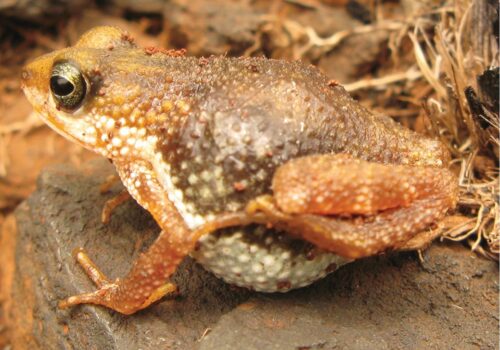
Bufoides meghalayanus bears characteristics inherently adapted for living amid conspicuous moisture and perpetual low-light conditions. This diminutive amphibian typically measures no more than 2 to 4 centimeters long, its small, stout physique ideally suited to navigating the thick forest floor vegetation and leaf litter packs.
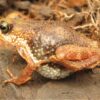
The skin exhibits a rough, granular texture, a hallmark typical of Bufonid toads, yet uniquely patterned in subtle blends of olive, brown, grey, and mossy green. The cryptic coloration and texture afford exceptional concealment within its surroundings, making detection virtually impossible even for diligent predators or researchers, enhancing its elusive demeanor.
Specialized glands positioned on its dorsum—the parotoid glands—secret mild defensive toxins, deterring potential predators while highlighting evolutionary pressures for defensive adaptation. The legs, though short, are strong and agile, suitable for brief, decisive leaps during escape or hunting prey, while their perfectly shaped toes easily navigate slippery surfaces.
Behavior and Life Cycle: Subtle Rhythms of Survival#
Imagine a cool evening after heavy rainfall; the air saturated with moisture, droplets drip rhythmically from dense forest foliage. It is precisely during such times that Bufoides meghalayanus becomes most conspicuous, engaging in nocturnal foraging or courtship behaviors near flowing streams and moisture pockets. Patient and meticulous, they stealthily patrol for small invertebrates—principal components of their diet—such as beetles, ants, termites, and various forest-floor arthropods.
Mating Rituals and Reproduction#
Following seasonal cues—in this case, the onset of monsoon season—these toads gather near streams and damp depressions to propagate. Males vocalize gently yet persistently, releasing soft melodic croaks designed to entice prospective mates while competitors strive for optimal territory and female attention.
Fertilization occurs externally, as is typical for many amphibians. Females deposit strings or clusters of gelatinous eggs in clean and shallow stream edges or moist crevices shielded from harsh weather conditions. Larvae hatch quietly into tiny tadpoles adapted for stream life, quickly embarking on a perilous journey transitioning through vital developmental stages—primarily herbivorous at first, later progressively more omnivorous—culminating in metamorphosis into fully mature terrestrial individuals.
Ecological Role: Keystone Miracles of Small Scale#
While small and often overlooked, Bufoides meghalayanus significantly impacts Meghalaya’s delicate ecological web. By efficiently regulating populations of various insect species, these toads contribute actively to maintaining balanced ecosystems. In turn, they also serve as vital prey for local snakes, birds, and mammals, establishing crucial food chain connections.
Additionally, their sensitivity to environmental changes makes Bufoides meghalayanus valuable bio-indicators. The health of these amphibians signals subtle shifts in habitat quality, climate, and pollution—evidence easily overlooked by humans and pointing towards broader environmental stability or distress.
Threats and Conservation Status: A Species on the Brink#
Despite their ecological importance, Bufoides meghalayanus remains critically at risk. The International Union for Conservation of Nature (IUCN) classifies it as “Data Deficient” primarily due to limited observations and studies; yet, habitat degradation clearly poses immediate threats.
Human activities—intensifying agriculture, deforestation for infrastructure, mining exploration, and unregulated tourism—disrupt the species’ fragile moisture-dependent habitats. Moreover, climate change poses growing concerns, directly threatening rainfall predictability and humidity patterns essential to their reproduction and survival.
Local conservationists and regional initiatives increasingly advocate for dedicated ecological assessments, habitat protection, and sustainable practices to safeguard these verdant forests from irreversible harm, preserving the unique diversity they harbor.
Cultural and Scientific Significance: Guardians of Meghalaya’s Forest Mysteries#
While culturally less prominent compared to large iconic fauna, Bufoides meghalayanus symbolizes the profound biological wealth and unknown mysteries Meghalaya embodies. New species discoveries attract global attention, generating pride among local communities increasingly invested in the sustainable management and protection of their invaluable biodiversity.
Scientifically, each observation of Bufoides meghalayanus deepens humanity’s understanding of biodiversity hot spots, evolutionary biology, and ecological connectivity. Each study becomes yet another vital thread woven together, forming a tapestry embodying life’s extraordinary adaptability and interconnectedness.
Conclusion: Ensuring Bufoides meghalayanus’s Enduring Legacy#
A glimpse into Bufoides meghalayanus’s complex world enriches understanding—the wondrous mysteries inhabiting Meghalaya’s shadowy forest depths. As ecosystems face unprecedented conservation challenges in this changing world, the Meghalaya Toad prompts reflection on humanity’s ecological responsibility. Protecting Bufoides meghalayanus safeguards manifold forest treasures, strengthening a global commitment to biodiversity and ecological harmony.
Let each discovery guide conservation, offering Meghalaya’s humble iconic amphibian hopeful resilience into perpetuity.