- Bufo torrenticola: Exploring the Fascinating Life of Japan's Torrent Toad
Bufo torrenticola: Exploring the Fascinating Life of Japan’s Torrent Toad#
Hidden among the shaded streams and cascading waterfalls of Japan’s mountain forests dwells an extraordinary amphibian. Quiet, elusive, yet resilient—a creature whose lifestyle perfectly encapsulates its name: Bufo torrenticola, the Japanese Stream Toad or Torrent Toad. With an evolution finely tuned by rapid waters, slippery rocks, and moss-covered forests, this unique amphibian captures the very essence of its rugged, aquatic habitat.
While frogs and toads often inspire humankind’s storytelling traditions, few generate the quiet intrigue of the Torrent Toad. Living in swift-flowing mountain streams and equipped to withstand powerful currents, their lives are adventures of resilience, ingenuity, and delicate ecological balance. Come immerse yourself in their story and explore the intricacies of a species evolved specifically for life amid torrents.
Taxonomy and Classification#
Belonging to the expansive family Bufonidae—the “true toads”—Bufo torrenticola shares a lineage with familiar earth-dwelling cousins, many inhabiting perfectly terrestrial or semi-aquatic niches. The genus Bufo comprises multiple species, all sharing robust physiques, dry skins, and characteristic wart-covered appearances. But while many Bufo species are primarily land-oriented, B. torrenticola has uniquely embraced an aquatic lifestyle, setting it apart within its genus.
First scientifically described in 1976 by Matsui, this species quickly fascinated herpetologists because of its particular adaptations. It shares its ecosystems with several notable close relatives, such as Bufo japonicus, though no other toad within its range has committed equally to life in fast-flowing mountain torrents like B. torrenticola.
Natural Habitat#
Geographic Range and Distribution#
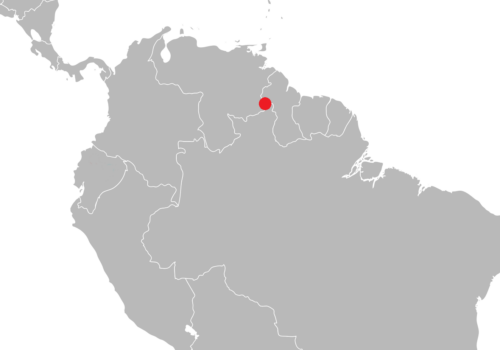
Bufo torrenticola is endemic to Japan, where it defines the amphibian biodiversity of the temperate mountain forests primarily across Honshu, Shikoku, and Kyushu islands. It occupies locations characterized by fast-running mountain streams, often richly forested and shaded, maintaining cooler, moist microclimates essential for amphibians.
The highly specific range and distinct habitat preferences mean this species is both geographically limited and ecologically specialized. Mountainous terrains provide swift-moving, oxygen-rich waters which, though seemingly harsh, create ideal homes for these rugged amphibians.
A Life Crafted by Rapids#
The habitats preferred by B. torrenticola are defined not by peaceful ponds as many amphibians favor, but by turbulent rapids, rock-strewn riverbeds, and constantly shifting waters. Imagine steep mountain streams emerging from thickly wooded slopes, water cascading over moss-slick stones and through corridors carved by currents over millennia. These waters are sparkling clear, icy cold, and intensely oxygen-rich environments perfect for species adapted to currents and turbulence.
Adults and tadpoles alike thrive where others would perish, adapting to cycles of drought and torrents shaped by seasonal rains and snow-melt. Their resilience offers researchers insights into evolutionary adaptation, illustrating how amphibians can exploit even the most demanding habitats.
Physical Characteristics and Adaptations#
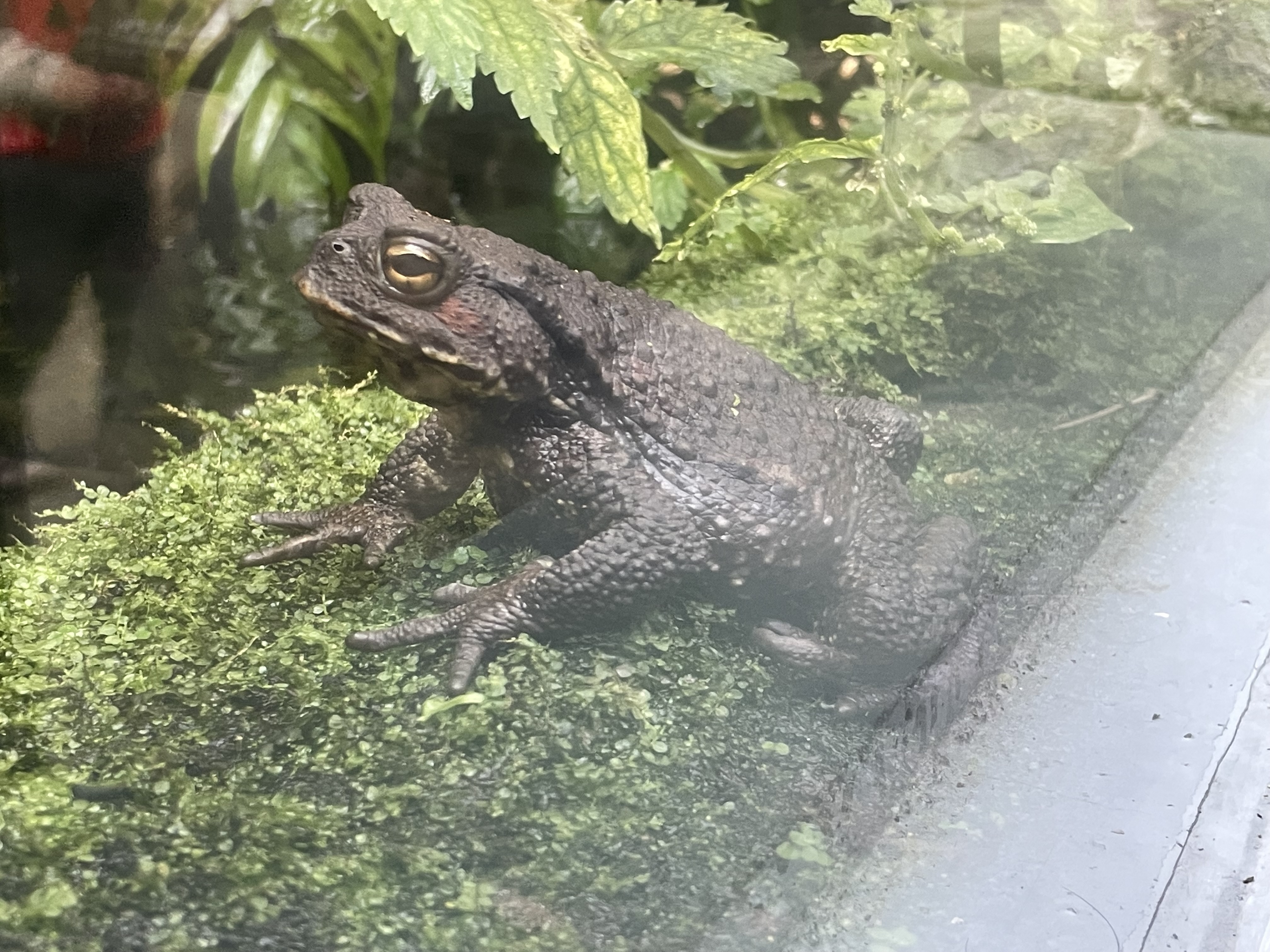
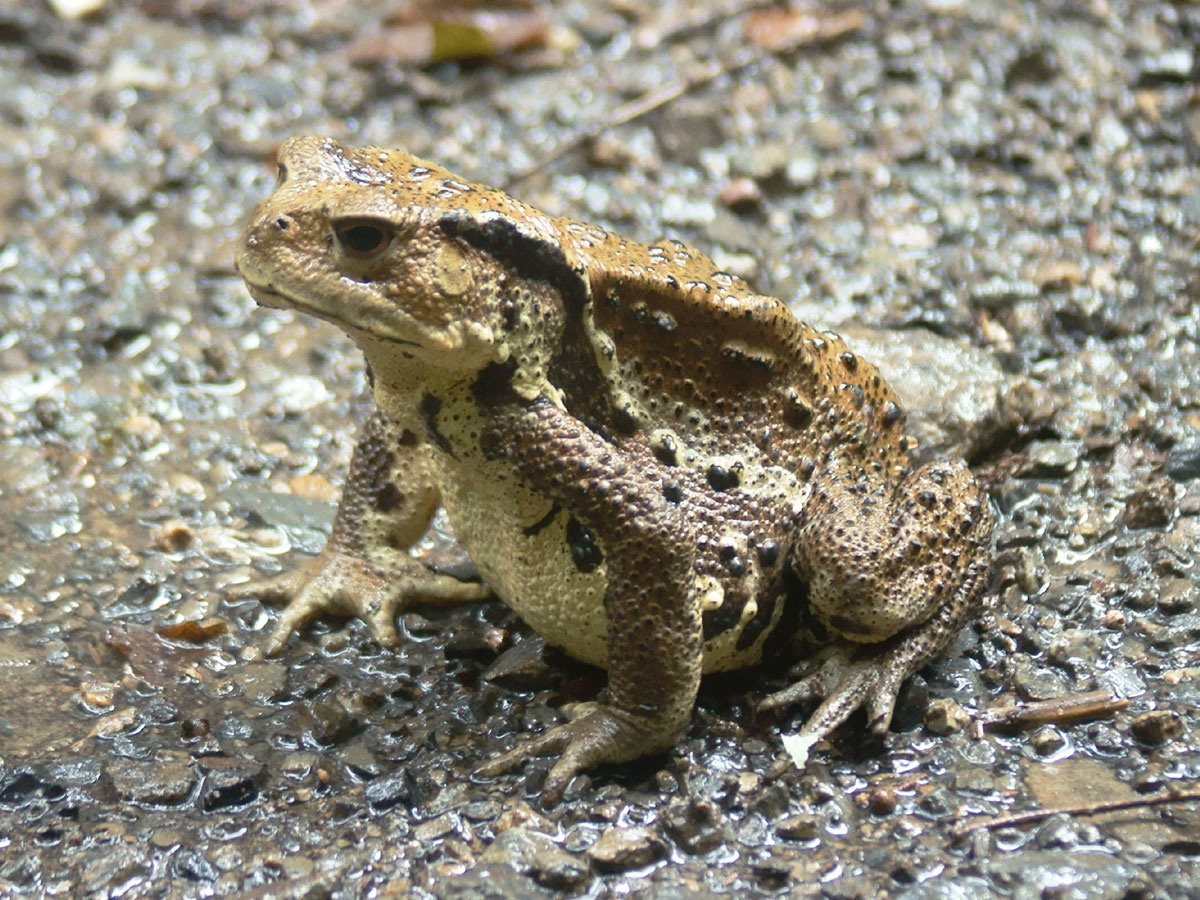
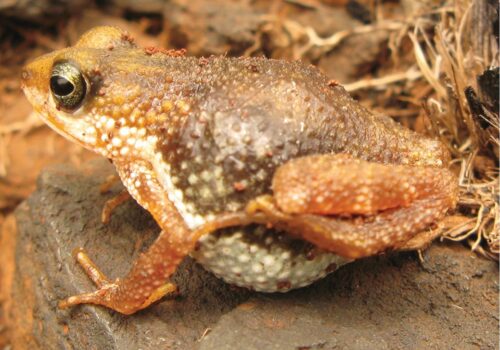
Measuring approximately 8 to 12 centimeters in length, the Torrent Toad presents a medium-sized amphibian appearance, robust by bufonid standards. Its body form is especially muscular, appropriately so—these individuals must maintain a secure foothold amid powerful currents.
Upon first glance, the distinctive wart-speckled skin in varied shades from dark olive-brown to slate-grey lets it melt into its habitat, camouflaging it wonderfully within mossy rocks and shadowy crevices. Well-adapted fingers and toes equipped specifically for grasping and stable gripping characterize this unique amphibian, enabling it to hold fast even against vigorous water flow.
An extraordinary adaptation of B. torrenticola is its powerful hind limbs, strongly muscular for steady leaps and skillful rock-to-rock travel. Meanwhile, their parotoid glands secrete toxins to deter predators, marking them both as protected survivors and fascinating evolutionary mosaics—a marvel for both scientists and nature enthusiasts alike.
Behavior and Life Cycle#
An Amphibian’s Daily Routine Amid Streams#
Life within mountain torrents requires unique behaviors. Torrent Toads often anchor themselves to submerged rocks, hiding in cracks or beneath underwater ledges during the daytime. As darkness descends over the streams, these nocturnal amphibians awaken fully, emerging from hiding places to actively hunt along stream banks.
Their diet primarily includes terrestrial insects, spiders, worms, and sometimes small crustaceans washed from the forest into stream waters. Using vision and exceptional agility, the toads pounce on prey swiftly, employing dexterity gained from life amid instabilities of swift waters.
A Unique Breeding Ritual#
Spring, especially late March through April, marks their courtship period. Male Torrent Toads emit gentle yet persistent calls to attract their mates, whose ears are finely tuned to detect such melodies amid roaring waterfalls—a mighty feat of evolutionary tuning. Following successful mating, their egg strings are meticulously placed beneath submerged stones in calmer pockets downstream, securing them amid turbulent waters.
Over the next several weeks, eggs develop into resilient tadpoles uniquely adapted to cling to rocky substrates. Powerful suction mouths anchor them to rocks, scraping algae and biofilm for sustenance. Eventually metamorphosing into small, juvenile toads, they begin their careful upstream migration, symbolizing the lifelong resilience their species embodies.
Ecological Role and Relationships#
Within their specialized niche, Torrent Toads perform vital ecological roles. Acting both as predators and prey, their existence supports food web balances critical within mountain stream ecosystems. The capture of insects and terrestrial invertebrates controls pest populations while providing crucial nutrition flow into aquatic territories.
Equally importantly, their presence indicates healthy water quality. Sensitive to pollutants and disruptions, stable populations signal ecosystems that remain ecologically intact, offering environmental scientists an essential biological barometer on ecosystem health.
Threats and Conservation Status#
Bufo torrenticola is currently categorized as Near Threatened by the International Union for Conservation of Nature (IUCN). Habitat fragmentation, deforestation, pollution, damming, and climate-related changes pose significant and ongoing threats to their survival, disrupting delicate lifecycles intricately tied to natural flow regimes and purity of mountain waters.
Efforts are underway among Japanese conservationists, researchers, and local community groups working to protect stream ecosystems, establish conservation corridors, and monitor population dynamics. Increasingly recognized for its ecological importance, this rugged amphibian is emerging gently from obscurity, receiving urgently needed conservation recognition and protection measures.
Cultural and Scientific Significance#
Frogs and toads hold special places in Japanese culture. Revered in poetry, arts, and folklore—often depicted symbolically to portray resilience and adaptability—species such as the Torrent Toad are increasingly celebrated as symbols of ecological vitality and environmental harmony.
Scientifically, Bufo torrenticola provides herpetologists compelling insights into evolutionary biology, ecology, and potential bio-indicators of climate change. Documenting their specialized adaptations helps environmental planners predict ecosystem responses to human impacts, aiding informed conservation planning.
Conclusion: Celebrating an Icon of Natural Resilience#
Fifty million years of evolution have crafted Bufo torrenticola into an unparalleled survivor—a symbol of adaptability, strength, and hidden beauty. From egg to tadpole, to adult thriving in turbulent currents, their existence narrates a story both fascinatingly complex and urgently fragile. Yet resilience alone cannot guarantee survival amid modern threats.
Today, our challenge is recognizing the powerful yet often overlooked roles these astonishing creatures fulfill within ecosystems, elevating conservation efforts, and protecting their delicate stream habitats. Whether through education, advocacy, or simply learning more about this enigmatic species, each effort contributes critically.
Let us cherish more consciously the quiet yet vivid drama unfolding in every mountain stream inhabited by the alluring Bufo torrenticola. Only then can we ensure future generations, too, share in the wonder of Earth’s amazing biological treasures.