- Exploring the Enigmatic World of Bufo stejnegeri: East Asia's Hidden Jewel
- Understanding Bufo stejnegeri: Classification and Relation
- The Quiet Realms of Bufo stejnegeri's Natural Habitat
- A Closer Look: Physical Traits and Adaptations
- The Quiet Symphony of Behavior and Life Cycle
- The Understated Guardian: Ecological Significance
- Facing Challenges: Conservation Threats and Efforts
- Encounters of Significance: Cultural and Scientific Contributions
- Why Stejneger's Toad Deserves Our Attention and Protection
Exploring the Enigmatic World of Bufo stejnegeri: East Asia’s Hidden Jewel#
Hidden among the leaf litter and quiet waterways of East Asia’s serene landscapes lives a creature often overlooked but infinitely fascinating: Bufo stejnegeri. Known commonly as Stejneger’s Toad, this unassuming amphibian species, scientifically described as Bufo stejnegeri, represents more than just another frog—it embodies an intricate story of adaptation, ecological balance, and the delicate interconnectedness of life. Its camouflage blends seamlessly with its habitat, making every encounter with this amphibian not just a casual observation, but a treasured discovery.
Named in honor of Norwegian-born American herpetologist Leonhard Stejneger, this species captivates researchers and nature enthusiasts alike. Yet, despite its biological significance, Bufo stejnegeri remains relatively under-studied and hidden from the mainstream awareness of biodiversity. What unique secrets does this little-known frog hold? And why is its preservation crucial for the regions it quietly inhabits?
Understanding Bufo stejnegeri: Classification and Relation#
In taxonomic terms, Bufo stejnegeri falls under the Kingdom Animalia, Phylum Chordata, Class Amphibia, Order Anura, Family Bufonidae, Genus Bufo, and finally, the species designation stejnegeri. This places it squarely among the true toads—members of the Bufonidae family, characterized by their robust build, warty skin, and typically terrestrial lifestyles.
Closely related to other Bufonid species across Asia like Bufo japonicus, this species distinguishes itself subtly through geographic specificity, morphological nuances, and distinct behavior patterns. The taxonomic clarity within the Bufonidae family can sometimes blur, and detailed field studies remain pivotal in confirming and understanding precise evolutionary relationships.
The Quiet Realms of Bufo stejnegeri’s Natural Habitat#
Bufo stejnegeri predominantly inhabits regions across East Asia, including China, Taiwan, Japan, and potentially parts of Korea. It thrives in varied terrain—from subtropical broadleaf forests to montane woodlands, highlighting its remarkable adaptability. Typically found between elevations of 500 to 2000 meters, this toad favors environments with abundant moisture, leaf litter, stream banks, and shaded undergrowth rich in insects—the staple of its diet.
Imagine stepping into a lush subtropical forest, sunlight filtering gently through towering canopies, casting playful patterns on moist, leaf-strewn ground. This serene yet dynamic habitat defines the essential refuges of Bufo stejnegeri. Leaf litter forms a rich tapestry, teeming with prey species like beetles, ants, and spiders—the vital components fueling this amphibian’s survival.
Further emphasizing their adaptability, individuals also occupy disturbed habitats such as cultivated fields, gardens, and parks amidst their native range, displaying resilience in the face of human encroachment—though this has distinct ecological limits and implications.
A Closer Look: Physical Traits and Adaptations#
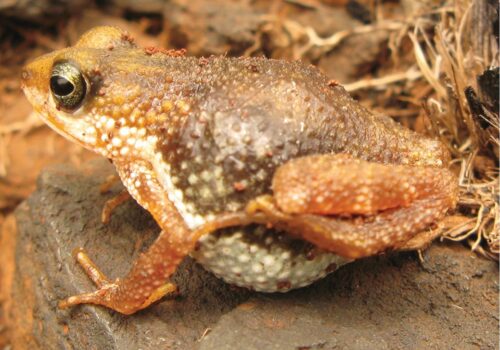
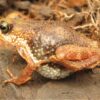
Measuring approximately 5 to 9 centimeters in length, Stejneger’s Toad exhibits the robust appearance typical of true toads. Its body, cloaked in earthy shades ranging from muted greens and browns to vivid reddish-orange hues interspersed with darker blotches, serves as a living portrait of camouflage mastery. Warty bumps pepper its skin, enhancing its inconspicuousness while providing defense against predators.
Pronounced parotid glands resting just behind the head are particularly noteworthy; these glands secrete toxins as a means of predator deterrence—an evolutionary trait common across many bufonids. Their eyes—amber or dark copper in coloration—peer silently from a predominantly nocturnal existence, capturing the dim moonlight as they await their nightly meals.
This subtle coloration not only helps Bufo stejnegeri evade predators but offers thermal regulation while resting inconspicuously on forest floors during daylight hours. Its muscular hind limbs provide powerful bursts of motion when needed, despite a generally sedentary lifestyle that prefers stealth and stillness over active avoidance.
The Quiet Symphony of Behavior and Life Cycle#
Feeding and Hunting Habits#
Stejneger’s Toad primarily employs an ambush hunting strategy, patiently awaiting unsuspecting prey to venture within striking distance. Its keen eyesight and responsive tongue provide precision strikes to capture insects, spiders, and other small arthropods. This method of predation minimizes energy expenditure, ideal for amphibians inhabiting nutrient-rich yet energetically competitive environments.
Breeding and Reproduction#
Breeding for Bufo stejnegeri coincides with rainy seasons, usually in early spring. Males converge at temporary pools or slow-moving streams, greeting potential mates with melodic yet gentle calls that resonate through humid nighttime air. These vocalizations are crucial, making auditory territory just as important a resource as the water needed for spawning.
Egg clusters are deposited underwater, suspended delicately along vegetation stemming from submerged branches, grasses, or other anchoring points. Tadpoles hatch after several days, embarking upon a life stage drastically different from adulthood. With elongated bodies adapted for aquatic life, these larvae feed primarily on detritus and minute algal growth until metamorphosis equips them with limbs and terrestrial capabilities—transforming aquatic dwellers into terrestrial amphibians ready to explore their terrestrial realm anew.
Notably, parental investment beyond egg-laying does not occur; the species instead relies on sheer numbers, cryptic coloration, and highly synchronized developments to maximize offspring survival—a truly fascinating dance of natural selection and adaptation.
The Understated Guardian: Ecological Significance#
Bufo stejnegeri fills numerous vital ecological niches. As predators, these toads serve as pest controllers, regulating insect populations and subsequently alleviating pressures on plant communities and human agricultural activities. Their role extends further still—serving as prey for larger predators, they nourish species ranging from aquatic birds and mammals to snakes and larger amphibian species.
Perhaps less commonly recognized but equally essential, amphibians like Bufo stejnegeri act as critical indicators of environmental health. Their semi-permeable skin, unique larval phases, and high sensitivity to pollutants render them early-warning signals for environmental degradation—a gentle voice signaling ecological distress long before impacts become irreversible.
Facing Challenges: Conservation Threats and Efforts#
Although currently categorized as “Least Concern” according to the International Union for Conservation of Nature (IUCN), Bufo stejnegeri nonetheless confronts several pressing ecological challenges. Habitat loss poses perhaps the most prominent threat, driven by increasing urbanization, agriculture expansion, and infrastructure developments. Fragmentation of natural landscapes limits the species’ ability to undergo vital seasonal migrations and diminishes genetic diversity, subtly yet significantly undermining overall population health.
Climate change compounds pressures through altered precipitation and temperature patterns, directly affecting breeding cycles, larval survival rates, and the abundance of prey populations. Pollutants, pesticides, and altered landscapes further erode habitats’ quality and quantity.
Despite these challenges, regional conservation organizations and researchers have started to emphasize habitat preservation, pollution reduction, and defining conservation management in affected localities, laying foundations for proactive measures ensuring this species’ continuing survival.
Encounters of Significance: Cultural and Scientific Contributions#
Though less prominent culturally compared to Asian favorites such as the Chinese giant salamander, frogs and toads across the region feature regularly within folklore, medicinal traditions, and cultural symbolism representing luck, prosperity, renewal, and rain-bringing.
Scientifically, Bufo stejnegeri contributes insights into amphibian ecology, toxin production mechanisms, and adaptations to changing habitats. Investigations into its toxin properties hold potential for novel medicinal compounds—emphasizing untapped potentials within even modest, otherwise overlooked species.
Why Stejneger’s Toad Deserves Our Attention and Protection#
Bufo stejnegeri encapsulates perfectly the notion that every species, no matter how seemingly ordinary, plays an indispensable role within nature’s complex ecological tapestry. Its continued survival signifies healthy ecosystems, stable climatic conditions, and responsible stewardship of our biodiversity.
As we deepen our appreciation for these quiet, hidden lives, it becomes increasingly imperative to advocate for proactive conservation practices and environmental restoration. By protecting isolated, overlooked species like the Stejneger’s Toad, we ultimately protect our collective future—one amphibian at a time.
Let us remember: every small creature matters, every habitat deserves safeguarding, and every story—like that of Bufo stejnegeri—should be told and cherished.