- Introduction: Discovering a Forest Jewel—The Bufo luchunnicus
- Taxonomy and Classification
- Natural Habitat: The Subtle World of Luchun Forests
- Physical Characteristics: Camouflaged for Survival
- Behavior and Life Cycle: The Quiet Rhythms of Forest Life
- Ecological Role: Unseen, Yet Essential
- Threats and Conservation Status: A Species at Risk
- Cultural and Scientific Significance: Bridging Humanity and Nature
- Conclusion: Preserving the Quiet Charm of Bufo luchunnicus
Introduction: Discovering a Forest Jewel—The Bufo luchunnicus#
Amid the lush, emerald tapestry of China’s southern forests exists a humble yet fascinating amphibian, often overlooked yet quietly exceptional—the Bufo luchunnicus. Scientifically named and skillfully hidden within its vibrant subtropical habitat, this enchanting native of southern China’s Yunnan province plays an integral, if understated, role in the region’s rich, biodiverse fabric. Known colloquially as the Luchun toad, Bufo luchunnicus presents itself subtly to the observant eyes of biologists, conservationists, and nature enthusiasts alike.
Although it lacks the splashy colors or dramatic behaviors of its tropical cousins, this forest toad nevertheless holds unique ecological importance and reveals remarkable facets of adaptation and survival. From its fascinating camouflage skills to its sensitive dependence on forest ecosystems, each detail of Bufo luchunnicus’ existence is an enlightening lesson in ecology, conservation, and evolutionary biology.
Taxonomy and Classification#
Classified in the Bufonidae family—the true toad family—Bufo luchunnicus finds company among over five hundred diverse species worldwide. Within the genus Bufo, species often vary widely in their habitat preferences, coloration, and behaviors, yet all share fundamental evolutionary traits: protection via toxin glands, terrestrial adaptations, and an impressive resilience to environmental shifts.
Bufo luchunnicus was scientifically described as a distinct species relatively recently. Its closest known relatives include several other East and Southeast Asian Bufo species inhabiting forested montane and subtropical regions, highlighting a strong evolutionary lineage adept at thriving in damp, shaded forest worlds.
Natural Habitat: The Subtle World of Luchun Forests#
Geographic Range and Habitat Preferences#
The Luchun toad’s name itself gives away its home turf: discovered near Luchun County, Southern Yunnan, Bufo luchunnicus inhabits the lush, evergreen subtropical forests characteristic of this region. Yunnan is renowned globally for its ecological diversity and abundance of endemic species, thriving in habitats stretching from dense lowland forests, shrublands, to moss-covered montane woods.
Bufo luchunnicus particularly favors moist and shaded habitats with densely-layered leaf litter, close to freshwater sources—small streams, forest streams, puddles—where conditions offer stable humidity, ample prey availability, and sheltered nesting grounds. Possessing complex behaviors suited to forest dwelling, Bufo luchunnicus blends remarkably with its environment, easily overlooked among rotting trunks, damp soils, and lush, dappled undergrowth.
A Perfect Fit: How Habitat Shapes Survival#
The subtropical forest floor offers Luchun toads more than mere shelter; it’s a dynamic habitat precisely aligned with their evolutionary adaptations. The dense leaf litter creates microhabitats that retain moisture, enabling them to maintain proper hydration critical for respiration and skin health. Hidden spaces among fallen logs, tree roots, and soil crevices act as safe havens against predators and extreme weather.
Furthermore, these particular habitats provide an abundant supply of insects and other invertebrates that constitute the primary diet of this species. Feeding along the fertile edge between forest floor litter and soil, Bufo luchunnicus contributes significantly to controlling pest populations, facilitating energy circulation within this fragile forest community.
Physical Characteristics: Camouflaged for Survival#
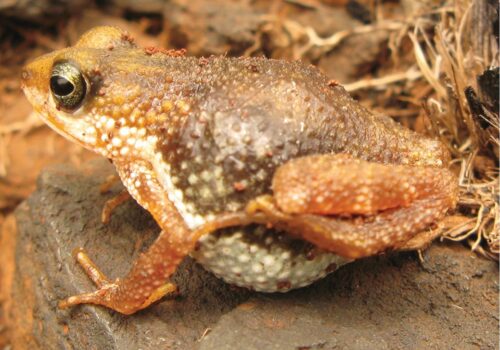
Modestly sized and subtly adorned, adult Bufo luchunnicus typically measure around 4cm to 6cm in length from snout to vent, embodying an unassuming presence on the forest floor. Their coloration blends convincingly with their surroundings—a mottled mosaic of olive, brown, tan, and grey hues. Complex patterns across their skin closely mimic fallen leaves, moss patterns, and subtle earth tones, allowing them to evade detection by predators and human observers alike.
Perhaps most distinctively, this species possesses parotoid glands behind each eye. These glands secrete mild defensive toxins, deterring potential predators such as birds, mammals, and even snakes. Though they may appear innocuous, these toads quietly showcase a magnificent biological arsenal, adapting uniquely to their ecological niche.
Behavior and Life Cycle: The Quiet Rhythms of Forest Life#
Feeding and Hunting Behaviors#
An ambush predator by nature, Bufo luchunnicus relies extensively on stealth and patience. Settling invisibly into leaf litter or perched silently by shallow rivulets, these toads await unsuspecting prey primarily composed of insects and small invertebrates—beetles, ants, worms, spiders, and occasionally small mollusks. Short, swift lunges and sticky tongues swiftly end these unsuspecting victims’ lives, guiding the forest’s ecological equilibrium.
Upholding the Cycle: Breeding Habits#
As subtropical rains begin to descend and breathe fresh life into Yunnan’s forests each spring, males of Bufo luchunnicus awake to their annual ritual—courtship. Limited knowledge prevails on the intricacies of their mating calls, yet researchers have noted soft chirping whistles resonating subtly throughout the rainy nights, guiding receptive females toward secluded freshwater pools.
Females lay gelatinous egg clusters into shallow water sources, often tucked discreetly among submerged debris and leaves. From here, thousands of tiny tadpoles begin their aquatic life, rapidly developing under pressures of predation and competition. Eventually, metamorphosis occurs, transforming aquatic juveniles into terrestrial adults fully equipped to continue the ancient cycle once again.
Ecological Role: Unseen, Yet Essential#
Though small in stature, Bufo luchunnicus significantly influences its environment in myriad subtle ways. Primarily, these toads act as regular insectivores, balancing insect populations in the subtropical forests of Yunnan. Their role reduces potential insect outbreaks, safeguarding plants and contributing to the stability and overall health of the forest ecosystem.
In return, they serve as meaningful links in the food chain, providing sustenance to a variety of larger predators, from birds and snakes to small carnivorous mammals. Through observations of their sensitivity towards habitat quality, these amphibians also function as bioindicator species, alerting scientists to potential ecological disasters long before they become obvious.
Threats and Conservation Status: A Species at Risk#
Unfortunately, the quiet existence of Bufo luchunnicus is increasingly challenged. Habitat degradation, deforestation, and climate change-related shifts threaten its subtropical forest home. Socioeconomic pressures—logging operations, agricultural expansion, and human settlement encroachment—continue to fragment and shrink suitable habitats, diminishing population numbers and genetic diversity at alarming rates.
Currently categorized as “Data Deficient” on the IUCN Red List, the status highlights the urgent need for increased scientific attention, surveys, and conservation management efforts. Dedicated protection of remaining forest habitats, environmental education programs, and supportive policies can help tip the scales and safeguard this subtle yet ecologically vital amphibian.
Cultural and Scientific Significance: Bridging Humanity and Nature#
While not prominently featured in regional folklore or ancient symbolism known elsewhere in Asia, Bufo luchunnicus nevertheless embodies profound ecological symbolism—representing the health, resilience, and subtler threads of regional ecosystems. Scientists value such understudied amphibians deeply, recognizing their potential for scientific inquiry into ecotoxicology, developmental biology, and climate change resilience.
Especially amid intensifying global biodiversity crises, the Luchun toad advocates silently yet powerfully for sustainable coexistence between human communities and natural landscapes that sustain life in all its quiet forms.
Conclusion: Preserving the Quiet Charm of Bufo luchunnicus#
The tale of Bufo luchunnicus echoes far beyond its small forest niche, resonating through the unfolding human-nature relationships worldwide. By bringing attention, appreciation, and committed protection to these hidden jewels, we collectively protect much broader eco-frameworks upon which we too ultimately depend.
We encourage everyone—from students and nature enthusiasts to scientists and policymakers—to learn more, engage actively with amphibian conservation efforts, and raise awareness of subtle biodiversity wonders often hidden in plain sight. After all, protecting a small, humble toad today signifies safeguarding our very future tomorrow.