- Bufo Formosus: Discovering the Beautiful Asian Toad
- Taxonomy and Classification
- Natural Habitat of the Beautiful Toad
- Physical Characteristics: Nature's Masterpiece in Amphibian Form
- Behavior and Life Cycle of Bufo Formosus
- Ecological Role: Keeping Forest Balance
- Threats and Conservation Status: Struggling for Survival
- Cultural and Scientific Significance
- Conclusion: Celebrating and Protecting the Beautiful Toad
Bufo Formosus: Discovering the Beautiful Asian Toad#
When the twilight settles softly upon the mist-shrouded hillsides and dense forests across parts of Asia, a peculiar voice joins the symphony of nocturnal creatures. This low, melodic trill belongs not to a night bird or insect but to a remarkable and beautiful amphibian known scientifically as Bufo formosus. Commonly referred to as the Beautiful Toad or Asian Tree Toad, this intriguing amphibian enchants naturalists and nature enthusiasts alike.
While frogs and toads often elicit varied reactions, ranging from fascination to squeamishness, there’s something undeniably captivating about Bufo formosus. Adorned with unique patterns and coloration, each individual becomes a living work of art lurking quietly among leaf litter, rocks, and streams. As an essential yet subtle part of the ecosystems it inhabits, this species holds a key role in both ecological balance and our broader understanding of amphibian diversity. Join us as we immerse ourselves in the hidden world of the fascinating Bufo formosus, illuminating its natural history, richly-textured behavior, and the conservation issues surrounding its delicate existence.
Taxonomy and Classification#
Bufo formosus belongs to the family Bufonidae, a group commonly known as true toads. This family encompasses numerous species worldwide, characterized by their dry, warty skin and distinctive parotoid glands behind their eyes. First described scientifically by Boulenger in 1883, the name “formosus” derives from Latin, meaning “handsome” or “beautiful,” a reflection of this species’ striking appearance.
Within the genus Bufo, this species is closely related to other Asian toads sharing similar ecological niches and adaptations. However, in recent decades, rapidly advancing genetic analysis has begun unraveling more detailed relationships, prompting taxonomic reassessments and occasional reclassifications among various toad taxa. Yet, despite changes within amphibian taxonomy, the distinctive morphology and behavior of Bufo formosus have allowed it to hold steady taxonomic clarity and recognition.
Natural Habitat of the Beautiful Toad#
Geographical Distribution#
The Beautiful Toad is native primarily to Southeast Asia, specifically found in mountainous regions of northeastern India, southern China, Myanmar (Burma), Bhutan, Nepal, and extending into northern Thailand and Laos. It thrives at elevations typically ranging from 500 to 2,500 meters above sea level, areas often characterized by moist, verdant forests and subtropical to temperate climates.
Habitat Preferences#
This species reveals a distinct preference for forested environments, including subtropical broadleaf forests and Himalayan foothill forests. Moist conditions coupled with ample shelter provided by leaf litter, moss-covered stones, fallen logs, and dense vegetation make ideal habitats. Streams, small forest pools, or slow-moving rivers are essential not only for hydration but also as crucial breeding habitats for depositing eggs and caring for developing larvae.
Unlike many amphibians, Bufo formosus often displays a certain mysterious invisibility, blending seamlessly into its surroundings. Naturalists walking quietly along shaded streams might pass by without noticing the beautifully camouflaged adults or juveniles hiding among leaf litter or underbrush, their vibrant patterns harmonizing flawlessly with the dappled forest floor.
Physical Characteristics: Nature’s Masterpiece in Amphibian Form#
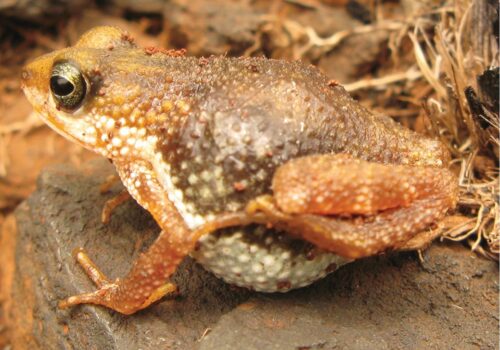
One glance at the Beautiful Toad reveals the appropriateness of its name, as its appearance perfectly marries function with visual splendor. Adults generally measure between 5 and 8 centimeters in length—compact enough for nimble movement, yet robust enough to navigate forest terrain effortlessly.
What’s most striking perhaps is their distinctive coloration and texture. The dorsal surface of Bufo formosus is ornamented with varying shades, often featuring olive-brown or yellowish hues accented by darker blotches, giving each individual a patterned appearance akin to intricate mosaic artwork. Their skin texture remains characteristically warty, subtle bumps providing not only camouflage but also a mild defense mechanism that deters predators with distasteful or irritating secretions.
Prominent parotoid glands located just behind the eyes serve as chemical defense systems, releasing mildly toxic compounds when predators attempt to bite or handle the toad. Eyes are large, darkly surrounded, lending a sort of innate curiosity to their expression. Limbs are sturdy yet flexible, equipped for hopping and traversing uneven wooded landscapes effortlessly, underscoring their adaptability.
Behavior and Life Cycle of Bufo Formosus#
The Intriguing Nocturnal Lifestyle#
Primarily active at night when humidity rises and predators decrease, Bufo formosus emerges cautiously from shelter, embracing its role as a nocturnal hunter. Insects and invertebrates constitute the bulk of its diet, comprising ants, beetles, termites, spiders, and occasionally small centipedes and mollusks. Hunting relies heavily upon their patient approach, ambushing prey with quick, deliberate tongue movements. Their cryptic coloration enhances predatory success, allowing them to move silently through shadows in search of unwary insects passing by.
Breeding Behavior and Life Cycle#
The breeding season, closely tied to the monsoon rains and increased availability of freshwater habitats, sees male Bufo formosus making their enchanting, melodious calls—soft trills and chirps that echo gently into forest nights, attracting mates from their hiding places. Females, attentive listeners, respond selectively, approaching chosen males who compete discreetly through vocalizations and subtle displays of dominance.
Once paired successfully, females deposit clusters of long strings filled with elevating numbers of gelatinous eggs, carefully attached to submerged plants or stones along forest streams. After fertilization by the male, parental care ends abruptly, leaving the eggs and the subsequent tadpole stage to develop independently—imbuing both beauty and vulnerability to this amphibian’s life cycle.
Tadpoles bear distinctive dark coloration, suited for watery camouflage as they actively fragment algae, detritus, and microorganisms. Transformation from tadpole to young adult, a fascinating metamorphosis period lasting several weeks—sometimes months—culminates in the development of terrestrial adaptations that valorize survival and thriving amid forest complexities.
Ecological Role: Keeping Forest Balance#
In its subtle way, Bufo formosus plays a substantial ecological role. As predators, these toads are effective pest controllers, limiting insect populations—including those harmful to plants and humans. As micro-predators, their diets significantly impact insect community dynamics, indirectly influencing plant pollination rates and disease spread control by feeding upon disease-carrying insects.
In addition, as prey, they contribute vital nutrients to predators such as birds, snakes, small mammals, and even larger amphibians. This predator-prey relationship embodies ecosystem balance, enhancing biodiversity richness and ecosystem resilience.
Threats and Conservation Status: Struggling for Survival#
Despite their hidden lives deep in Asian wilderness, Bufo formosus has increasingly confronted various threats. Habitat destruction poses the most significant issue, characterized by deforestation and habitat degradation driven by agriculture expansion, logging, infrastructure development, and human settlements.
Climate change alters rainfall patterns, threatening breeding success due to erratic weather events impacting stream habitats. Pollution through pesticides or chemical runoff further reduces water body suitability, degrading egg and larvae survival rates. While currently listed as “Least Concern” by the IUCN due to relatively widespread populations, ongoing threats illustrate a precarious future without active conservation engagement.
Effective conservation requires localized habitat protection, sustainable land-usage policies, mitigation of human-induced hazards, and education efforts promoting coexistence between local communities and amphibians. Scholars and conservationists are increasingly focusing research endeavors to monitor populations, breeding success, and threats to establish proactive protection plans.
Cultural and Scientific Significance#
In local folklore across its geographic range, frogs and toads, including Bufo formosus, symbolize environmental health and prosperity. Beyond symbolism, amphibians serve as bioindicators scientifically, with species like the Beautiful Toad offering markers reflecting ecosystem health due to their permeability to environmental changes.
Studies involving this species’ adaptations, secretions, or behaviors contribute significantly to ecological and biomedical research, providing opportunities to uncover unique toxins or medically relevant compounds, reinforcing the importance of biodiversity conservation.
Conclusion: Celebrating and Protecting the Beautiful Toad#
The exquisite beauty, captivating behaviors, and vital ecological role of Bufo formosus offer abundant reasons to cherish this amphibian and advocate for its conservation. As ambassadors of forest ecosystems across Asia, these fascinating toads deserve recognition, understanding, and active efforts toward their protection and preservation. Let us honor these understated icons of biodiversity—remnants of ancient evolutionary paths—urging respectful coexistence and conservation-focused actions to ensure that future generations experience the quiet magic of encountering nature’s Beautiful Toad.