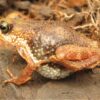
- Discovering Bufo eichwaldi: The Enigmatic Caucasian Toad Amidst Ancient Forests
- Taxonomy and Classification
- Natural Habitat: Ancient Forests and Hidden Streams
- Physical Characteristics: The Art of Camouflage
- Behavior and Life Cycle: Nature’s Quiet Dramas
- Ecological Role: Balancing Act within the Forest Floor
- Threats and Conservation Status
- Cultural and Scientific Significance
- Conclusion: Preserving the Enigmatic Voice of Caucasian Forests
Discovering Bufo eichwaldi: The Enigmatic Caucasian Toad Amidst Ancient Forests#
Amid the dense mountain forests and lush valleys of the southern Caucasus region, tucked away in hidden streams and shaded leaf litter, lives a creature rarely seen yet profoundly important: the fascinating Caucasian toad (Bufo eichwaldi). Often overlooked in favor of its more flamboyant amphibian cousins, this humble toad harbors secrets that are as perplexing as they are captivating.
Bufo eichwaldi, sometimes affectionately referred to simply as Eichwald’s Toad, represents an extraordinary example of evolutionary adaptation and ecological significance. Named after pioneering naturalist, Karl Eduard von Eichwald, who first documented many of the region’s distinctive fauna, this species holds hidden biological treasures tightly interwoven with the balance of its natural habitat. Though modest in appearance, its presence or absence can profoundly echo within ecosystems, guiding conservationists like a silent sentinel.
Join me in exploring the secretive life and ecology of this remarkable amphibian; let us uncover how the quiet, unassuming Eichwald’s toad epitomizes the intricate synergy of nature’s design.
Taxonomy and Classification#
To fully appreciate the biological role of Bufo eichwaldi, we journey briefly through its taxonomic lineage. Classified under the family Bufonidae, commonly referred to as “true toads,” this family comprises a widespread lineage renowned for their robustness and adaptability.
Within Bufonidae, Bufo eichwaldi belongs to the genus Bufo, a diverse and globally dispersed group notable for their rugged, often warty appearances, terrestrial tendencies, and peculiar glands secreting defensive toxins. Eichwald’s toad itself carries a distinctive lineage, closely tied evolutionarily to other Eurasian toads, yet distinguished profoundly by isolation in its particular mountainous abode within the Caucasus.
Natural Habitat: Ancient Forests and Hidden Streams#
Geographical Range and Distribution#
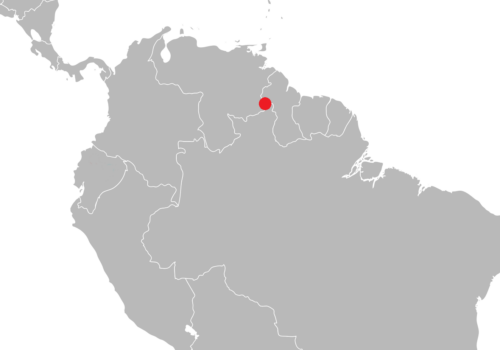
The Caucasian toad occupies a relatively narrow, specialized distribution primarily concentrated in the southern Caucasus region: encompassing parts of southwestern Azerbaijan, northwestern Iran, and pockets within southeastern Georgia and Armenia. Here, rugged mountain terrains give rise to heavily wooded valleys, interspersed with cool temperate forests shaped by centuries of climatic fluctuations and geological transformations.
These secluded, humid forests sit nestled between the lowlands and alpine zones—uniquely suited as homes for this discrete yet resilient amphibian. Within such isolated biomes unfold the quiet drama of Eichwald’s everyday existence.
Precise Habitat Preferences: Shelter beneath the Canopy#
The secret to Eichwald’s longevity lies in habitat specialization—the forest leaf litter and damp understory of mixed deciduous woodlands, especially those containing oaks, hornbeams, maples, and elms. Shaded streams flowing gently through moss-covered stones and hidden cavities beneath fallen logs provide critical micro-habitats essential for survival.
Amidst these cool, shaded microclimates, moisture remains steady, allowing amphibians to maintain vital metabolic functions, safeguard eggs during breeding seasons, and ensure larvae development. Relatively sensitive to habitat disruptions, Eichwald’s toad offers an invaluable indicator of forest ecosystem health, reflecting subtle changes triggered by climate shifts or human encroachment.
Physical Characteristics: The Art of Camouflage#
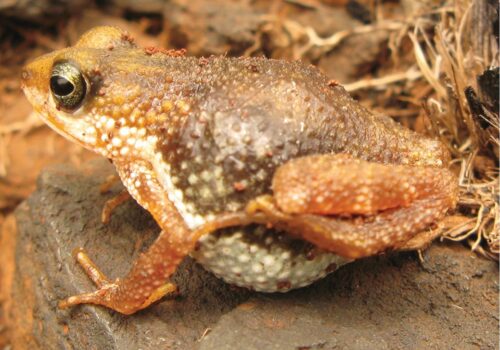
While Eichwald’s toad lacks the flamboyant colors exhibited by many tropical amphibians, its quiet beauty manifests through subtlety and adaptability. Averaging around 6–10 centimeters in length, adults are identifiable by their robust build, short sturdy limbs, and characteristically rough, textured skin, adorned with a constellation of small warts and glands. These glands secrete bufotoxins, providing an invaluable defensive mechanism against potential predators.
Coloration can vary widely, typically ranging from olive-brown and tan hues to deeper shades of grey or dusky green, often imitating the very leaf litter and soil they burrow into. Dark irregular patches or spots serving as camouflage further contribute to invisibility, particularly effective when stationary within the shaded understory of Caucasus woodlands.
Adaptations such as powerful hind limbs facilitate cautious hopping and burrowing—behaviors crucial in navigating and manipulating their leaf litter habitat to escape danger and fluctuations in humidity and temperature.
Behavior and Life Cycle: Nature’s Quiet Dramas#
Feeding Habits and Prey Relationships#
Primarily nocturnal and silent predators, Eichwald’s toads occupy essential niches within their ecosystem, controlling insect populations and providing balance within the food web. Equipped with a lightning-fast, sticky tongue, they patiently ambush prey within leaf litter and stream-sides, targeting insects, spiders, worms, and occasionally snails. By moderating pest species populations, Eichwald’s toad plays a profound role in supporting forest health and productivity.
Breeding Behaviors and Reproduction#
The first stirring warmth of spring signals Eichwald’s toads to awaken from their sheltered hibernation beneath logs and soil. Their annual migration sends them carefully back toward ancestral breeding pools, guided by powerful environmental cues and internal rhythms.
Male toads congregate near quiet stream pools, voicing mating calls—typically a subdued melodious croak—to attract potential female mates. Upon successful courtship, females deposit long strings of eggs, entrusting their future offspring to cool waters. Over several weeks, eggs hatch into tiny, herbivorous tadpoles undergoing a steady metamorphic transformation, eventually emerging onto land as miniature replicas of adults, ready to pursue terrestrial existence.
Unique Behavioral Traits#
A noteworthy peculiarity exists in Eichwald’s behavior, marked by a remarkable fidelity to a precise home range and breeding pond. Individuals, after dispersal, frequently return to exact natal water bodies, conveying a delicate ecological intimacy thoroughly tied to a few square meters of forest.
Ecological Role: Balancing Act within the Forest Floor#
Eichwald’s toad assumes vital roles of predator, prey, and bio-indicator within the forest ecosystem. By keeping insect populations balanced, they indirectly support the health of woodland flora, aiding in preserving native plant species from insect herbivory.
Eichwald’s tadpoles provide crucial nourishment for aquatic predators, including dragonfly larvae, predatory beetles, small fish species, and waterfowl. Adult toads themselves sit critically at the center of the food chain, offering nutrition for various large birds, snakes, small mammals, and occasionally carnivorous amphibians.
Utterly dependent on healthy soils and uncontaminated water sources, Eichwald’s toad acts as an early warning sentinel for ecological decline, highlighting emerging environmental issues well before human detection.
Threats and Conservation Status#
Regrettably, the ecological specialization that defines Eichwald’s toad also constitutes vulnerability. Habitat degradation from expanding agriculture, deforestation, infrastructural growth, and pollution severely threatens the species’ delicate habitats. As forest fragmentation isolates suitable habitats, populations inevitably shrink or disappear completely. Compounded by accelerating impacts of climate change—altering rainfall patterns and increasing drought frequency—populations stagnate or decline.
The International Union for Conservation of Nature (IUCN) currently lists Bufo eichwaldi as Vulnerable, reflecting these growing environmental challenges. Concerted action, habitat preservation, and raising awareness are urgently required to reverse these worrying trends.
Cultural and Scientific Significance#
Though modest in appearance, Bufo eichwaldi holds unassuming cultural value, appearing gently in local lore symbolizing fertility and renewal, their springtime choruses signaling nature’s rebirth and continuity in the Caucasus countryside.
Scientifically, these toads represent evolutionary novelty, equipping biologists and conservationists with valuable biological insights applicable globally. Continued studies of their unique toxins, survivorship traits, and ecological dependencies promise genuine benefits for human medicine, ecosystem management, and biodiversity conservation planning.
Conclusion: Preserving the Enigmatic Voice of Caucasian Forests#
Bufo eichwaldi, with understated beauty and subtle charisma, embodies the quiet resilience required in preserving our fragile ecosystems. Every amphibian matters—but Eichwald’s toad reveals particularly clearly how deeply intertwined an overlooked species can become within vibrant landscapes.
Awareness leads to action. By understanding and appreciating this delicate creature’s ecological story, we ignite deeper passion for conservation. Supporting initiatives aimed at protecting habitats, raising awareness, and sustaining ecosystems provides hope—not only for Eichwald’s toad but the stunning Caucasian wilderness they embody.
Together, let’s commit to safeguarding nature’s subtle voices, ensuring Eichwald’s song will resonate through generations to come.