- Bufo ailaoanus: The Enigmatic Toad of Yunnan's Hidden Forests
- Taxonomy and Classification
- Natural Habitat: The Misty Ailao Mountains
- Physical Characteristics: Camouflaged Wonders of the Forest Floor
- Behavior and Life Cycle: Secret Lives Beneath the Mist
- Ecological Role: Guardian of Balance in Mountain Forests
- Threats and Conservation Status
- Cultural and Scientific Significance: Illuminating Hidden Biodiversity
- Conclusion: Celebrating the Wonder of Bufo ailaoanus
Bufo ailaoanus: The Enigmatic Toad of Yunnan’s Hidden Forests#
In the dense mists of southern China’s Ailao Mountains, amidst humid undergrowth and shadowy rocky streams, dwells a remarkable yet little-known creature—Bufo ailaoanus. This elusive amphibian, belonging to the widespread true toad family Bufonidae, remains cloaked in mystery, its very existence largely unnoticed by the broader world. Yet, it quietly contributes to the complex ecological ballet of its remote habitat, playing its part in maintaining the delicate equilibrium of the mountainous forest ecosystems.
The discovery of Bufo ailaoanus marked a captivating addition to amphibian diversity and illuminated the startling biodiversity hidden away within China’s southwestern wilderness. While many enthusiasts are drawn to the more colorful or mesmerizing mongooses and tropical birds of these regions, this modest amphibian, with its peculiar habits and distinct natural history, possesses unique wonders to share with those patient enough to appreciate their understated charm.
Taxonomy and Classification#
The scientific classification of Bufo ailaoanus places it within the family Bufonidae—the true toads—under the genus Bufo. Since the early days of amphibian systematics, the classification of toads has evolved, reflecting sophisticated advancements in genetic profiling and morphological analysis. Within this intricate taxonomic jigsaw, B. ailaoanus achieves distinct recognition due to subtle yet meaningful divergences from its closest relatives.
First described scientifically by Yang in 1984, Bufo ailaoanus was immediately appreciated for its morphological distinction. It joins the ranks of species whose unique evolutionary adaptations grant insight into the local ecosystem’s history and the geographical events that have shaped biodiversity in the region.
Scientists note its close genetic relationship with other Bufonidae inhabitants of East and Southeast Asia, including species like Bufo tuberculatus and related taxa. These intricate evolutionary lineages highlight the Frog’s importance for studying amphibian diversity and dispersal in this historically isolated territory.
Natural Habitat: The Misty Ailao Mountains#
The defining character of Bufo ailaoanus is intrinsically linked to the environment it calls home—the remote Ailao Mountains of Yunnan Province. Rising abruptly from subtropical lowlands to substantial elevation, these mountain ranges form a biological hotspot, a mosaic of lush montane forests, dense bamboo thickets, clear flowing streams, and dense moss-covered rock formations.
A Specialized Habitat Dweller#
The Ailao Mountain range provides an ideal sanctuary for B. ailaoanus. The abundant rainfall and consistent humidity create the moist habitats essential for amphibians. Here, beneath dense canopies of broad-leaved evergreen forests punctuated by towering trees often wreathed in fog, the toads carry out their secretive lives. Typically thriving around crystal-clear streams, shallow ponds, and marshy areas, these specialized ecosystems provide perfect cover, breeding sites, and food sources.
Seasonal rains fill countless shallow depressions that serve as nursery pools for emerging tadpoles, secure from larger aquatic predators but close enough to damp logs and underbrush that nurture juvenile and adult toad populations. This mosaic habitat complexity has enabled the species to survive hidden from prying human eyes, lending it an air of captivating obscurity.
Physical Characteristics: Camouflaged Wonders of the Forest Floor#
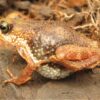
Bufo ailaoanus possesses the classic body contour and appearance common to true toads—but with subtle ecological adaptations shaped by its unique habitat. Moderate in size, adults typically range between 5 and 7 centimeters (around 2–3 inches), making them neither dramatically large nor insignificantly small.
Distinctive Markings and Colors#
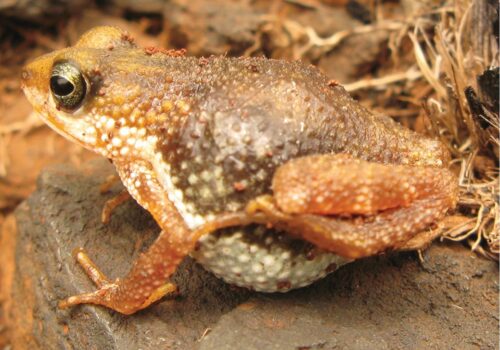
Colored primarily in earthy brown tones mixed with gray shades, these toads blend seamlessly into moist leaf litter and mossy substrates, exhibiting remarkable cryptic coloration. Their patterns typically display irregular mottling, enhancing their camouflage against the forest floor’s dappled sunlight and shadow interplay. The textured skin, filled with granular bumps and subtle ridges, further obscures their silhouette, blending perfectly against wet stones, bark, or leaf litter.
Adaptations Enhancing Survival#
Beyond coloration and texture, Bufo ailaoanus features adaptations suited to semi-aquatic habitats. Strong, muscular hind limbs allow for quick leaps and efficient swimming, essential to evade predators or to pursue prey. Meanwhile, their sturdy, muscular build helps them navigate rough, rocky terrain where slipping could mean exposure to danger.
Behavior and Life Cycle: Secret Lives Beneath the Mist#
As twilight settles across the mountain landscape and the incessant chatter of insects fills the cool, humid air, Bufo ailaoanus emerges from daytime shelters, seeking prey. Primarily nocturnal, their active hours offer protection from diurnal predators such as serpents, birds, and small mammals.
Feeding Habits and Predatory Strategies#
These toads hunt meticulously, feeding predominantly upon insects—ants, beetles, spiders, and moths—that are abundant in their biodiverse forest habitat. Employing a sit-and-wait strategy, they rely on keen eyesight and excellent timing. When prey brushes too close, the toad strikes with astonishing speed, deploying a sticky, well-aimed tongue to capture unsuspecting insects in mere milliseconds.
Unique Breeding Behaviors#
Breeding typically coincides with the annual monsoonal rains, where calls echoing softly across watery hollows attract mates. Male vocalizations form distinct choruses composed of resonant and harmonizing calls. Females are drawn to these rhythmic displays, prompting amplexus, the amphibian mating embrace where egg fertilization occurs externally as clusters of gelatinous eggs are broadcast into shallow pools and streams.
Once hatched, tadpoles navigate early stages of development in sheltered, food-rich waters, developing gradually until metamorphosing into terrestrial juveniles ready for life on land. Protection of suitable breeding sites thus becomes critical to ensuring continuing generations.
Ecological Role: Guardian of Balance in Mountain Forests#
As stealthy predator and vulnerable prey, Bufo ailaoanus profoundly impacts the ecological dynamics of its habitat. By regulating insect populations, they maintain balance among invertebrates, contributing to healthy forest systems. They also play an important role as prey, nourishing predators ranging from snakes and birds to mammals, thus sustaining the broader food chain.
Amphibians, like the Ailao Mountain’s obscure toad, serve as dependable bioindicators. Their porous skin and aquatic development stages render them sensitive to environmental changes such as pollutants, climate fluctuations, and diminished water quality. Hence, thriving populations of these creatures often reflect healthy ecosystems, while declining numbers signal challenges, alerting conservationists to underlying ecological issues needing urgent attention.
Threats and Conservation Status#
Despite limited studied attention, Bufo ailaoanus faces significant threats stemming mostly from environmental degradation and climate change. Habitat loss, driven by increased land clearing, agriculture expansion, and logging activities, presents profound concerns. Fragmented habitats inhibit breeding cycles and reduce genetic diversity, heightening vulnerability to disease outbreaks and specialized parasites such as devastating chytrid fungus.
Though scientific data on this species remain scarce, conservationists actively monitor and advocate for vital habitat protection. Current conservation measures within the region emphasize forest preservation, ecological connectivity, and pollution reduction, aiming to secure long-term survival.
Cultural and Scientific Significance: Illuminating Hidden Biodiversity#
The discovery and dedicated conservation efforts surrounding Bufo ailaoanus underscore the extraordinary hidden biodiversity of China’s remote mountainous regions. For scientists, this species represents untold potential discoveries related to amphibian evolutionary pathways, adaptation strategies, and responses to environmental challenges.
Culturally, amphibians such as this toad symbolize ecological resilience and the vital interconnectedness among species. Their presence reminds local communities and global audiences alike of the tenuous balance within ecosystems and evokes stewardship-oriented respect for nature’s subtler inhabitants.
Conclusion: Celebrating the Wonder of Bufo ailaoanus#
Bufo ailaoanus, though rarely appreciated or known beyond the sphere of specialized herpetologists, embodies nature’s intricate beauty, subtlety, and wonder. Protecting this amphibian means safeguarding its lush mountainous realm, further conserving countless other plant and animal species thriving within its ecological orbit.
By delving deeper into the hidden wonders of creatures like the Ailao toad, we foster greater admiration and appreciation for our world’s astounding biodiversity. Let us be inspired to support active conservation initiatives, amplify awareness, and ensure these secretive amphibians continue their silent chorus beneath misty skies for generations to come.