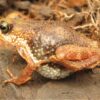
- Unveiling the Secret World of Beduka koynayensis: India's Enigmatic Stream Frog
- Taxonomy and Classification: The Origins of Beduka koynayensis
- Natural Habitat: Life in the Western Ghats' Hidden Streams
- Physical Characteristics: Nature's Master of Camouflage
- Behavior and Life Cycle: A Symphony of Subtlety and Survival
- Ecological Role: Guardians of Stream Ecosystems
- Threats and Conservation: Protecting a Fragile Legacy
- Cultural and Scientific Significance: A Symbol of India's Natural Wealth
- Conclusion: A Call to Action
Unveiling the Secret World of Beduka koynayensis: India’s Enigmatic Stream Frog#
In the heart of the Western Ghats, amidst the thick foliage, moss-laden rocks, and wandering mist, lives a charming yet little-known resident of India’s streams and lush forests. Beduka koynayensis, affectionately known as the Koyna Stream Frog, captivates anyone lucky enough to glimpse its cryptic shades and hear its mysterious nightly chorus. Scientifically described relatively recently, this intriguing amphibian species offers a treasure trove of insights into ecology, evolution, and conservation.
When evening envelops the evergreen canopy, this small amphibian begins its subtle orchestration—a symphony of chirps and whistles resonating softly against the whispers of forest streams. Beduka koynayensis isn’t just another frog; it symbolizes the incredible biodiversity and conservation challenges facing one of Earth’s richest yet most vulnerable ecological regions.
Taxonomy and Classification: The Origins of Beduka koynayensis#
Beduka koynayensis belongs to the family Nyctibatrachidae, more commonly known as Night Frogs, a family that thrives primarily in the biodiverse habitats of the Western Ghats. Within this family, the genus Beduka represents a relatively recent scientific recognition, highlighting India’s growing contributions to amphibian taxonomy.
This species was first described scientifically in the year 1919 by C.R. Narayan Rao, but due to its cryptic nature and challenging habit, it largely escaped the public eye. Ongoing research over the past few decades has enhanced our understanding, drawing attention to Beduka koynayensis and its ecological significance.
Closely related species include Nyctibatrachus frogs, fellow inhabitants known equally for their nocturnal serenades and intricate mating behaviors. However, Beduka koynayensis uniquely distinguishes itself through subtle morphological differences and its very specific ecological niche.
Natural Habitat: Life in the Western Ghats’ Hidden Streams#
The vibrant yet secretive Beduka koynayensis has one home—the narrow streams, moist riverbanks, and shaded forest floors in the Western Ghats, primarily restricted near areas surrounding Koyna, Maharashtra, hence its name. Each dusk, its domain transforms into a living ecosystem full of intrigue, teeming with riveting predators and delicate prey, vibrant mosses, fragrant flowers, and their ever-changing audience of curious naturalists.
Geographical Distribution#
Beduka koynayensis is endemic to India’s Western Ghats, a biodiversity hotspot renowned globally for its ecological significance and incredible array of endemic amphibians. This species primarily inhabits Maharashtra’s Koyna Wildlife Sanctuary region, with populations also spotted in nearby stream ecosystems. Such extremity in range makes the species especially vulnerable to habitat disruptions or changes in environmental conditions.
Preferred Microhabitat#
This frog chooses its real estate carefully. Within its verdant habitat, Beduka koynayensis thrives along crystal-clear streams engulfed by dense vegetation and dappled with shafts of light filtering through a canopy defined by towering trees. Humidity levels remain consistently high; moss carpets thrive abundantly; rocks glisten with moisture; leaf litter piles intricately layer across the forest floor. For this stream-dweller, these conditions represent not merely a cozy niche but are necessary supports for survival and propagation.
Physical Characteristics: Nature’s Master of Camouflage#
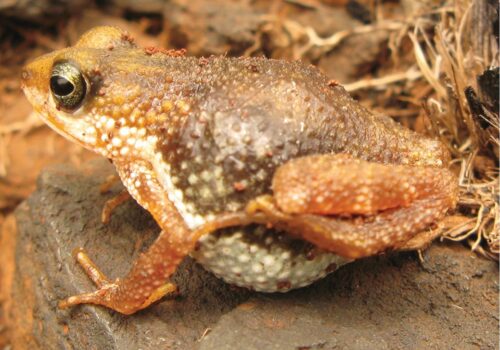
Camouflage serves as Beduka koynayensis’s ultimate strategy for both survival and successful hunting. Measuring approximately 30–40 millimeters in length, it’s rather small, modestly sized but equipped splendidly for its watery, forest-bound existence. Sporting hues of olive-brown, dull greens, or mottled grays, the frog effortlessly blends into damp rocky surroundings and mossy leaves, evading predators and curiously observant eyes alike.
Its body shape matches the microhabitats’ requirements perfectly: a slender, streamlined physique helps swim gracefully through gentle currents and creep stealthily across moist surfaces. Prominent eyes, positioned strategically, enable it to observe prey and notice movement with exquisite detail, ensuring timely escape or effective hunting.
Perhaps the most striking adaptation lies in its textured skin adorned with blotchy patterning. Small tubercles dotting the surface not only enhance disguise but also aid moisture retention, guaranteeing the creatures stay hydrated in their amphibious environment.
Behavior and Life Cycle: A Symphony of Subtlety and Survival#
The elusive charm of Beduka koynayensis extends beyond mere aesthetics. Witnessing its behavioral intricacies reveals an entire world—a delicate interplay of ecological relationships, survival strategies, and subtle companionship rituals.
Hunting and Feeding#
Nighttime ushers in this species’ active hours, and Beduka koynayensis embarks on meticulous nightly expeditions in search of nourishment. A predator by nature, it preys primarily upon small insects and larvae. Its powerful legs allow precise leaps to snatch unwary insects resting precariously nearby. Its specialized eyesight capable under low light gives it an undeniable edge during these nightly hunts.
Mating and Reproduction#
Breeding season for Beduka koynayensis coincides with monsoon rains, when increased stream flows and dripping foliage set a rhythm to their reproduction. Male frogs take prime positions near tranquil streamside rocks or vegetation to exhibit their vocal prowess—producing faintly melodic calls resonating gently amidst gurgling streams.
Females, selective in their choice of mate, approach cautiously, inspecting both potential partners and thoughtfully chosen egg-deposition sites. Females deposit eggs carefully beneath moist leaves, moss-covered stones, or submerged surfaces, safeguarding them from immediate predation and environmental drying. After hatching, tadpoles thrive in quiet stream pools, continuing the cycle of life deep within hidden forest waterways.
Ecological Role: Guardians of Stream Ecosystems#
Beduka koynayensis plays several critical roles in its habitat, each subtle yet impactful. As insect predators, these frogs maintain balance by controlling insect populations, many of which could become harmful pests if their numbers exploded unchecked. As prey, their healthy populations guarantee sustenance for numerous forest birds, snakes, and other higher-order carnivores, intricately tying together fabric threads within the forest’s food web.
Critically, amphibians such as Beduka koynayensis often act as bioindicators—a species whose population declines or health deterioration reveals broader ecological disturbances. Thus, ensuring its well-being naturally helps sustain overall ecosystem integrity.
Threats and Conservation: Protecting a Fragile Legacy#
Despite its critical ecological importance and captivating qualities, Beduka koynayensis now faces intensifying threats, causing concern among herpetologists and conservationists. Habitat destruction from urbanization, agriculture, human settlements, dam construction, and deforestation threatens regional streams and forest covers crucial to the frog’s sustenance.
Equally pressing threats include pollution from agriculture pesticides and runoff, introducing harmful chemicals into delicate stream systems essential for amphibian reproduction. Climate change further exacerbates this fragile balance, altering rainfall patterns and temperatures essential to reproduction cycles.
Currently listed as “Data Deficient” by the International Union for Conservation of Nature (IUCN), Beduka koynayensis urgently requires extensive research and region-specific conservation plans to ensure its survival and the protection of its fragile home landscape.
Cultural and Scientific Significance: A Symbol of India’s Natural Wealth#
The story of Beduka koynayensis extends beyond mere ecological output. Amphibians frequently serve cultural roles, symbolizing regeneration, transformation, and even serving as music within folklore among some indigenous communities living in close proximity to nature. While detailed cultural significance for Beduka koynayensis remains less documented, amphibians in India’s Western Ghats region traditionally hold places of folklore’s deepest reverence.
From a scientific perspective, studies focused on secretive amphibians such as Beduka koynayensis continuously offer intriguing insights into amphibious evolution, ecological relationships, and responses to global climate shifts.
Conclusion: A Call to Action#
Beduka koynayensis exemplifies nature’s subtle but profound interconnectedness, reminding us of unique beauty often hidden just beyond our daily gaze. Its survival remains intimately tied to the protection of pristine freshwater habitats and forest cover in the biodiverse Western Ghats region.
As advocates of nature conservation—and humbled admirers of amphibians—we have a responsibility to protect such species effectively. Supporting local efforts, habitat conservation organizations, and encouraging further scientific exploration and understanding will ensure Beduka koynayensis continues thriving quietly, beautifully, in its hidden domain.
Let’s champion a world where creatures like Beduka koynayensis not only live but flourish—an existence filled with mystery, music, and the gentle guardianship of our collective care.