- Introduction: Unveiling a Desert Survivor
- Taxonomy and Classification: Placing Brongersma’s Toad in Context
- Natural Habitat: Life Beneath the Saharan Sands
- Physical Characteristics: A Portrait of Desert Adaptation
- Behavior and Life Cycle: Awakening with the Desert Rain
- Ecological Role: Desert Sentinel and Indicator Species
- Threats and Conservation Status: Challenges in a Changing Climate
- Cultural and Scientific Significance: Learning from Desert Adaptations
- Conclusion: Preserving the Jewel Beneath the Sands
Introduction: Unveiling a Desert Survivor#
Tucked within the scorched dunes and rocky plateaus of northwest Africa exists an amphibious marvel that defies conventional wisdom. The Sahara Desert, seemingly lifeless and unforgiving, cradles a small, resilient creature that emerges after rare rains—a toad whose very existence challenges our notions of survival.
Meet Barbarophryne brongersmai, commonly known as Brongersma’s toad. This modest amphibian, named in honor of renowned Dutch herpetologist Leo Brongersma, has evolved sophisticated adaptations to thrive beneath desert sands for most of its life, awakening with the infrequent rains. Although small and relatively obscure, Barbarophryne brongersmai embodies the gritty resilience, subtle elegance, and ecological intrigue of desert life. Let us journey together into the fascinating world of this Saharan survivor.
Taxonomy and Classification: Placing Brongersma’s Toad in Context#
Understanding the uniqueness of Barbarophryne brongersmai begins with its scientific classification. Belonging to the family Bufonidae, it shares lineage with a diverse range of true toads spread globally. Originally grouped within Bufo, modern genetic sequencing warranted classification into its own distinct genus Barbarophryne, emphasizing its divergence from other toads.
This singularity hints at millions of years of specialized evolution, finely tuning B. brongersmai to its extreme desert habitat. Distinct enough to warrant its sole place in Barbarophryne, this classification echoes nature’s talent for sculpting creatures uniquely suited to their most challenging environments.
Natural Habitat: Life Beneath the Saharan Sands#
Geographic Distribution#
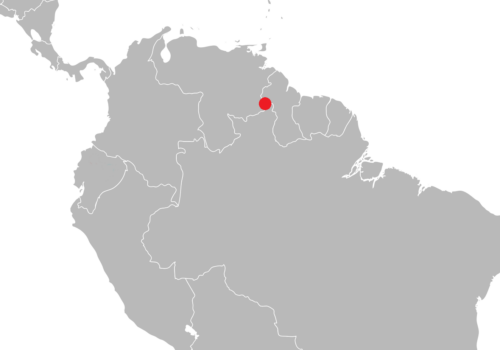
This remarkable amphibian inhabits a restricted range in the harshest parts of Northwest Africa, notably Mauritania, Western Sahara, Morocco, and Algeria. Occupying territory marked by scorching temperatures, minimal rainfall, and persistent drought, B. brongersmai endures conditions few amphibians could.
Habitat Preferences#
Unlike conventional frogs favoring lush wetlands and tropical forests, Brongersma’s toad thrives in deeply arid, desert environs. Its preferred habitat consists of shifting sand dunes, rocky outcrops, and dry riverbeds, locations that provide the toad with soft, sandy soil—ideal for burrowing during prolonged drought periods.
B. brongersmai spends much of its life hidden beneath the desert sand in burrows it excavates, surviving in a state of estivation—a form of dormancy that conserves moisture and energy during extreme drought. After rare, brief rainfalls, the desert awakens, pools form, and these amphibians emerge dramatically, driven by the primal imperative to reproduce before dryness returns.
Physical Characteristics: A Portrait of Desert Adaptation#
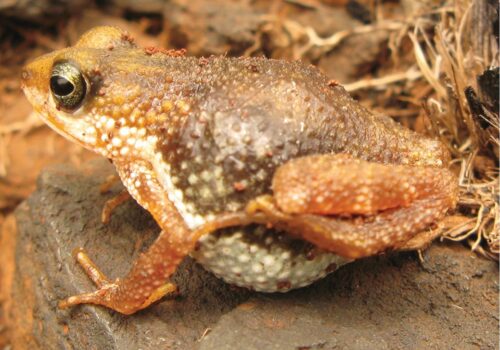
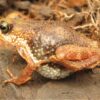
The physical proportions of Brongersma’s toad reflect perfectly the harsh realities of desert life. Adults typically measure between 4-5 centimeters, small enough to efficiently regulate internal temperature and water usage. Their compact, stout bodies bear an appearance tailor-made for burrowing and long periods underground.
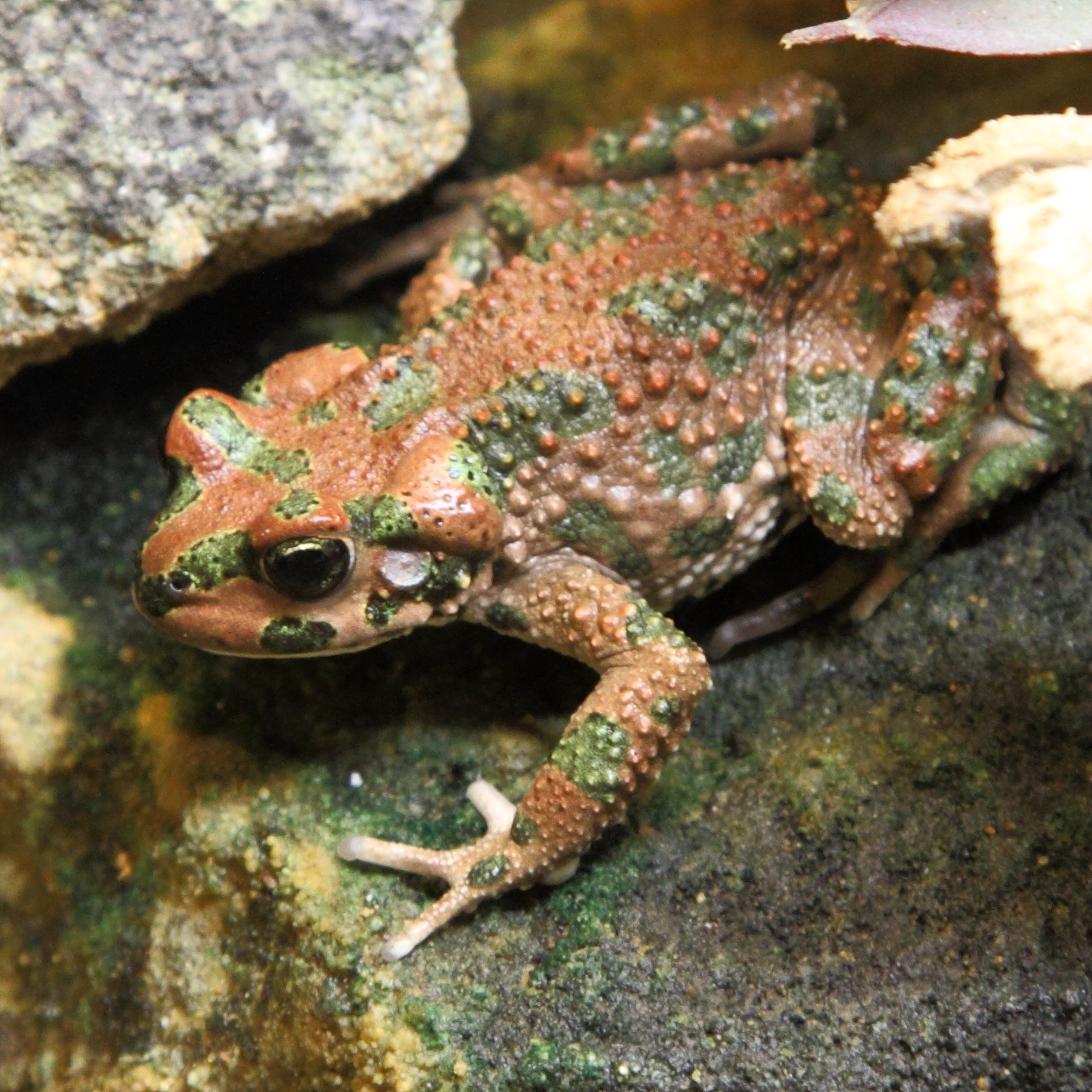
Skin coloration offers another vivid adaptation. The toad exhibits sandy or pale-gray hues, mottled with darker tones and reddish-brown markings. Every color and pattern seamlessly matches the backdrop of sun-bleached sand and stone, offering excellent camouflage against keen-eyed desert predators.
Moreover, specialized glands behind their eyes, known as parotoid glands, secrete mild toxins to deter predators, providing a crucial defense mechanism. Their hardened, spade-like hind feet prove essential, digging effortlessly through sandy soils and anchoring them safely underground.
Behavior and Life Cycle: Awakening with the Desert Rain#
Feeding Habits and Dietary Preferences#
When rare rainfall brings life back to the barren sands, the desert ecosystem briefly flourishes. Rains stimulate a rapid proliferation of insects and invertebrates, providing the toads with a sudden abundance of prey. B. brongersmai actively hunts at night, using a combination of visual acuity and vibration-sensing to locate and capture prey, including beetles, ants, spiders, and moths.
Breeding Rituals and Reproductive Strategy#
Perhaps most fascinating of all is the ephemeral breeding season of Brongersma’s toad. Awoken by the first rains, males emerge from estivation and quickly establish temporary territories. They produce gentle, trilling calls resonating through the desert night, a soundscape that briefly transforms the quiet sands into a chorus of life.
Females select mates based on these vocal serenades, pairing rapidly as temporary pools begin filling with rainwater. Females deposit strands or clutches of gelatinous eggs, most frequently in shallow, warm pools forming after rainfall. The rapid development of tadpoles follows, with young tadpoles undergoing rapid metamorphosis—sometimes within a mere few weeks—to escape the imminent drying of their transient aquatic nurseries.
Ecological Role: Desert Sentinel and Indicator Species#
Barbarophryne brongersmai holds remarkable importance beyond its small stature. As an adaptable predator, it serves an essential role in regulating insect populations, crucially balancing the delicate food webs of deserts. Its presence indicates environmental health, marking the brief flourishing of life in an otherwise desolate landscape.
Additionally, this small amphibian itself provides a critical food source, nourishing a variety of birds, small mammals, and reptiles that similarly exploit treasure-troves of resources brought forth by desert rainfall. Its fleeting lifecycle thus intricately connects it to the rhythms—and survival—of many other desert organisms.
Threats and Conservation Status: Challenges in a Changing Climate#
Despite its extraordinary adaptations, B. brongersmai faces increasing threats largely driven by human activity and climate change. The delicate ecosystems it occupies are vulnerable to intensified desertification, altered rainfall patterns, and habitat fragmentation from human encroachment and resource extraction.
Although currently listed as “Least Concern” by the International Union for Conservation of Nature (IUCN), conservationists warn that escalating climate instability could rapidly alter this status. Proactive, precautionary measures such as habitat protection and careful monitoring remain key to safeguarding the resilience and persistence of this remarkable species.
Cultural and Scientific Significance: Learning from Desert Adaptations#
Though small and often overlooked, B. brongersmai embodies resilience and adaptation in the face of extreme hardship. Indigenous populations have long recognized its seasonal emergence as a symbolic sign of regeneration and renewal, an inspiring motif rooted in the harsh realities of desert existence.
Scientists, meanwhile, study this species closely to understand physiological survival strategies, especially as climate change threatens more vulnerable amphibians globally. Insights gleaned from understanding Brongersma’s toad could greatly inform conservation efforts and even biomedical research into drought resistance and metabolic dormancy.
Conclusion: Preserving the Jewel Beneath the Sands#
Brongersma’s toad, modest in appearance and elusive by habit, represents far more than just another reptile or amphibian lurking beneath the sand. It is living proof of evolutionary resilience, ecological intricacy, and the essential interconnectedness of desert life.
As conservationists, wildlife enthusiasts, and readers intrigued by nature’s marvels, our call to action is clear: we must strive to understand, appreciate, and ultimately protect rare species like Barbarophryne brongersmai. By doing so, we safeguard the extraordinarily adapted life forms shaping—and shaped by—the rhythms of our planet’s remarkable environments.
Let us cherish and protect the fragile worlds beneath the sands, ensuring this humble Saharan survivor endures, inspiring future generations to further unravel nature’s boundless creativity and tenacity.