- Guardians of the Streams: The Fascinating World of Atelopus zeteki, Panama's Golden Frog
- Taxonomy and Classification
- The Enchanted Habitat of Atelopus zeteki
- Physical Characteristics: A Golden Jewel of the Jungle
- Behavior and Life Cycle: From Streams to Silent Signals
- Ecological Role: Linking Nature's Web
- Facing Extinction: Threats and Conservation Challenges
- A Symbol of Prosperity: Cultural and Scientific Significance
- Conclusion: Ensuring a Future for Panama's Golden Frog
Guardians of the Streams: The Fascinating World of Atelopus zeteki, Panama’s Golden Frog#
Hidden within the misty, emerald embrace of Panama’s cloud forests dwells a creature of exceptional beauty and symbolic resonance—the golden-hued wonder known as Atelopus zeteki. Popularly referred to as the Panamanian golden frog, this species’ vibrant coloration and unique biology have fascinated scientists and wildlife enthusiasts alike. More than just an amphibian, Atelopus zeteki is a living legend, thrust into the international spotlight due to its striking appearance, local cultural significance, and tragic struggle against extinction.
Unlike typical frogs, Atelopus zeteki does not produce audible calls; instead, it communicates through a mesmerizing visual language of subtle hand signals and gestures. Beyond these intriguing distinctions lies a deeper story—a narrative of survival, looming threats, pioneering conservation efforts, and hope. Join us as we journey into the lush heart of Panama to explore the extraordinary existence of Atelopus zeteki, a species at the intersection of nature, science, and culture.
Taxonomy and Classification#
The scientific journey of Atelopus zeteki reveals an animal deeply rooted in an extensive family of colorful amphibians known as the Bufonidae, commonly referred to as “true toads.” Although labeled as a frog due to its general physique and behavior, Atelopus species belong firmly in the toad family. First described by zoologist Emmett Dunn in 1933, Atelopus zeteki pays homage to biologist James Zetek, who contributed significantly to Panamanian biodiversity research.
Atelopus zeteki is part of a fascinating lineage that includes over 90 recognized species of brightly colored, poisonous amphibians distributed throughout Central and South America. Members of the genus Atelopus are frequently referred to as “harlequin toads,” a nod to their vivid, clown-like hues. Among its close relatives are frogs such as Atelopus varius and Atelopus certus, cousins that share similar habitats and conservation plight—but none as iconic as zeteki itself.
The Enchanted Habitat of Atelopus zeteki#
A World within a Cloud Forest#
The mountainous landscapes of central-western Panama, including regions such as El Valle de Antón and the forests around Cerro Campana, form the primary historical homes of Atelopus zeteki. Here in these mist-drenched cloud forests, humidity clings thickly to the air, cloaking the landscape in perpetual dampness. Permanent rivers, gentle streams, and cool waterfalls carve through the rugged terrain, offering the ideal living conditions that these delicate amphibians demand.
Golden frogs thrive primarily along streams and rivulets bordered by dense vegetation, shaded by towering trees, and cushioned by layers of moss-covered rocks. The constant coolness of these shaded microclimates plays a vital role in maintaining the delicate balance in their skin’s moisture levels. Close ties to streams are critical for their reproduction, as tadpoles thrive exclusively in fast-moving yet shallow water bodies enveloped in pristine forest.
An Interconnected Ecosystem#
The Panamanian cloud forests are teeming with life and biodiversity. Within this dense verdant canvas, golden frogs weave their existence intricately within a vibrant and complex ecological web—feeding primarily on small insects like ants, beetles, and flies. In their turn, golden frogs become an essential prey item for certain predators capable of overcoming the toad’s potent skin toxins.
The health of Atelopus zeteki populations mirrors the ecological stability of forests in which they reside, earning them recognition as a valuable indicator species. Their very presence speaks volumes about the broader environmental conditions and vitality of their cloud forest home.
Physical Characteristics: A Golden Jewel of the Jungle#
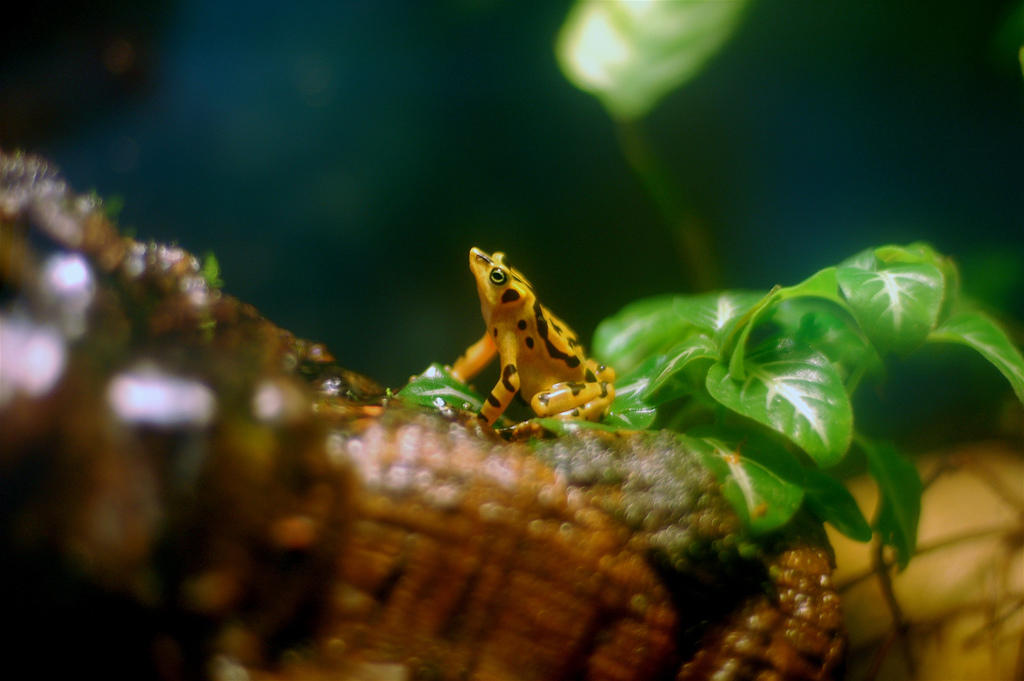
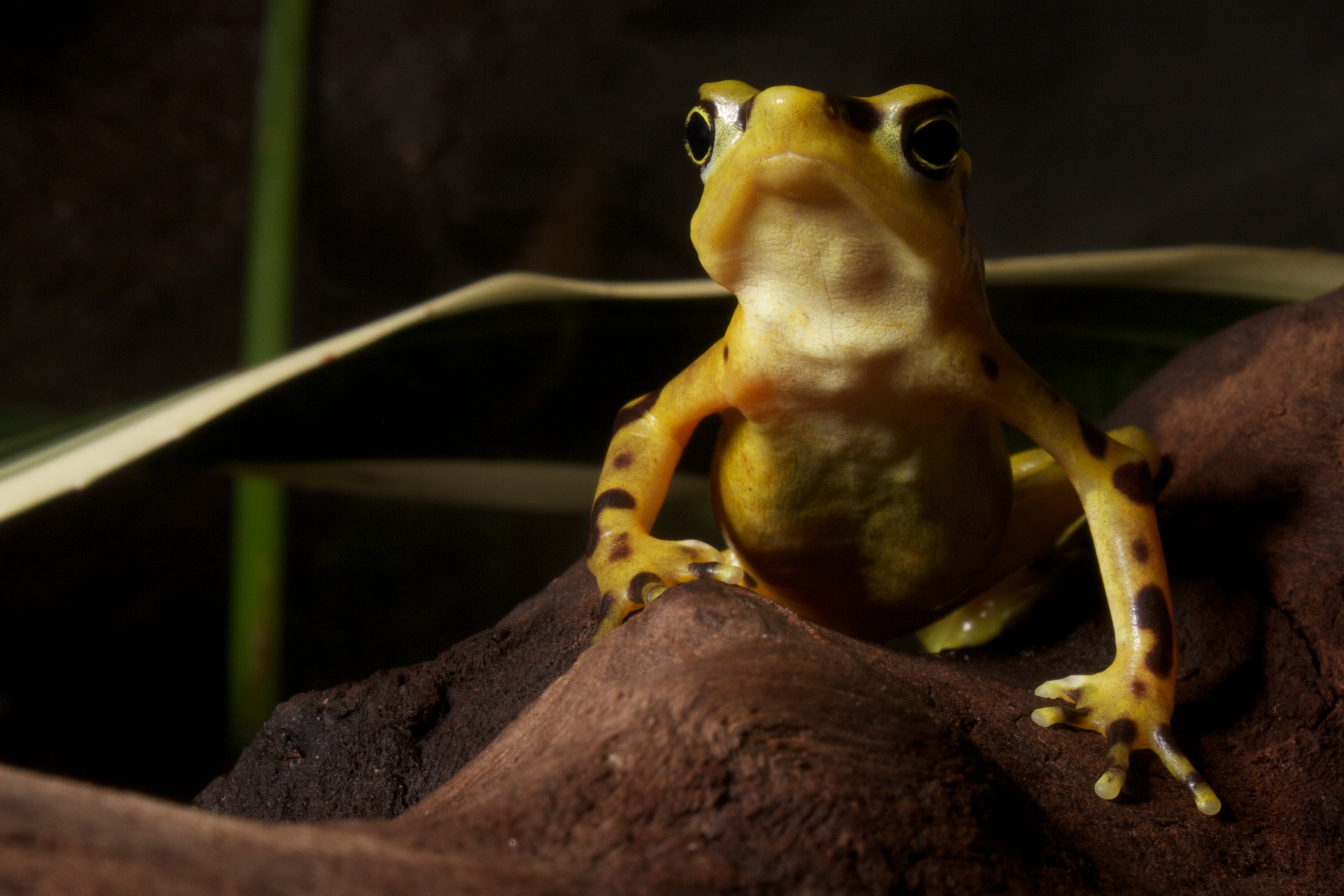
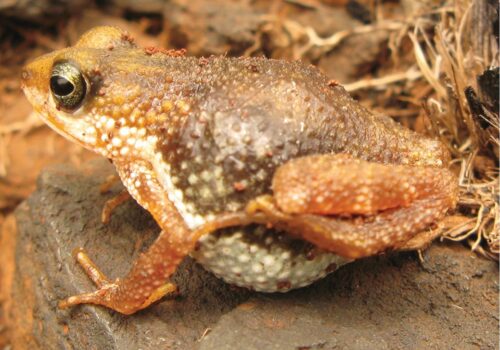
The instant appeal of Atelopus zeteki resides in its extraordinary vibrancy. Adults typically display brilliant yellow-golden hues, though shades from deep yellow to bright orange are not uncommon; often, these dazzling colors contrast spectacularly against distinctive dark or black patterns that stripe and speckle their skin. These bold coloration patterns function as aposematic signals, a natural warning coloration designed to alert potential predators of their inherent toxicity.
A relatively small amphibian, Atelopus zeteki ranges in size from approximately three to six centimeters when fully grown. Their limbs are slender yet perfectly adapted for navigating slippery streamside terrains. Prominent eyes sit elegantly atop their heads, capable of keenly observing movement—critical for detecting both dangerous predators and feeble prey.
While once thought to produce calls, recent observations confirm that these frogs communicate through visually engaging and complex hand gestures. Such silent exchanges among individuals exemplify nature at its most enchanting: a quiet ballet conducted amidst swirling mists and flowing streams.
Behavior and Life Cycle: From Streams to Silent Signals#
Hunting and Feeding#
Like many amphibians, Atelopus zeteki relies predominantly on vision to locate and catch prey, utilizing its agile limbs to ambush unsuspecting insects. Patient hunters, these frogs remain motionless among foliage and rocks, springing swiftly and decisively when prey passes within reach. Their adaptations—including keen eyesight and skilled precision jumps—are testament to evolutionary efficiency.
A Delicate Courtship and Silent Communication#
The waterways of Panama’s cloud forests become central stages to the quiet yet elaborate romantic affairs of Atelopus zeteki. Mating rituals, while devoid of audible vocalizations, unfold elegantly in a choreographed dance of subtle motions and touches, accentuated by the frogs’ brilliant golden coloration. Males gently wave limbs and employ visual signaling displays, silently courting females amidst the calming rush of stream currents.
Once paired, the female deposits clusters of eggs beneath submerged rocks or leaf litter, providing a safe and oxygenated environment for embryonic growth. Upon hatching, larvae (tadpoles) drift in the currents, feeding on algae-rich substrates and swiftly progressing through their aquatic life stage.
The Transformation: Emergence of Golden Adults#
In several months, tadpoles undergo a remarkable transformation through metamorphosis, developing lungs, adopting a terrestrial existence, and displaying vibrant coloration. Newly transformed frogs must quickly master survival skills across forest floors, streamsides, and their complex environments, eventually repeating the cycle of life to ensure survival.
Ecological Role: Linking Nature’s Web#
Atelopus zeteki plays an important multi-dimensional role. As insect predators, these frogs prevent overpopulation of herbivorous insects, promoting natural vegetation control. Simultaneously, their toxins contribute to pharmaceutical research, allowing scientists to explore potential medical advances derived from unique substances secreted in their skin glands.
The species is also a pivotal study subject for amphibian conservationists, environmentalists, and researchers investigating environmental changes and emerging global threats to biodiversity—including climate change and disease spread.
Facing Extinction: Threats and Conservation Challenges#
Confronting Chytrid Fungus#
The gravest peril facing Atelopus zeteki is perhaps Batrachochytrium dendrobatidis, commonly known as chytrid fungus—a pathogen causing lethal infections which attack sensitive amphibian skin. Chytridiomycosis, the disease caused by this fungus, has devastated amphibian populations globally. This fungal parasite has pushed Atelopus zeteki to the brink, causing sudden, catastrophic population declines.
Looming Habitat Loss#
Additionally, ongoing habitat destruction resulting from logging, deforestation, and water pollution drastically compounds their vulnerability. Forest degradation severely disrupts delicate breeding habitats, insidiously removing the species’ lifeline.
Conservation Efforts & International Mobilization#
Recognized as Critically Endangered by the International Union for Conservation of Nature (IUCN), Atelopus zeteki is now receiving intensive conservation attention. Captive breeding and reintroduction programs conducted by institutions such as the Panama Amphibian Rescue and Conservation Project offer potential lifelines, illuminating a hopeful path towards species recovery.
A Symbol of Prosperity: Cultural and Scientific Significance#
In Panamanian culture, Atelopus zeteki is celebrated as an emblem of joy, luck, and prosperity. Local folklore ascribes magical properties to the frogs, associating their presence with renewal, regeneration, and environmental harmony. Scientifically, their toxins have garnered attention for potential medical uses in fields ranging from cardiac research to neurological medicine.
Conclusion: Ensuring a Future for Panama’s Golden Frog#
Atelopus zeteki represents more than ecological value—it embodies a blend of vivid beauty, intricate biology, and deep cultural heritage. Continued survival demands vigilant international collaboration, habitat restoration, and public engagement through increased awareness. By uniting conservation science and cultural advocacy, we can secure this golden jewel’s presence amidst Panama’s verdant streams.