- Atelopus vermiculatus: The Enchanting Harlequin Toad Fighting for Survival in the Rainforests
- Introduction: A Tiny Guardian of Rainforest Rivers
- Taxonomy and Classification: Piecing Together the Amphibian Tree
- Natural Habitat: Within the Heart of Cloud-forests and Streams
- Physical Characteristics: Nature’s Paintbrush at its Finest
- Behavior and Life Cycle: Rhythms Dancing to Seasonal Rains
- Ecological Role: Guardian and Indicator of Environmental Health
- Threats and Conservation Status: An Amphibian on the Brink
- Cultural and Scientific Significance: Symbols of Fragility and Hope
- Conclusion: A Call to Action
Atelopus vermiculatus: The Enchanting Harlequin Toad Fighting for Survival in the Rainforests#
Introduction: A Tiny Guardian of Rainforest Rivers#
Hidden beneath a dense canopy of emerald leaves and bathed in the gentle mist of freshwater streams, a vivid splash of black, yellow, and green waits quietly amid the lush greenery of tropical rainforests. It is here, in the humid foothills and richly vegetated valleys of northern South America, particularly within Venezuela and Colombia, that we find the elusive Atelopus vermiculatus—more affectionately recognized as the vermiculated harlequin toad.
Scientifically classified within the Bufonidae family, Atelopus vermiculatus is far from your ordinary backyard amphibian. Celebrated for its strikingly patterned skin, unique ecological role, and poignant struggle against extinction, this fascinating harlequin toad stands as both a symbol of nature’s beauty and a sobering ambassador for conservation.
Taxonomy and Classification: Piecing Together the Amphibian Tree#
Atelopus vermiculatus belongs to the Bufonidae family, popularly known as the true toads. Within this diverse group, the genus Atelopus, commonly termed harlequin frogs or toads, houses nearly one hundred species known for vivid, contrasting colors and intriguing ecological adaptations.
Closely related to species such as Atelopus zeteki—the iconic Panamanian golden frog—and Atelopus varius from Costa Rica, A. vermiculatus shares morphological and behavioral traits shaped over millennia by selective environmental pressures. In essence, unfolding the secrets of vermiculated harlequin toads provides intriguing insights not only about them but about the broader biodiversity and evolutionary patterns coursing through tropical amphibian lineages.
Natural Habitat: Within the Heart of Cloud-forests and Streams#
The preferred abode of Atelopus vermiculatus is no less enchanting than the frog itself: moist evergreen tropical forests cloaking mountainous regions primarily throughout Venezuela’s Andean foothills, extending cautiously into neighboring territories of eastern Colombia. These pristine ecosystems are defined by lush vegetative layers, from towering canopies festooned with orchids and bromeliads to an understory of tangled vines and ferns.
Harlequin toads depend profoundly on clear, fast-flowing rivers and streams with rocky substrates. Here, crystal water tumbles down pebble-strewn channels, carrying rich nutrients and oxygen crucial to both adult toads and developing tadpoles. These microhabitats grant the vermiculated harlequin frog everything it needs: hydration, breeding grounds, refuge from predators, and plentiful insect prey.
Yet, this specific and delicate interplay places Atelopus vermiculatus at great ecological risk. Disruption to waterways or vegetation cover rapidly translates into population declines, marking this frog as an ecological sentinel—a warning sign for scientists and conservationists.
Physical Characteristics: Nature’s Paintbrush at its Finest#
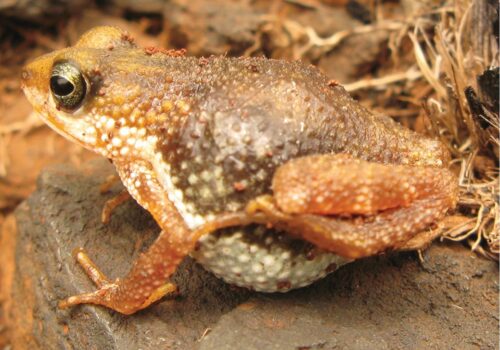
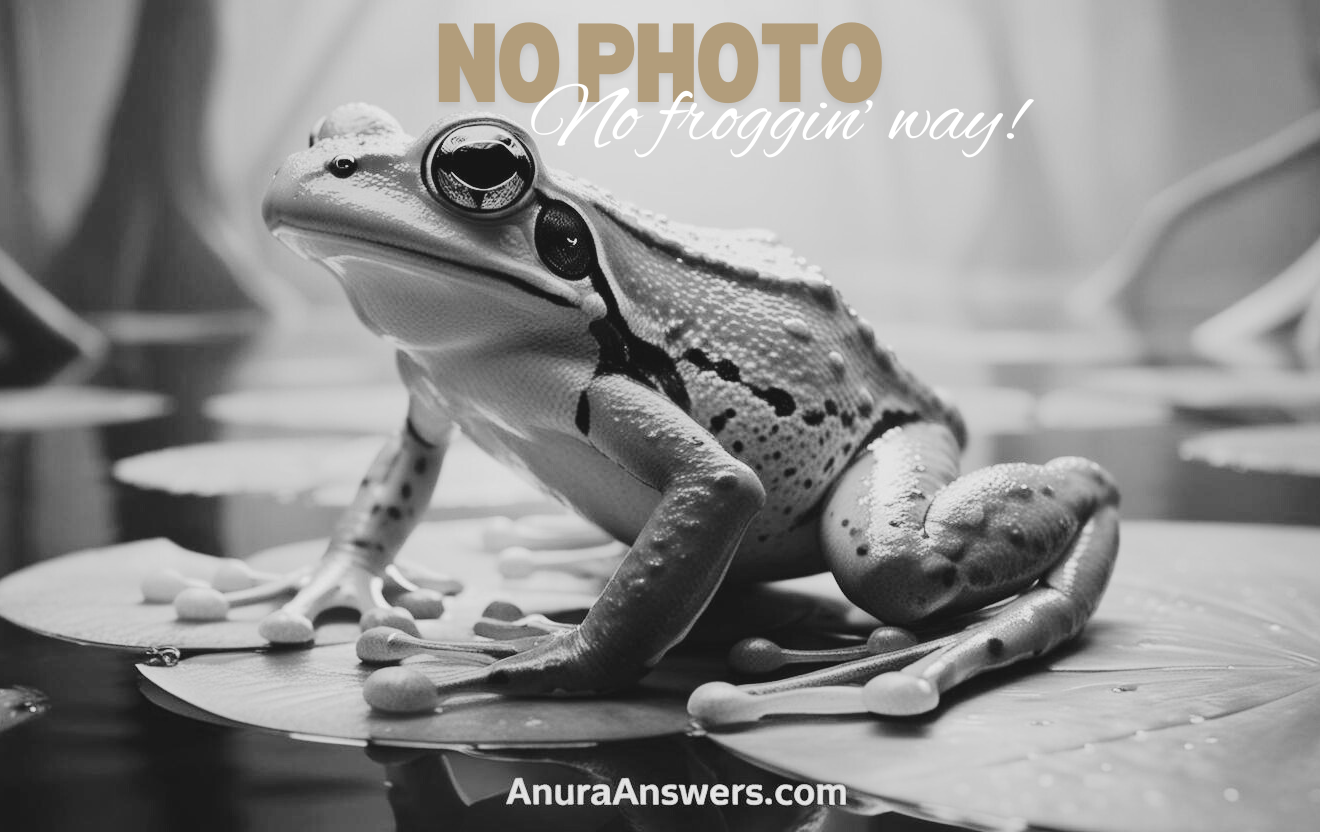
The first time one encounters Atelopus vermiculatus, the experience is nothing short of mesmerizing. Growing only up to approximately 2 to 4 centimeters in length, these frogs showcase an astonishing display of vibrant and contrasting hues. Their name “vermiculated” references the intricate, worm-like patterns winding across their bodies, typically splashed in bright yellows or greens against a darker, glossy black background.
This stunning coloration acts as aposematic (warning) signaling—a biological billboard to predators that proclaims, “Danger, toxic!” Indeed, their skin secretes potent alkaloid toxins acquired from their arthropod diets, making them an undesirable treat for hungry birds, mammals, and larger reptiles. Bright coloration thus not only adorns them with aesthetic charm but underlines their evolutionary cleverness.
Atelopus vermiculatus also exhibits a relatively slender body profile and elongated limbs. These adaptations give it agility to leap across slippery river rocks and deftly navigate dense vegetation—crucial survival tactics in the slippery realms of tropical rainforest streams.
Behavior and Life Cycle: Rhythms Dancing to Seasonal Rains#
A Feast Beneath the Foliage: Feeding Habits#
Like many small amphibians, A. vermiculatus fulfills its predatory role mainly by feeding on a variety of insects and arthropods found along riverbanks, in vegetation, and forest floors. These voracious hunters employ rapid and stealthy movements, their sticky tongues snapping out to capture unwary prey within milliseconds—a small but effective predator, maintaining balance within its ecosystem through sustained insect population control.
Courtship by the Stream: Mating Rituals and Reproduction#
The breeding behaviors of Atelopus vermiculatus transpire during primary rainy seasons, when streams swell with abundant water, providing ideal conditions for egg-laying. Males stake out key territories along waterways, using melodious, repetitive calls—subtle chirps and trills—to attract receptive females and deter rival suitors.
Once paired, female vermiculated harlequin frogs deposit strings of gelatinous egg masses onto submerged rocks, ensuring larvae remain oxygen-rich and safe. Tadpoles develop swiftly, adapting with specialized mouthparts that effectively scrape algae from underwater substrates. This diet and the microhabitat choice of rocky, flowing rivers dramatically improve tadpole survival and eventual metamorphosis.
Ecological Role: Guardian and Indicator of Environmental Health#
The ecological contribution of Atelopus vermiculatus extends significantly beyond its immediate survival. Serving in a multifaceted ecological role, the species holds positions as prey, predator, and sensitive bioindicator organism. Amphibians universally are sensitive to environmental changes because of their permeable skin, reliant aquatic life stages, and extensive dietary interdependencies.
As bioindicators, a decline in harlequin toad populations often directly indicates disturbances in water quality, temperature fluctuations, or broader ecosystem health deterioration. Similarly, their disappearance ripples across food webs, involving predators (birds, fish, and mammals) and prey, inevitably prompting resource stress and biodiversity losses elsewhere in the ecosystem.
Threats and Conservation Status: An Amphibian on the Brink#
Atelopus vermiculatus faces mounting pressure from multiple anthropogenic threats. Tragically familiar to many amphibians worldwide, threats include habitat destruction driven by agriculture expansion, mining, logging, and infrastructure development. Altered river courses, deforestation, and increased pollution from agricultural runoff adversely affect the pristine streams this harlequin toad calls home.
Yet, perhaps the most catastrophic threat comes silently—from the microscopic chytrid fungus (Batrachochytrium dendrobatidis) ravaging amphibians worldwide. This deadly disease penetrates their porous skin, disrupting vital electrolyte exchanges and rapidly leading to mortality—a threat so severe it has driven several Atelopus species close to extinction.
Consequently, Atelopus vermiculatus has been designated a Critically Endangered species by the International Union for Conservation of Nature (IUCN)—a grim yet critical classification galvanizing conservationists.
Cultural and Scientific Significance: Symbols of Fragility and Hope#
While not as widely recognized culturally as some of their amphibian cousins, Atelopus species bear significant symbolic resonance. Indigenous peoples and local communities have historically cherished these vibrant creatures, weaving them into rich folklore and respecting their presence as signs of healthy environments.
Scientifically, these harlequin toads have assumed a pivotal role as focal points for understanding species declines, biological diversity, disease management, and overall ecosystem stability. Conservation and research programs increasingly emphasize their preservation through captive breeding programs, community education, habitat protection, and international scientific collaborations.
Conclusion: A Call to Action#
The story of Atelopus vermiculatus serves as a poignant reminder of both the immense beauty and intricate fragility that characterizes our planet’s biodiversity. Each tiny, jeweled amphibian congregated along rainforest streams is a testament to countless generations thriving in an interconnected web of life.
By learning more and taking action—supporting local conservation initiatives, educating others, advocating for environmental policies, and nurturing a personal connection to natural environments—we can assure these charismatic amphibians remain not merely memories but thriving residents of Earth’s rainforests.
Together, our chorus can remain as melodious, enduring, and hopeful as the gentle calls of Atelopus vermiculatus echoing softly along the streams.