Atelopus tricolor: Discovering the Jewel-Colored Harlequin of South America’s Forests#
Imagine wandering along a forest trail deep within the lush mountain rainforests of Bolivia and Peru. The air is heavy with moisture, filled with the cedar-sweet scent of wet foliage, greenery thick enough to brush your arms as you move forward. A sudden rustle of leaves draws your gaze downward. There, amid the mossy leaf litter, sits an extraordinary sight—a frog whose colors seem to have been distilled from a tropical sunset. Meet Atelopus tricolor, the enchanting harlequin toad whose vibrant presence is both visually striking and ecologically significant in its unique habitat.
Known scientifically as Atelopus tricolor, this small yet captivating amphibian belongs to a genus famed for its brilliant colors, peculiar behaviors, and important role as ecological indicators. Unfortunately, the vivid beauty of these frogs is matched by their fragility; across their range, they face threats jeopardizing their survival, turning them into symbols for broader conservation issues affecting amphibians worldwide.
Taxonomy and Classification#
Atelopus tricolor sits comfortably within the Bufonidae family—a group best known as the “true toads.” But don’t let the name mislead you; harlequin toads bear little resemblance to the stereotypical, wart-covered amphibians we may picture. Instead, they display smooth, colorful skins and occasionally vibrant patterns, placing them among nature’s most striking amphibians.
The species name, “tricolor,” translates literally as “three colors,” aptly reflecting the frog’s distinctive coloration. Closely related species include Atelopus zeteki, known as the Panamanian golden frog, sharing similarities in biology, morphology, and regrettably, conservation challenges.
Natural Habitat#
Geographical Range and Preferred Environment#
Naturally residing in high-altitude cloud forests and subtropical moist forests, Atelopus tricolor is mostly known from specific mountainous areas in Bolivia and Peru. Its distribution is patchy and fragmented—often isolated to pristine habitats where streams flow through pristine, forest-covered slopes, blanketed in perpetual mist and saturated air.
These toads prefer environments where moisture is constant but flooding minimal; they are typically found near streams, nestled within moss-covered rocks or resting quietly among damp leaves of ferns and bromeliads. The microclimate here is remarkably stable—temperatures remain mild, humidity high, and disturbances minimal, creating the perfect conditions for survival.
Interactions With Its Environment#
For Atelopus tricolor, survival in such specialized habitats is essential. Streams and pools provide ideal breeding sites vital to their life cycle, offering protection for eggs and tadpoles against predation. Adult toads exploit dense vegetation for shelter, camouflage, and hunting grounds. The combination of forest structure, stream health, and humidity levels directly influences their ability to thrive.
Physical Characteristics#
Appearance, Size, and Coloration#
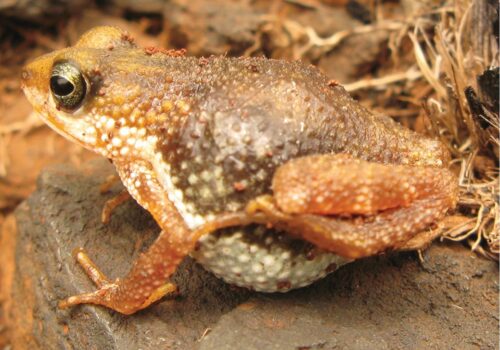
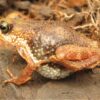
The striking look of Atelopus tricolor immediately captivates, presenting bold combinations of yellow, black, and greenish-orange patterns. Contrasting vividly against the rich greens of its rainforest home, their markings are not merely ornamental—such bold coloration serves as an effective warning to potential predators, signaling their toxicity.
These frogs are relatively petite; adults commonly measure between two and four centimeters in length, delicately built, with slender limbs and flattened, somewhat arrow-shaped bodies. Their smooth, sleek skin contrasts sharply with other toads in their family, adding another layer of interest to their already astonishing appearance.
Adaptive Significance of Coloration#
The harlequin toad’s psychedelic hues serve as a powerful form of aposematic warning coloration. Like many brightly-colored amphibians, their skin secretes potent toxins. Predators quickly learn that consuming these visually striking creatures has distressing consequences, often ensuring that Atelopus tricolor can display themselves openly, relatively unharmed by natural predators.
Behavior and Life Cycle#
Feeding Habits and Hunting Behaviors#
Primarily insectivorous, Atelopus tricolor adeptly hunts ants, mites, springtails, and other small arthropods inhabiting the leaf litter. Their dietary preferences contribute significantly to controlling forest-floor arthropod populations, balancing ecological health. Employing a patient ambush strategy, these frogs sit motionless, their colors blending seamlessly with patches of light and shadow until prey ventures close enough for a lightning-fast strike.
Mating Rituals and Reproduction#
Perhaps the most enchanting spectacle occurs during their breeding season, coinciding with the rainy months when forest floors are thick with humidity, pools swell, and streams overflow. Male frogs vocalize vividly, their calls rising melodically within the forest, serving as invitations to receptive females. Courtship rituals are delicate and intricate; males sometimes engage in gentle competition for prime breeding spots, carefully guarding small territories along the shallow pools or gentle currents where eggs will be deposited.
Females deposit eggs in water—fragile, jelly-like bead strands draped delicately onto submerged vegetation or rocky streambeds. Their transparent eggs hatch into small, lively tadpoles adapted to stream currents, undergoing gradual metamorphosis, slowly transitioning into their beautifully colored adult form.
Ecological Role#
Despite their small size, Atelopus tricolor anchors important roles within its ecosystem. As insectivores, they contribute significantly to the control of insect populations, minimizing damage to plant communities. Likewise, being prey for snakes, birds, and mammals—able predators that have evolved resistance to their toxins—they hold a complex position in the food web.
Importantly, frogs like Atelopus tricolor are exceptionally sensitive to environmental changes, thus acting as “bioindicators”—signaling larger disturbances, including climate shifts, habitat degradation, or pollution. Their presence or absence quickly alerts scientists to ecosystem imbalances, providing valuable insight into ecosystem health.
Threats and Conservation Status#
Sadly, like many amphibians globally, Atelopus tricolor faces numerous challenges. Habitat destruction remains a paramount threat; deforestation, logging, and encroaching agriculture degrade their fragile ecosystems. The introduction of invasive, voracious predators—such as non-native fish species—also disrupt breeding pools, posing further risks.
More sinister yet is chytridiomycosis, caused by the deadly fungus Batrachochytrium dendrobatidis. Responsible for devastating declines of amphibian populations worldwide, this fungal pathogen has reduced many Atelopus populations to mere remnants within historical distributions. According to the International Union for Conservation of Nature (IUCN), Atelopus tricolor is currently categorized as Critically Endangered, facing imminent extinction threats without extensive conservation efforts.
Current Conservation Actions and Hope for the Future#
Dedicated conservationists and researchers tirelessly strive to protect these remarkable frogs. Initiatives include habitat restoration, protection of vital forest areas, captive breeding programs, and careful monitoring of wild populations. Public education drives, collaborations with local communities, and international partnerships foster long-term sustainability efforts. These strategies aim not just to save one species but to preserve the intricate ecosystems upon which they depend and help stabilize the environment for all wildlife.
Cultural and Scientific Significance#
Long respected as indicators of environmental health, Atelopus tricolor and similar species have drawn significant scientific attention. Their sensitivity to environmental toxins and climate changes contributes valuable data aiding environmental policies. Locally, indigenous communities sometimes see these vividly colored frogs as symbols of clean water, healthy forests, and the delicate balance between people and nature. Their cultural symbolism inspires stewardship and elevates public awareness about conservation priorities.
Conclusion: Protecting a Forest Gem#
The harlequin toad, Atelopus tricolor, serves as a vivid reminder of nature’s wonder, fragility, and resilience. By safeguarding their habitats, addressing emerging threats, and increasing public awareness, every engaged individual can help protect this rainforest jewel from vanishing forever. Let us carry forth a collective commitment—not merely to admire amphibians like the captivating Atelopus tricolor but to ensure their vibrant presence remains a beacon, guiding us toward a healthier, more biodiverse planet.