- Introduction: A Rare Jewel in Venezuela's Wilderness
- Taxonomy and Classification: Understanding Atelopus sorianoi’s Roots
- Natural Habitat: Venezuela’s Verdant Cloud Forests
- Physical Characteristics: Beauty and Adaptation in Miniature
- Behavior and Life Cycle: An Intricate Amphibian Story
- Ecological Role: Guardian of Forest Balance
- Threats and Conservation Status: On the Edge of Survival
- Cultural and Scientific Significance: Beyond Biological Curiosity
- Conclusion: A Call to Advocate for Harlequin Toads
Introduction: A Rare Jewel in Venezuela’s Wilderness#
Amid Venezuela’s lush cloud forests and mist-covered mountains dwells a rare amphibian whose beauty and fragility call attention to the wonders—and vulnerabilities—found within our planet’s biodiversity. Known scientifically as Atelopus sorianoi, this splendid frog is a unique member of the Bufonidae family, more commonly recognized as the harlequin toads. It’s not just its vivid patterns and remarkable behaviors that draw attention, but also its precarious existence in an ever-changing environment.
The harlequin toads, collectively beloved both by nature enthusiasts and researchers alike, possess a blend of striking beauty and ecological importance matched by few others. However, Atelopus sorianoi, like many of its kin, now teeters on the edge of extinction, with each remaining population fighting silently for survival.
Yet, hidden within the vulnerability of a tiny amphibian lies a tale of remarkable adaptability, curious survival strategies, and the intricate dance between evolutionary persistence and environmental stressors. Join us in discovering the fascinating life of Atelopus sorianoi, and exploring how this little-known species highlights the urgency that surrounds amphibian conservation worldwide.
Taxonomy and Classification: Understanding Atelopus sorianoi’s Roots#
Atelopus sorianoi sits comfortably within the diverse family Bufonidae, a broad assemblage of true toads, but it belongs specifically within the genus Atelopus, known commonly as the harlequin toads or stubfoot toads. Distinct for their colorful appearances, these toads are distributed throughout mountainous regions and cloud forests in Central and South America, each species possessing unique patterns and behaviors adapted to local habitats.
The species itself was formally described by Venezuelan herpetologist Enrique La Marca in 1983, named in honor of the distinguished Venezuelan zoologist Dr. Pascual Soriano. Like many Atelopus species, this frog stands as a crucial indicator of ecosystem health, its presence (or absence) providing essential clues about habitat stability.
Natural Habitat: Venezuela’s Verdant Cloud Forests#
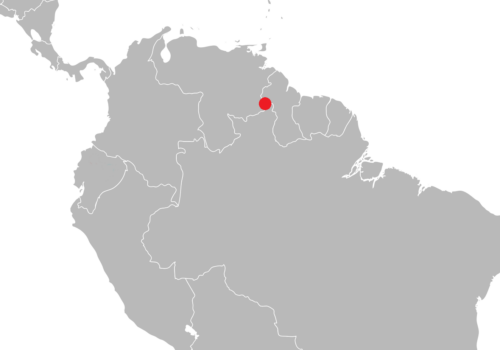
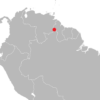
The story of Atelopus sorianoi unfolds primarily within the pristine, humid cloud forests and mountain streams of Venezuela’s Andean ranges. Located specifically within the state of Mérida, these lush habitats are characterized by constant moisture, mist-shrouded canopies, and cool mountain temperatures – all environmental factors critical for the survival of delicate amphibians like our harlequin friend.
Here, the forest floor becomes a vivid tapestry of life; moss-covered rocks, fallen logs thick with fungi, dripping bromeliads, and tangles of roots provide shelter and hunting grounds for countless creatures. The glittering mountain streams that snake their way through the woods are vital breeding grounds for Atelopus sorianoi, whose lifecycle delicately hinges on clean, flowing water.
Each niche within this ecosystem contributes something important, guiding amphibians like this species in their daily routines, offering refuge from predators or aiding in their search for food. Indeed, at the heart of these cloud forests, this tiny amphibian exemplifies biodiversity’s immense interconnectedness and sensitivity.
Physical Characteristics: Beauty and Adaptation in Miniature#
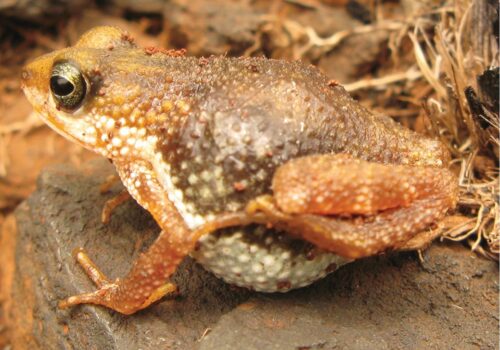
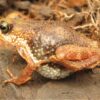
The first glance at Atelopus sorianoi is often a moment of wonder. Measuring only around two to three centimeters from snout to vent, this small amphibian captivates observers with striking color contrasts and intricate patterns.
Vivid yellows, vermilions, deep browns, and even touches of rich orange merge to form dramatic patterns across its smooth, delicate skin. These bright colors are not merely nature’s artistry; they’re clear warnings to potential predators, signaling toxin presence capable of deterring even the hungriest of forest hunters.
The frog’s slender limbs terminate in slightly stubby digits, each bearing tiny pads adapted to life on slippery rocks and foliage. Such features represent a marvelous adaptation to its mountain stream habitat, ensuring stability against rushing waters, mist-slick boulders, and damp forest litter.
Additionally, their large, expressive eyes dominate their faces, perfectly suited for hunting their diet of small insects and for spotting threats that lurk amidst shadows.
Behavior and Life Cycle: An Intricate Amphibian Story#
Hunting Techniques and Feeding Habits#
As carnivores, mature Atelopus sorianoi frogs trawl the moisture-rich undergrowth and rocks for suitable prey, primarily small insects such as ants, beetles, and small flies. Possessing keen eyesight, they stalk prey with sharp precision, lunging swiftly to capture their meal with a quick, sticky tongue strike.
Breeding Rituals and Parental Marvels#
Breeding season is a period of unparalleled vitality for these tiny amphibians. Chirps and whistles echo under the thick forest canopy as males stake out territories along fast-flowing streams. These songs serve not merely to court females but to ward off rival males, asserting dominance over prized nesting spots.
Upon mating, female frogs carefully attach clusters of eggs to submerged rocks and vegetation within cool mountain streams. Fertilized externally by males, these eggs swiftly develop into tadpoles, whose gills, powerful tail fins, and mouthparts are perfectly attuned to life underwater.
Over weeks, these floating, wriggling larvae transform dramatically—a journey fraught with risk from aquatic predators, shifting waters, and climatic stresses. Once metamorphosis occurs, newly emerged froglets set foot onto land, beginning their terrestrial chapter and renewing the species’ generational cycle.
Ecological Role: Guardian of Forest Balance#
Far more than mere inhabitants of their environments, amphibians like Atelopus sorianoi form crucial links in their ecosystems. As insectivores, their feeding controls local insect populations, contributing to ecological balance. Simultaneously, these vibrant amphibians become essential prey for larger predators, such as snakes, birds, and mammals—maintaining complex, multi-tiered food webs.
Moreover, this species acts as a bioindicator, its presence signaling a healthy, uncontaminated habitat. Scientists pay particular attention to its distribution, abundance, and health status, knowing any population declines can signify deeper problems within the overall ecosystem.
Threats and Conservation Status: On the Edge of Survival#
Despite its rich evolutionary history and striking environmental adaptability, Atelopus sorianoi now faces dire threats. Once abundant within their specialized mountain habitats, populations have sharply declined, impacted severely by diseases such as chytridiomycosis—a fungal infection devastating amphibian populations globally.
Rapid habitat degradation, influenced heavily by deforestation, agricultural expansion, climate change, and pollution further exacerbate the species’ vulnerability. The International Union for Conservation of Nature (IUCN) currently classifies Atelopus sorianoi as Critically Endangered.
Yet, hope lingers in the tireless efforts of dedicated conservationists, researchers, and local communities. Projects focusing on habitat restoration, captive breeding programs, and disease research offer a glimmer of optimism for this stunning frog’s survival.
Cultural and Scientific Significance: Beyond Biological Curiosity#
Local indigenous cultures historically recognize amphibians like Atelopus sorianoi as symbols of fertility and environmental well-being. While contemporary scientific exploration into its chemical defenses and toxins offers new medical prospects, its position within ecological research provides valuable understanding into climate impact and disease dynamics—lessons stretching beyond Venezuela to global amphibian conservation.
Conclusion: A Call to Advocate for Harlequin Toads#
In the enchanting forests of Venezuela, the small, brilliant form of Atelopus sorianoi awaits passionate advocacy from those willing to share its story. Its plight serves as a poignant reminder of our interconnected existence, our shared responsibility to preserve life’s delicate mosaic.
As lovers of nature, students of ecology, or simply compassionate global citizens, understanding and protecting this species—and others like it—is a noble and deeply necessary pursuit. Whether committing to conservation support, educating others, or simply spreading awareness, each action we take helps ensure future generations experience their own moments of wonder with the remarkable Atelopus sorianoi.