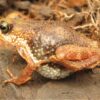
Atelopus simulatus: The Enigmatic Harlequin Frog of the Andean Forests#
Hidden in the misty forests and winding streams of northern South America, a remarkable, jewel-colored frog clings precariously to existence. With striking coloration and a seemingly delicate beauty, Atelopus simulatus, commonly known as the harlequin frog, embodies both the splendor of biodiversity and the vulnerability of nature’s most exquisite creatures.
At first glance, this amphibian captivates not only through its vibrant colors but also its compelling tale of survival in an ever-changing world. More than mere adornments of tropical biodiversity, frogs like Atelopus simulatus serve as vital sentinels, signaling the health—or distress—of their ecosystems. Should they vanish, the silence left behind would ripple through forests, streams, and delicate webs of life.
Taxonomy and Classification#
Atelopus simulatus belongs to the Bufonidae family, a diverse group commonly referred to as true toads. Within this vast assemblage, the genus Atelopus is particularly prized by biologists and naturalists for its dazzling diversity and the urgency of its conservation plight. Known popularly as harlequin toads or frogs, this genus is distinguished by its vivid coloration and startling variability.
Described formally by taxonomists Ruiz-Carranza and Osorno-Muñoz in 1994, Atelopus simulatus has since become emblematic of the escalating conservation crisis affecting amphibians worldwide. Its closest relatives, such as Atelopus varius and Atelopus zeteki, share many traits—striking pigmentation, significant toxicity, and preference for pristine water sources—yet each retains a unique ecological niche and distribution pattern.
Natural Habitat#
Geographical Distribution#
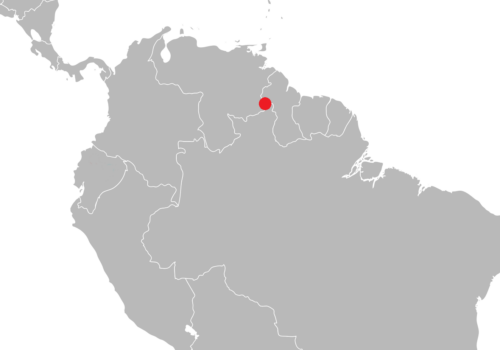
Atelopus simulatus occupies a limited yet ecologically complex range across portions of the northern Andes of Colombia. Confined largely to montane forests and high-altitude streams, this frog favors cool, humid microclimates provided by elevations approximately between 1,500 and 2,500 meters above sea level. Its known distribution covers fragmented populations scattered across the western slopes of the Cordillera Central, a bioclimatic treasure chest nurturing exceptional endemism.
Preferred Microhabitats#
The harlequin frog’s daily existence is intimately tied to pristine waterways—clear, flowing streams and creeks that wind gently through verdant cloud forests. These delicate frogs cling to mossy riverbanks, blend in seamlessly among leaf litter, or rest upon smooth riverine stones washed regularly by rainfall streaming off dense forest canopies. Such environments, abundant in moisture, stabilize temperatures conducive to amphibian health and reproduction, making them perfectly tailored habitats for Atelopus simulatus.
Seasonally persistent rainfall patterns and rich vegetation provide additional shelter and humidity, creating microhabitats teeming with insects—key prey for amphibians. However, this intimate reliance also underlies their vulnerability. Any alteration to the pristine water quality or forest health drastically threatens these sensitive creatures, making them bellwethers of ecological integrity.
Physical Characteristics#
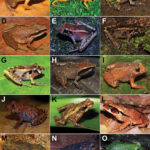
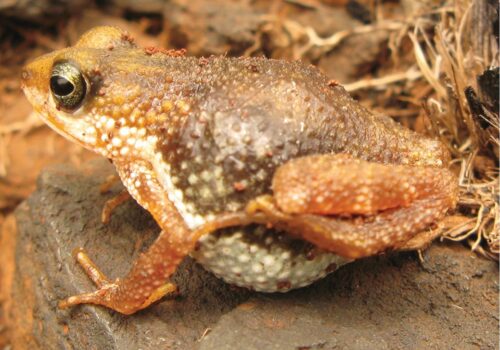
A creature of undeniable beauty, Atelopus simulatus is strikingly adorned with hues ranging from vivid yellow to deep orange, interspersed with lustrous black markings reminiscent of intricate puzzle pieces. Adults typically measure between 2 to 3 centimeters, their diminutive stature accentuating the intricate artistry that nature has bestowed upon them.
The bright coloration of these frogs serves a critical ecological function, a phenomenon known as aposematic coloration. Their radiant hues signal potent toxicity to potential predators, a vital defense mechanism in a rainforest teeming with hungry predators. Their skin secrets alkaloid toxins derived partially from their diet, making them dangerously inedible and assuring their survival amidst ample threats.
Their bodies showcase adaptations ideally suited for life along fast-flowing streams. Limbs long and slender allow agile leaps between moss-covered stones, while specialized pads at their fingertips provide secure grip on moist-wet surfaces. Eyes large and expressive grant keen eyesight for hunting small insects, their primary diet, and evading potential predators.
Behavior and Life Cycle#
Hunting and Feeding Habits#
Harlequin frogs are predominantly insectivorous, preying upon ants, beetles, spiders, and various streamside invertebrates. Active primarily during daylight hours—unlike many nocturnal amphibians—they hunt meticulously, using sharp vision and stealthy approaches to capture prey. With lightning-fast tongue flicks, they secure meals rapidly, sustaining energy requirements even in resource-sparse environments.
Mating Rituals and Development#
Each breeding season, typically correlated with wet climatic periods, brings fascinating courtship rituals. Male Atelopus simulatus vocalize beautifully resonant calls designed to attract potential mates. These soft yet penetrative serenades blend harmoniously into the soundscape of their natural habitat, becoming integral to the forest’s acoustic identity.
Following successful courtship, pairs engage in amplexus, a behavior wherein males grasp females firmly until oviposition concludes. Females lay strings of eggs directly into rushing streams, attaching them to underwater vegetation or rocks to protect them from predators and turbulent currents. After hatching, tadpoles display powerful sucking mouthparts adapted for clinging securely to rocks amid flowing waters. The aquatic larvae graze algae, filter organic debris, and slowly transform through metamorphosis into miniaturized versions of adults, eventually ascending onto land to continue the delicate balance that defines their ecological niche.
Ecological Role#
The ecological significance of Atelopus simulatus transcends their size or beauty. Harlequin frogs serve as sensitive ecological indicators, revealing subtle yet crucial variations in environmental health. Their semi-permeable skin makes them susceptible to pollution, toxic runoff, and habitat degradation, quickly disappearing at the earliest indication of ecological distress. Therefore, the presence or absence of thriving populations can serve as a barometer measuring the health of Andean watershed ecosystems.
Moreover, this amphibian, despite its defensive toxins, fills vital roles within food webs. Larval tadpoles function as essential nutrient recyclers and algae grazers, maintaining clean water quality within streams. Adults regularly consume nuisance insects, aiding insect population control, while simultaneously representing important prey items for snake species, birds, and predatory arthropods, forming key links in ecosystem balancing acts.
Threats and Conservation Status#
Despite their understated grandeur, populations of Atelopus simulatus are critically threatened primarily by habitat destruction, introduced diseases, climate change, and pollution. Widespread deforestation for agriculture and livestock grazing severely disturbs their fragile ecosystems, while climatic fluctuations alter critical temperature and rainfall patterns needed for successful breeding.
Alarmingly, the harlequin frog genus as a whole has become a poster child of the amphibian extinction crisis. The chytrid fungus (Batrachochytrium dendrobatidis or Bd), a pathogen devastating to amphibians worldwide, also targets Atelopus simulatus. This insidious threat decimates entire populations rapidly, with affected regions often noticing dramatic amphibian declines in mere months.
Such escalating vulnerability prompted the ample listing of species within this genus, including Atelopus simulatus, as “Critically Endangered” by the International Union for Conservation of Nature (IUCN). Conservation efforts now include rigorous habitat protection, population monitoring, captive breeding initiatives, and disease mitigation strategies, each critical to safeguarding this species’ fragile existence.
Cultural and Scientific Significance#
Across Colombia’s indigenous cultures, creatures such as the harlequin frog symbolize purity, fertility, and environmental harmony. Their disappearance becomes culturally significant, seen as a profound loss embedding deeper meanings into the struggles of bridging tradition and modern conservation.
Scientifically, the toxicity and ecology of these frogs continue to illuminate exciting biochemical discoveries, informing medicine and environmental sciences alike. Understanding their vulnerabilities can also guide broad-scale conservation strategies, benefiting countless other species coexisting within these habitats.
Conclusion#
In the remote cloud forests of Colombia, Atelopus simulatus perseveres, illuminating the complex interplay between beauty and fragility. It is a species whose survival serves as testament and warning—a living ambassador of biodiversity and an urgent call for action. By understanding, appreciating, and safeguarding these delicate amphibians, we preserve not mere species, but the astonishing tapestry of life itself.
Engage further—support conservation efforts through local foundations and institutions dedicated to protecting species like Atelopus simulatus, ensuring its enchanting calls resonate within Andean forests for generations to come.