- The Secretive World of Mertensophryne taitana: Kenya's Elusive Taita Toad
- Taxonomy and Classification
- Natural Habitat: Kenya's Misty Highlands
- Physical Characteristics: The Beauty of Subtlety
- Behavior and Life Cycle: Secrets Under Moonlight
- Ecological Role: Tiny Guardians of the Taita Hills
- Threats and Conservation Status: An Amphibian at Risk
- Cultural and Scientific Significance: Connecting Nature and Heritage
- Conclusion: Preserving the Fragile Beauty of Mertensophryne taitana
The Secretive World of Mertensophryne taitana: Kenya’s Elusive Taita Toad#
Within the mist-drenched highlands of southeastern Kenya, nestled among ancient forests and moss-clad trees, lives a creature so secretive and delicately adapted that most visitors pass unaware of its presence. This enigmatic denizen is the Mertensophryne taitana, commonly known as the Taita Toad, a small amphibian whose subtle beauty and fascinating behaviors often escape casual notice. With its scientific designation rooted in honor of renowned German herpetologist Robert Mertens and the mountainous region of Taita Hills, this amphibian quietly embodies nature’s incredible capacity for adaptation and survival.
Though modest in appearance, the Taita Toad holds an outsized ecological importance and reveals a surprising resilience amid ecological upheaval. In this in-depth journey, we will uncover the hidden world of Mertensophryne taitana, exploring its fascinating biology, intriguing behaviors, and critical conservation status, illuminating why this species deserves greater attention in the tapestry of Kenyan biodiversity.
Taxonomy and Classification#
Mertensophryne taitana belongs to the Bufonidae family—a diverse family colloquially recognized as ‘true toads’. Within this broad family, Mertensophryne stands out as a genus characterized by their diminutive size, distinctive skin texture, and specialized adaptations for survival in unique ecological niches. First described by British zoologist George Albert Boulenger in 1909, Mertensophryne taitana’s very name echoes its intimate association with the Taita Hills, a biodiversity hotspot in Kenya.
Close relatives within its genus include amphibians similarly adapted to highly localized microhabitats across East Africa. The evolutionary lineage of M. taitana paints a vivid tale of isolation, adaptation, and specialization, forged in the lush microclimates of its misty highland home.
Natural Habitat: Kenya’s Misty Highlands#
To understand the Taita Toad, one must look skyward toward southeastern Kenya, specifically toward the rugged slopes of the Taita Hills range. Set amidst the expansive Eastern Arc Mountains biodiversity hotspot, these hills rise dramatically from surrounding arid lowlands, harboring verdant cloud forests shrouded by perpetual fog. At altitudes typically ranging from 1,200 to 2,200 meters above sea level, the Taita Toad thrives within forested zones that retain ample moisture even during extended dry spells.
Here, beneath dense canopies of endemic trees like the giant Newtonia and mist-covered understory plants, the humidity remains constant, soil rich and waterlogged, and leaf litter carpets the forest floor. These wet conditions have allowed for specialized amphibians like the Taita Toad to find their ecological niche. Their cryptic lifestyles harmonize flawlessly with this shadowy forest sanctuary, blending seamlessly into their surroundings, seldom straying far from moist, shaded hiding places.
Microhabitat and Adaptation#
The Taita Toad’s life is intricately bound to subtle microhabitats, particularly depressions filled by rainfall, moist leaf litter pockets, moss-covered rocks, and shaded pools hidden among tangling tree roots. As night descends and humidity peaks under starlit skies, tiny amphibians emerge cautiously from concealment, venturing out to forage and breed in discrete nocturnal episodes. Every part of their careful routine is linked to their humid, cool highland habitats—environments sensitive to climate variations and human interference.
Physical Characteristics: The Beauty of Subtlety#
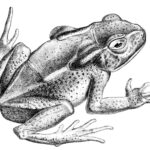
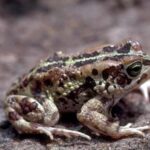
While often overlooked due to their restrained beauty and compact size, Mertensophryne taitana adults typically measure only 20 to 30 millimeters in length, their delicate frames fitting comfortably in the palm of even a child’s hand. The textured skin, rough yet elegantly patterned, bears subdued earthen hues ranging from warm browns, subtle olive-green shades, and occasional golden highlights. Such coloration is not ornamental whimsy—rather, it’s a carefully adapted camouflage perfectly matching the shadows, bark, and foliage of their forest floor habitats.
Adaptations for Survival and Camouflage#
This exceptional camouflage provides M. taitana not only with protection against predation but also aids them during their nocturnal hunting and breeding activity. Their coloration enables them to navigate the mossy substrate under moonlight without drawing attention from would-be predators such as birds, snakes, and small mammals roaming the forest at night.
In addition to coloration, their rough, wart-covered skin plays a subtle defensive role, deterring predators through a mild secretion of toxins—an effective evolutionary adaptation seen throughout the Bufonidae family. Though not dangerous to humans, this secretion discourages predators, providing one more layer of security in a challenging habitat.
Behavior and Life Cycle: Secrets Under Moonlight#
The secretive habits of the Taita Toad only become evident as night cloaks their forest home in darkness. Primarily nocturnal, these small creatures spend daytime hours sheltering in moist leaf litter or under rocks. As darkness descends and moisture saturates the night air, the frogs cautiously emerge, driven by instinctive rhythms of feeding and reproduction.
Feeding Habits and Predation Tactics#
As skilled ambush predators, Taita Toads rely heavily on pinpoint accuracy and stealth to capture their prey, which mainly consists of a variety of small invertebrates—ants, termites, beetles, spiders, and other forest floor detainees. Employing keen eyesight and swift tongue strikes, these amphibians maintain equilibrium within local insect populations and support forest floor health by controlling potential pest species.
Reproduction and Parental Care#
As the rainy season blankets the Taita Hills, male Taita Toads gather at temporary pools and waterlogged depressions, broadcasting their soft but distinctive mating calls into the night air. Their gentle resonant croaks create a harmonious chorus that echoes quietly through the misty forests.
Mating often occurs within these ephemeral waters, with females depositing strings or clusters of gelatinous eggs securely hidden among leaf litter, vegetative detritus, or submerged plants. Tadpoles hatch soon thereafter, rapidly developing within temporary pools that necessitate quick maturation—a adaptation ideal in environments where standing water may vanish once rains cease.
Ecological Role: Tiny Guardians of the Taita Hills#
Despite their humble size, the Taita Toads play a disproportionately significant role within their ecosystem. As predators feeding on various forest floor insect prey, they control population balances crucial for sustaining overall biodiversity and ecosystem health. Conversely, their delicate bodies supply essential prey items to a complex network of predator communities, maintaining energy and nutrient flow, key elements of ecological sustainability.
Additionally, amphibians like Mertensophryne taitana serve as ecological barometers—indicator species whose sensitivity to environmental changes offer humans invaluable early warnings of ecological decline, particularly those linked to climate shifts or habitat degradation.
Threats and Conservation Status: An Amphibian at Risk#
The secluded lives and specialized niche of the Taita Toad render them highly susceptible to external pressures. Unfortunately, habitat loss, driven by agriculture expansion, logging, and human settlements, endangers the Taita Hills forests upon which this species intricately depends. Furthermore, climate change poses risks, potentially disrupting rainfall patterns and altering temperature and humidity thresholds critical to their life cycles.
According to the International Union for Conservation of Nature (IUCN), Mertensophryne taitana currently carries a classification of “Endangered,” signaling serious concern over declining populations and loss of habitats. Conservation strategies, including forest restoration initiatives, community awareness campaigns, habitat protection zones, and ecological monitoring, urgently require expansion to safeguard the survival of these elusive amphibians and their ecosystems.
Cultural and Scientific Significance: Connecting Nature and Heritage#
In addition to ecological value, amphibians often possess symbolic significance in local cultures across East Africa. Though specific cultural references to Mertensophryne taitana remain scarce, many amphibian species symbolize renewal, fertility, and environmental health across diverse indigenous cultures. Scientifically, the Taita Toad represents an intriguing model species, helping herpetologists better comprehend environmental adaptations, bioindicators, and potential medicinal biocompounds.
Conclusion: Preserving the Fragile Beauty of Mertensophryne taitana#
Mertensophryne taitana exemplifies the delicate balance between organisms and their habitats, highlighting why diligent conservation efforts are pivotal not only in preserving one elusive amphibian but also in protecting the intricate ecological harmony that sustains human life itself. By increasing awareness, engaging communities to support habitat protection, and advocating robust conservation measures, we can ensure that the quiet nightly croaks of the Taita Toad remain a gentle reminder of our deeply interconnected natural world.