- Ingerophrynus ledongensis: Uncovering the Hidden Jewels of Southeast Asia's Rainforests
- Taxonomy and Classification
- Natural Habitat: The Enchantment of Montane Rainforests
- Physical Characteristics: The Artistry of Camouflage
- Behavior and Life Cycle: Quiet Pursuit under Moonlit Canopies
- Ecological Role: Guardians of Forest Health
- Threats and Conservation Status: On the Frontlines of Habitat Loss
- Cultural and Scientific Significance: Small Amphibian, Big Impact
- Conclusion: Celebrating the Hidden Wonders of Ingerophrynus ledongensis
Ingerophrynus ledongensis: Uncovering the Hidden Jewels of Southeast Asia’s Rainforests#
Nestled within the lush tapestry of Southeast Asia’s vibrant rainforests, among mist-wrapped mountains and emerald undergrowth, lives a tiny wanderer that many overlook, yet whose story captivates those who pause to appreciate it: the Ingerophrynus ledongensis. Commonly known to local herpetologists yet relatively mysterious to the general public, this toad species thrives in secluded realms of pristine forest habitat, playing an integral yet subtle role in the ecosystem.
Officially described to science in recent years, Ingerophrynus ledongensis remains somewhat enigmatic. Its unobtrusive appearance holds subtle charm, and its quiet, nocturnal behavior masks a fascinating array of adaptations carefully molded by evolutionary interplay. Let us journey deeper into the life story of this captivating amphibian, unraveling its hidden secrets, adaptive strategies, and its important yet challenging conservation narrative.
Taxonomy and Classification#
Scientifically classified as Ingerophrynus ledongensis, this intriguing species belongs to the Bufonidae family, commonly known as true toads. Within the Bufonidae, it belongs to the genus Ingerophrynus, named after famed herpetologist Robert F. Inger who dedicated decades to the study of Southeast Asian amphibians.
Ingerophrynus species are mostly small, ground-dwelling toads known for their cryptic appearances and ability to thrive in undergrowth and leaf litter environments. Though closely related to other Asian toads such as Ingerophrynus galeatus and Ingerophrynus divergens, Ingerophrynus ledongensis distinguishes itself with unique morphological features and habitat preferences that reflect its distinct evolutionary journey.
Natural Habitat: The Enchantment of Montane Rainforests#
This particular species occupies a limited geographic range, primarily confined to the montane and submontane rainforests along the mountains and hillside regions of Southeast Asia. Notably prevalent within the verdant forests of Malaysia and Indonesia, Ingerophrynus ledongensis demonstrates a strong affinity for dense, moist, and relatively undisturbed habitats rich in leaf litter and decaying organic matter.
Here, beneath towering dipterocarp trees and amidst a mosaic of ferns, bromeliads, and orchids, it finds protection from predators and harsh climatic conditions alike. The forest floor—moist, sheltered, and in perpetual decomposition—provides the ideal microhabitat rich in insects upon which the toad feeds.
Streams and rivulets winding gently through its habitat ensure persistent humidity, essential for the amphibian’s survival. The subtle microclimate created by this intricate web of vegetation, water sources, and soil types creates an environment that meets the specific temperature and moisture requirements necessary for this delicate creature.
Physical Characteristics: The Artistry of Camouflage#
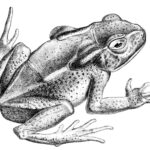
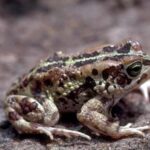
At first glance, Ingerophrynus ledongensis blends seamlessly into its forest floor surroundings, a testament to its evolved camouflage. Typically measuring around 30 to 60 millimeters in length, this relatively diminutive amphibian possesses proportions that equip it perfectly for its leaf-litter abode.
Its body is robust yet compact, sporting short limbs ideal for adeptly crawling and hopping amid tangled roots and fallen leaves. Skin coloration ranges from a subtle olive-green or muted brown to deep rust-red shades, interspersed with darker blotches and patches—akin to leaf mold and moist earth after rain.
Upon close inspection, the skin reveals gently granular textures dotted with tiny pustules—an adaptation thought not only to enhance camouflage but also to secrete mild toxins that dissuade potential predators. Its eyes, striking yet guarded, possess horizontal pupils adapted superbly for nocturnal vision, keenly discerning subtle movements of insects and other small prey.
Behavior and Life Cycle: Quiet Pursuit under Moonlit Canopies#
Under the cover of darkness, Ingerophrynus ledongensis becomes active, revealing its intriguing nocturnal behavior and cryptic habits. The stretch of rainforest it inhabits bursts to life after sunset, with its chorus mixing delicately among those of crickets, cicadas, and fellow amphibians.
Feeding Habits and Predatory Strategies#
Carefully positioned in ambush among damp leaf litter or atop moss-covered rocks, it awaits unsuspecting insects such as ants, beetles, and small arthropods. Employing stealth, precision, and patience, the toad’s tongue swiftly deploys—lightning-fast and adhesive—to capture its prey with remarkable accuracy.
A Unique Reproductive Story#
Come rainy season, Ingerophrynus ledongensis joins enigmatic nocturnal concerts to vocalize distinctive mating calls resonating gently through humid nights. Males vocalize rhythmically to attract females, their quiet trills complementing rather than dominating the forest orchestra.
Once a female selects her mate, the pair seeks shallow, ephemeral water bodies—often temporary pools or sheltered forest ponds—for egg deposition. Females deposit gelatinous egg strands threaded gently among aquatic vegetation, a protected cradle ensuring survival against predation and desiccation.
Tadpoles hatch within days, transforming slowly but steadily through metamorphosis into tiny versions of their terrestrial parents. Vulnerable initially, juveniles soon hone their camouflage skills among active leaf litter microhabitats.
Ecological Role: Guardians of Forest Health#
Despite their small stature and seemingly insignificant presence, Ingerophrynus ledongensis holds a definitive ecological role within its pristine environment. Primarily insectivorous, the species contributes substantially to insect population control, helping maintain popular equilibrium and forest balance.
Additionally, amphibians like Ingerophrynus ledongensis serve as essential bio-indicators of ecological health within their local ecosystems. Owing to their permeable skin and sensitivity to environmental stressors, their struggle or decline often signals broader habitat disturbances or ecosystem degradation, making their presence a vital measuring stick for researchers tracking conservation progress and environmental shifts.
Threats and Conservation Status: On the Frontlines of Habitat Loss#
Currently, Ingerophrynus ledongensis faces several potent threats, most notably habitat destruction driven by expansive agriculture, logging industries, and increasing infrastructure development. As forests disappear, the habitat corridors become fragmented, limiting genetic exchange and jeopardizing species survival.
Climate change further compounds these issues, altering precipitation patterns and threatening the ephemeral ponds and pools they rely upon for breeding purposes. While the complete ecological profile and the precise conservation status of this species remain inadequately studied—partially due to its cryptic nature and remote localities—it remains undoubtedly vulnerable, requiring earnest attention from conservationists.
Organizations and local researchers are now advocating for enhanced protection of these forest habitats and promoting education among local communities to emphasize the value of biodiversity and amphibian conservation.
Cultural and Scientific Significance: Small Amphibian, Big Impact#
Though not markedly charismatic and unassuming in cultural mythology as compared to larger or more vividly colored species, Ingerophrynus ledongensis symbolizes biodiversity richness, the world’s hidden splendor, and natural harmony.
Scientifically, studying such cryptic and specialized amphibians grants important insights into evolutionary ecology, behavioral biology, and conservation biology, helping shape future strategies to preserve vulnerable fauna and ecosystems alike.
Conclusion: Celebrating the Hidden Wonders of Ingerophrynus ledongensis#
Our journey into the life and habitats of Ingerophrynus ledongensis invites admiration, curiosity, and empathy for the quiet, sometimes overlooked wildlife thriving in threatened ecosystems worldwide. For while humble this amphibian may be in appearance, its hidden narrative resonates deeply, illustrating the intricate interdependencies knitting ecosystems together and the urgent need for collective, dedicated conservation action.
As we conclude exploring this delicate jewel within Southeast Asia’s ecological tapestry, let us commit to actions large and small—educating ourselves, supporting conservation initiatives, and respectfully exploring wildlife wonders—to ensure frogs like Ingerophrynus ledongensis remain vibrant participants in earth’s incredible story.