Guardian of the Leaf Litter: A Close Encounter with the Ingerophrynus galeatus Toad#
In quiet corners of dense Southeast Asian forests, hidden amidst the rich carpet of leaf litter and shaded by emerald foliage, lives a remarkable amphibian—Ingerophrynus galeatus. Commonly known as the Helmeted Toad, this humble yet fascinating creature easily escapes notice at first glance. With their cryptic appearance and subtle habits, they seamlessly blend into the tapestry of lush forest floors. But beneath their unobtrusive demeanor lies an astounding realm of adaptation, behavior, and ecological importance that deserves closer inspection.
Delving into the life of Ingerophrynus galeatus is akin to embarking on an exploration through an uncharted jungle pathway—each step reveals new insights into the delicate web of life thriving in tropical habitats. This article is an invitation to journey deeper into this toad’s hidden world, learning about its fascinating biology, quirky behaviors, and the urgent conservation lessons its existence imparts.
Taxonomy and Classification#
The Helmeted Toad, scientifically classified as Ingerophrynus galeatus, belongs to the family Bufonidae—a widespread and diverse group commonly known as the “true toads.” Within this family, the Ingerophrynus genus is characterized by terrestrial habits, often relying on camouflage to blend into forest substrates. Ingerophrynus galeatus was first described scientifically by Albert Günther in 1864 and has since been positioned among a growing group of Southeast Asian amphibians notable for their specialization to subtropical and tropical forest environments.
Its closest relatives within the genus, such as Ingerophrynus divergens and Ingerophrynus macrotis, share many ecological and morphological features, yet subtle differences in habitat use, morphology, and behaviors mark out each species as unique adaptations to their respective ecological niches.
Natural Habitat#
Geographic Range and Preferred Ecosystems#
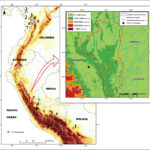
Ingerophrynus galeatus occupies a concentrated yet fragmented range across parts of Southeast Asia, predominantly found within the moist lowland and hillside evergreen forests of Borneo (including Sabah and Sarawak regions), parts of Peninsular Malaysia, Brunei, Singapore, and Sumatra, Indonesia. Within these dense forests, this creature thrives in areas thick with leaf litter, damp soils, and shady undergrowth, largely avoiding open or disturbed habitats.
The Forest Floor: A Realm Perfected for Survival#
The Helmeted Toad masterfully exploits the leaf litter, utilizing it both as shelter from predators and as a hunting ground. The humid, shaded understory provides essential microhabitats rich in invertebrates, the staple diet of the toad. Streaks of sunlight piercing the canopy illuminate mosses, fungi, and tiny arthropods, establishing an ideal hunting territory. Beneath this vibrant organic compost, the moisture preserves critical body hydration required by the toad’s sensitive amphibian skin.
Adapting to a cryptic lifestyle has enabled Ingerophrynus galeatus to thrive in an environment bustling with biodiversity, where competition for resources is intense, and predator vigilance remains high. Each day in this ecosystem holds a fragile balance, delicately upheld by specialized species like the Helmeted Toad.
Physical Characteristics#
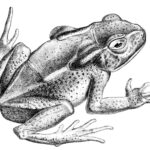
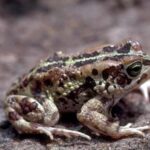
Upon close inspection, the Helmeted Toad is both striking and deceptively modest in appearance. Adults are typically moderate in size, with a snout-to-vent length ranging from roughly 40 to 70 millimeters. Their bodies are stocky and robust, equipped with sturdy limbs perfectly suited for terrestrial locomotion and powerful leaps when threatened.
The “helmet” from which this species gets its common name refers primarily to the distinctive cranial ridge—conspicuous bone crests running from their eyes along their heads, lending them a uniquely helmet-like aspect. This structural adaptation likely assists in protection from predators, camouflage, and possibly territorial or mating displays.
The toad’s skin—textured, granular, and covered in distinctive warts—is colored in muted shades of brown, olive, or obscure greys, typically mirroring leaf litter or damp forest substrates. This cryptic coloration provides extraordinary camouflage, a critical survival mechanism allowing the toad to remain unnoticed by predators such as birds, snakes, and small mammals.
Behavior and Life Cycle#
Silent Hunters of the Understory#
Ingerophrynus galeatus is predominantly nocturnal and crepuscular—a hunter cloaked by darkness. As dusk descends and temperatures stabilize, individuals venture forth from secure hiding places underneath logs or leaf cover. Their diet mainly comprises forest invertebrates such as ants, beetles, termites, spiders, and small insects encountered during meticulous forays, employing quick darting movements and sticky tongues to secure prey with surprising efficiency.
Mating Rituals and Breeding Habits#
Like many amphibians, Ingerophrynus galeatus engages in seasonal breeding rituals closely associated with forest streams and temporary bodies of water formed during rainy seasons. Male Helmeted Toads produce melodious, repetitive calling patterns—soft croaking notes resonating through the humid air to attract receptive females.
Once females approach and breeding pairs form, eggs are laid in gelatinous strings within shallow pools or slow-moving streams. Tadpoles, upon emergence, are conspicuously darker and streamlined, adapted for rapid development in ephemeral aquatic environments. Metamorphosis from aquatic larvae to terrestrial juveniles is swift, timed strategically before temporary pools evaporate—yet another testament to this species’ remarkable adaptability.
Ecological Role#
Integral Players in a Complex Web#
The Helmeted Toad fulfills essential ecological roles—serving as both predator and prey within densely structured forest ecosystems. By regulating populations of abundant arthropods, they contribute significantly to balancing forest floor insect communities. Moreover, their role as prey to larger animals like monitor lizards, owls, and certain predatory snakes underscores their integral position within food webs.
An Indicator of Forest Health#
Being sensitive to environmental disturbances, amphibians like Ingerophrynus galeatus also function as crucial indicators of environmental health. When populations decline, they serve as early warnings, signaling ecosystem disturbances such as habitat degradation, pollution, or climatic fluctuations warranting further attention and intervention by conservationists.
Threats and Conservation Status#
As an inherent forest specialist, Ingerophrynus galeatus faces numerous anthropogenic threats exacerbating the pressures on delicate habitats. Rampant logging, palm oil plantations, infrastructure development, and urban encroachment significantly fragment and degrade this species’ preferred habitats, rendering their survival precarious. Pollution from pesticides and increased sedimentation in waterways disturb breeding and tadpole development, further compounding population challenges.
Currently, the Helmeted Toad is classified by the International Union for Conservation of Nature (IUCN) as Least Concern (LC), yet conservationists note worrying localized declines due to ongoing habitat pressures. Proactive conservation measures emphasizing forest protection, sustainable land management, and targeted ecological corridor creation remain essential to safeguard stable populations for the future.
Cultural and Scientific Significance#
Though subtle in appearance, frogs and toads like Ingerophrynus galeatus frequently appear within local folklore across Southeast Asia—often seen as bellwethers of rain or indicators of ecosystem well-being. Scientifically, they represent critical biodiversity, genetic heritage reservoirs, and showcase evolutionary adaptations valuable for ecological and biomedical research. Understanding their chemical defenses, immune responses, or adaptability to climate change provides insights that may inspire solutions for broader environmental and scientific challenges.
Conclusion: Small Creature, Big Lessons#
Through careful observation, the understated Helmeted Toad teaches us about ecosystem interconnectedness, revealing insights into sustainable coexistence with nature. To lose this unobtrusive amphibian would not merely diminish biodiversity; it would silence an important indicator of environmental change, eroding our shared knowledge of ecological integrity.
We hold collective responsibility for the stewardship of such fascinating creatures. By protecting their richly textured forest homes, embracing conservation education, and advocating for sustainable practices, listeners, readers, and admirers alike can secure thriving populations of Ingerophrynus galeatus and countless other creatures that share this delicate, interconnected web of life. The Helmeted Toad is a small yet powerful ambassador, reminding us daily of our enduring obligation to protect the wild and wonderful tapestry of life on Earth.