- The Golden Toad (Incilius periglenes): The Lost Jewel of the Cloud Forest
- Taxonomy and Classification of the Golden Toad
- Natural Habitat: Realm of Mist and Moss
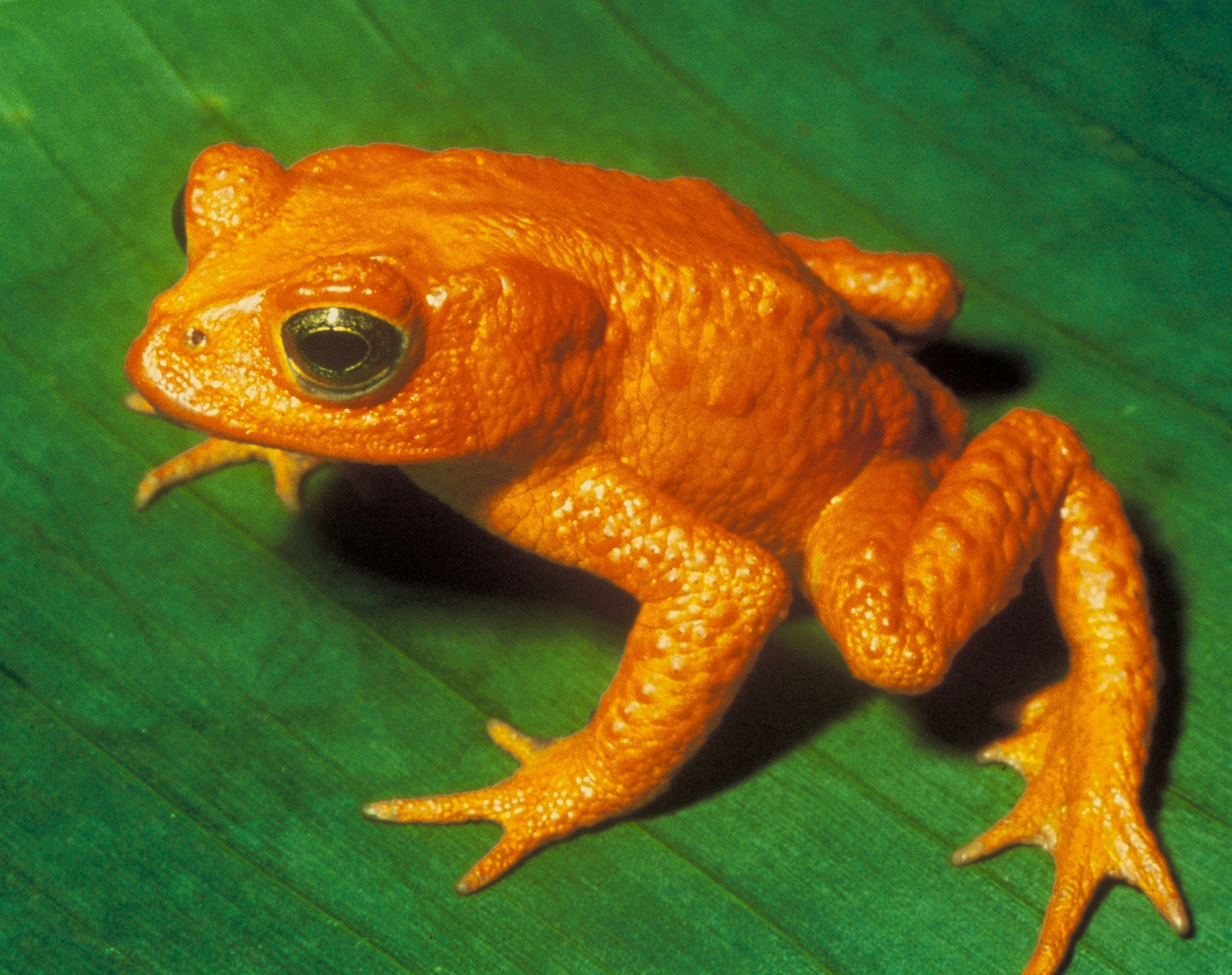
- Physical Characteristics: A Living Gemstone
- Behavior and Life Cycle: Brief Bursts of Life
- Ecological Role: A Crucial Cog Within the Rainforest Machine
- Threats and Conservation Status: The Mystery of Vanishing Jewels
- Cultural and Scientific Significance: Symbols and Lessons
- Conclusion: Honoring Incilius periglenes with Action
The Golden Toad (Incilius periglenes): The Lost Jewel of the Cloud Forest#
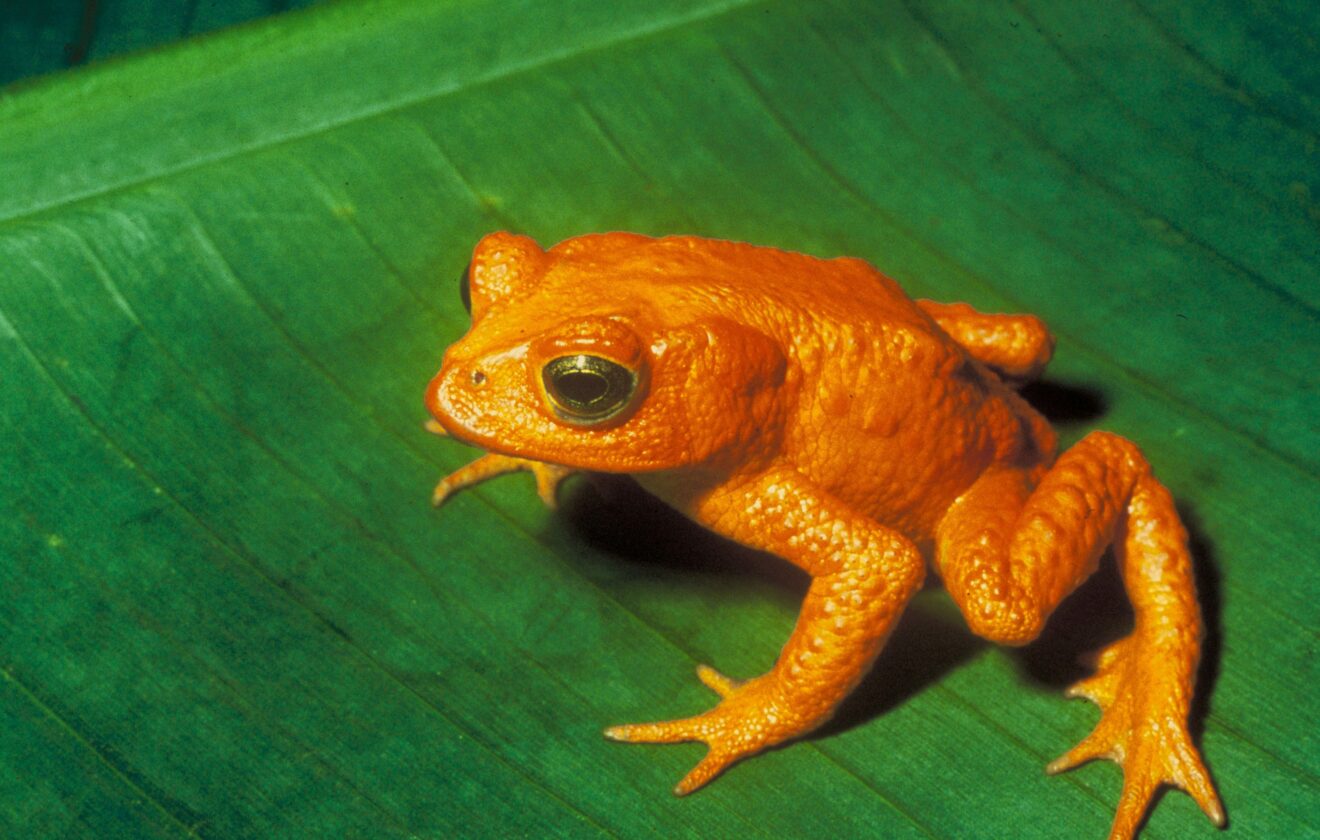
In the mist-shrouded cloud forests of Monteverde, Costa Rica, there once lived a creature so strikingly vivid that it seems born from legend rather than biology—the golden toad (Incilius periglenes). Brilliantly golden-orange, shimmering like living amber among the mossy foliage, these diminutive amphibians once symbolized the vibrant richness of Central America’s forests. Yet today, their absence stands as a silent yet powerful testimony to our planet’s fragility and vulnerability.
Incilius periglenes, better known as the golden toad, became an iconic example of biodiversity loss when it inexplicably vanished only decades after its official discovery. As we delve into the unique biology, ecology, and the poignant story of this enigmatic species, we find valuable insights into the delicate balance of our ecosystems and the urgent importance of global conservation efforts.
Taxonomy and Classification of the Golden Toad#
Belonging to the extensive Bufonidae family, the golden toad was formally classified as Incilius periglenes. Previously, it was also known under the scientific nomenclature as Bufo periglenes; however, taxonomic revisions have reassigned many American toads to the genus Incilius. The genus Incilius includes numerous toads native to North, Central, and South America, characterized by dry, wart-covered skin and prominent parotoid glands.
Though visually unique, the golden toad shared close evolutionary ties with other Neotropical Bufonids. Its closest relatives feature robust bodies, cranial crests, and variable coloration suited to diverse habitats. However, none quite mirrored Incilius periglenes’s extraordinary golden hue nor its mysterious and brief presence in biological history.
Natural Habitat: Realm of Mist and Moss#
Incilius periglenes was endemic to a small, highly specialized habitat within the Monteverde Cloud Forest Reserve in Costa Rica. Nestled between elevational bands of approximately 1,500 to 1,620 meters, this mist-laden cloud forest provides an ecosystem like no other on Earth.
A Fragile Haven#
The golden toad thrived exclusively in the humid, mist-covered forest clearings and temporary pools created by seasonal rains. Imagine an environment perpetually cloaked in gentle mist, draped with lichens, mosses, bromeliads, and orchids. Here, small puddles and temporary ponds formed during the rainy season, serving as vital breeding habitats and the foundation upon which the golden toad’s life cycle depended.
The constant cool temperatures and abundant moisture provided an ideal microclimate for amphibians, which breathe and absorb nutrients and moisture directly through their permeable skin. This fragile setting, beautiful yet incredibly sensitive, ultimately played a critical role in both the prosperity and eventual disappearance of the species.
Physical Characteristics: A Living Gemstone#
Perhaps nothing defines Incilius periglenes so memorably as its stunning appearance. Male golden toads were about 4.8 centimeters in length and possessed vibrant, luminous orange-golden skin. Their coloration was so intense and distinctive, they were once aptly described as resembling “liquid gold poured into the mold of a tiny amphibian.”
Dimorphic Wonders#
Though less stunningly bright than males, female golden toads exhibited their own understated beauty, often presenting a mosaic of olive-green, bronze or dark yellow coloration with reddish-brown patterns. The sexual dimorphism observed among this species was pronounced, helping males attract mates during their brief but energetic breeding season. This coloration also likely acted as visual cues during courtship interactions.
Their skin, like all toads, featured small warts and rough texture—a clever evolutionary adaptation, dissuading predators without the necessity of stronger defenses like fangs or claws.
Behavior and Life Cycle: Brief Bursts of Life#
The golden toad’s story overflows with ecological mysteries and behavioral marvels. They exhibited highly synchronized and concentrated breeding behaviors occurring within a narrow annual cycle linked intimately to the seasonal rainfalls characteristic of the cloud forest.
The Dance of Raindrops and Amphibians#
Breeding activity commenced swiftly after the first heavy rains in April or May. Imagine the forest floor pulsating under hundreds of luminous bodies converging near shallow temporary breeding pools. Males, bright and vivid, would outnumber females by notable ratios, sometimes up to eight males for every female, all competing fiercely to secure reproductive opportunities.
Mating pairs engaged in amplexus, in which the male grasped the female from behind, facilitating external fertilization as she released long strands of eggs into temporary ponds. Each female could lay hundreds of eggs at once, carefully hidden within these ephemeral wetlands.
Larvae (tadpoles) hatched within days, growing rapidly into toadlets to beat the drying out of temporary pools. Life was urgent, accelerated to synchronize perfectly with the ephemeral nature of their breeding grounds.
Ecological Role: A Crucial Cog Within the Rainforest Machine#
As with most amphibians, the presence of Incilius periglenes filmed a critical niche within their rainforest home. Amphibians serve two crucial ecological roles; often both predator and prey simultaneously. The golden toad consumed insects, arthropods, and a variety of small invertebrates, effectively controlling populations and maintaining balanced insect communities. In turn, this species also provided vital prey items for birds, snakes, and mammals that frequented their environment.
The golden toad was considered an indicator species—the proverbial canary in the ecological coal mine. Its sudden disappearance signaled a fragile balance tilting dangerously towards collapse.
Threats and Conservation Status: The Mystery of Vanishing Jewels#
Declared officially extinct by the IUCN in 2004, Incilius periglenes represents one of the first clear amphibian extinctions linked to the burgeoning global biodiversity crisis.
Perfect Storms#
Several theories emerged regarding its rapid disappearance. Initially, scientists pointed fingers at habitat destruction or climate variability. However, researchers now generally agree on a more insidious culprit—an infectious fungal pathogen, Batrachochytrium dendrobatidis, commonly known as chytrid fungus. This fungus disrupts amphibians’ sensitive skin respiration and water absorption, making survival impossible.
Still, environmental factors intensified the crisis. Climate anomalies—potentially worsened by human-driven climate change—altered cloud coverage, rain patterns, and temperature stability that once ensured the toad’s survival. This ecological unraveling emphasizes just how delicately balanced and interconnected ecosystems truly are.
Cultural and Scientific Significance: Symbols and Lessons#
The golden toad’s bright coloration helped establish an iconic image within conservation messages around the world. Incilius periglenes transformed from a species little-known outside of niche scientific circles into a global symbol spotlighting environmental degradation and biodiversity loss. The species now frequently appears in scientific literature, illustrating the devastating impacts of human-driven changes on vulnerable wildlife.
Additionally, this extinction galvanized scientific inquiry into chytrid fungi, climate change impacts, and rapid amphibian declines worldwide—prompting international amphibian conservation efforts and broader awareness around biodiversity crises.
Conclusion: Honoring Incilius periglenes with Action#
Today, the forests of Monteverde remain profoundly changed by the absence of their golden jewel. The haunting story of Incilius periglenes serves as a poignant parable demonstrating the hidden complexities of ecosystems, the unforeseen consequences of environmental change, and the irreversible heartbreak of extinction.
Yet we can still honor the vivid legacy of the golden toad by supporting conservation, ecological research, and habitat protection worldwide. The story of Incilius periglenes need not end in silence; let its story inspire advocacy and determination to protect the remaining jewels within Earth’s diverse tapestry of life.
Let each of us speak for these silent creatures, celebrating their lives and fighting to preserve the precious habitats that nourish so many species worldwide.