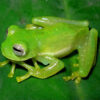
- Discovering Incilius majordomus: The Enigmatic Guardian of Tropical Forests
- Taxonomy and Classification
- Unraveling the Natural Habitat of Incilius majordomus
- Physical Characteristics: Evolutionary Masterpieces of Camouflage
- Behavior and Life Cycle: Mysterious Rituals of the Forest Floor
- Ecological Role: Guardians of a Sensitive Ecosystem
- Threats and Conservation Status: A Species at the Crossroads
- Cultural and Scientific Significance: Frog as Symbol and Scholar
- Conclusion: Championing the Guardian of Panama’s Rainforests
Discovering Incilius majordomus: The Enigmatic Guardian of Tropical Forests#
Beneath the lush canopy of Central America’s vibrant tropical forests, hidden among fallen leaves and tangled root systems, lives a creature as intriguing as it is elusive—the frog species Incilius majordomus. Also affectionately known by scientists and locals alike as the “Chief Toad” for its authoritative presence and distinct appearance, this humble amphibian holds secrets vital not only to the ecosystems it inhabits but also to our understanding of conservation itself.
Imagine a frog species whose discovery surprised even seasoned herpetologists, appearing in one of the most biodiverse but endangered regions of biological richness—Panama. First scientifically described as recently as 2013, Incilius majordomus is a stunning example of nature’s capacity for adaptation, evolutionary nuance, and carefully-sided mystery. This frog does not merely dwell within these forests; it serves as a sentinel, offering vital clues to the health of delicate ecosystems threatened by human expansion and environmental upheaval.
Taxonomy and Classification#
Before we delve deeply into its fascinating natural history, let’s first understand its scientific identity. Incilius majordomus belongs to the family Bufonidae—commonly known as true toads. True to their adaptable heritage, members of Bufonidae cover nearly every continent except Antarctica and Australia, exhibiting a remarkable range of sizes, behaviors, and coloration.
Within the genus Incilius, a group previously considered part of the broader genus Bufo, I. majordomus stands out due to its highly restricted habitat and unique physiological features. Closely related to species like Incilius coniferus and the northern Incilius valliceps, this species is distinctive enough in its genetics, morphology, and calls to deserve its own niche in scientific literature and conservation research.
Unraveling the Natural Habitat of Incilius majordomus#
Central to this species’ identity is its unique habitat: the Pacific slopes of western Panama. Within this narrow geographic boundary, Incilius majordomus thrives specifically in low-to-middle-elevation forests adjacent to rivers and streams. Here, amid moist, shady conditions, these frogs occupy the mysterious spaces beneath fallen logs, around leaf litter, and within the intricate root architecture of tall trees. The humid microclimates of stream banks provide them with precisely the moisture and shelter essential for their survival, facilitating their ephemerally secretive nature.
Picture, for a moment, the deep verdancy of their surroundings—dense, moist forests echoing with bird calls, humming with insect life, and pulsing with the rhythmic sounds of cascading water. Capturing a glimpse of these elusive toads requires exceptional patience and a keen eye; they blend effortlessly into their environment, their brown, mottled skin hiding them in plain sight.
Physical Characteristics: Evolutionary Masterpieces of Camouflage#
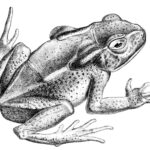
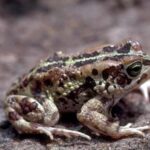
Adult individuals of Incilius majordomus measure between 5 and 8 centimeters from snout to vent—not impressively large, yet their stature commands respect within their ecosystem. Their robust bodies carry the distinctive hallmarks of the Bufonidae family: rugged, wart-covered skin, short but powerful limbs, and expressive eyes that peer cautiously from their concealed forest hiding places.
Yet beyond their functional build are the elegantly adapted coloration patterns. Shades of rich, mottled browns, rusted ochres, and subtle greenish-gray tones swirl together like an impressionist painting, mimicking perfectly the hue and texture of leaf litter, wood bark, and moist dirt. Veins and coloration subtly vary, adjusted perfectly for the terrain and vegetation of their habitat—a perfect prism of evolutionary adaptation at work.
Behavior and Life Cycle: Mysterious Rituals of the Forest Floor#
Nocturnal Hunters and Patient Predators#
As purely nocturnal creatures, these frogs navigate the darkness with careful deliberation, cautiously emerging under cover of night. Their diets consist primarily of forest-floor invertebrates—including ants, beetles, spiders, and crickets. Utilizing a tactics-oriented hunting style, they patiently wait partly concealed, eyes alert for movement. While their feeding mechanisms are simple—quick lashes of a sticky tongue—the precision of their movements speaks eloquently to thousands of years of natural selection, tuned to their environment’s rhythms.
Mating Calls and Breeding Habits#
When the annual heavy rains drench the forests, male Incilius majordomus unleash orchestrations of vocalizations to attract females. The calls, deep and resonant, possess a distinctive quality that sounds almost like quiet repeated croaks—rhythmic, gentle, yet profoundly resonant, echoing through the dampened twilight of their habitat.
Once breeding pairs form, females carefully select shallow pools close to freshwater streams, delicately depositing strings of dark, gelatinous eggs. Unlike some amphibians who abandon their eggs to the vagaries of nature, Incilius majordomus exhibit a subtle but meaningful variety of parental strategy. Females linger nearby for short periods post-laying, a protective sentinel against the advances of predators, ensuring a higher likelihood of offspring survival—a loving but overlooked parental care behavior.
Tadpoles hatch after approximately one week, swimming and feeding voraciously within their protective watery nurseries. Spawn develop rapidly, metamorphosing into tiny replicas of adults in mere weeks, at which point they venture into darker corners of the forest to begin their clandestine amphibious lives.
Ecological Role: Guardians of a Sensitive Ecosystem#
Though not immediately apparent to the average passerby, these unassuming toads play pivotal roles in their forest ecosystem. They serve simultaneously as predators and prey within the complex food web. Their voracious appetite helps control invertebrate populations, contributing to the delicate balance of forest-floor biodiversity. Conversely, snakes, birds, and small mammalian predators rely on these frogs as a food source, anchoring the vitality of the interconnected system around them.
Moreover, due to their sensitivity to environmental changes, amphibians like Incilius majordomus act as critical ecological indicators. Studying the population health of these toads provides conservationists and researchers valuable indicators of broader environmental trends—particularly alarming habitat degradation and climate-change stressors.
Threats and Conservation Status: A Species at the Crossroads#
Unfortunately, the ongoing saga of humanity’s expansion brings ominous tidings for species reliant on pristine forests. Though considered relatively new to science, conservationists quickly learned Incilius majordomus faces distinct pressures. Habitat degradation and fragmentation driven by logging, agriculture expansion, infrastructure projects, and pollution threaten their isolated populations. Moreover, amphibians worldwide suffer immensely from fungal infections like chytridiomycosis, and it remains unclear how significantly this disease impacts this relatively understudied species.
The International Union for Conservation of Nature (IUCN), as of their latest assessment, lists Incilius majordomus under the status of “Endangered,” highlighting the urgent need for comprehensive protections. Conservation organizations within Panama increasingly stress the importance of habitat protection measures and community-based environmental educational initiatives—critical steps toward preserving these tiny forest dwellers and their richly biodiverse home.
Cultural and Scientific Significance: Frog as Symbol and Scholar#
Beyond its critical ecological function, local communities reverently recognize frogs as indicators of seasonal and ecological changes. Indigenous traditions within Panama’s remote communities often see forest species—including toads—as spiritual symbols and messengers between worlds, reflecting a profound respect and inherent understanding of their ecological interconnectedness.
Scientifically, the species’ late discovery continues to underscore the importance and excitement of tropical biological exploration. Each new species identified offers clues into evolutionary processes and galvanizes efforts to protect these rapidly disappearing habitats.
Conclusion: Championing the Guardian of Panama’s Rainforests#
Through understanding their ecology, behavior, and conservation plight, we begin to appreciate the compelling narrative of Incilius majordomus. They remind us how subtle yet critically important even the smallest member of an ecosystem can be. By championing their preservation, supporting habitat conservation initiatives, and spreading awareness of their status and importance, each one of us participates in safeguarding not only a species but the remarkable tapestry of life to which they belong.
Let us rally together, learn more, and act decisively in protecting the enigmatic guardians of our planet’s priceless forests—before it’s too late.