Bocourt’s Toad (Incilius bocourti): Secrets of Central America’s Enigmatic Amphibian#
The humid air settles heavily beneath the dense canopies of Central America’s tropical forests. Moisture hangs in a fine mist, clinging to lush foliage and nurturing carpets of emerald moss. Amid the chorus of countless insects and echoing birdcalls lies a less conspicuous but captivating creature—Bocourt’s Toad, scientifically known as Incilius bocourti. Quiet guardians of their ecosystem, these amphibians offer fascinating insights into biodiversity, ecology, and conservation. Though often overshadowed by more charismatic wildlife, Bocourt’s Toad’s unique ecological role and intriguing natural history make it a species deserving admiration and protection.
Taxonomy and Classification#
Bocourt’s Toad belongs to the family Bufonidae, a vast lineage of true toads known for their characteristic dry, warty skin and toxin-producing parotoid glands. Within this established family, Incilius represents a genus particularly adapted for various tropical and subtropical environments across Central America and northern South America. Named in honor of French zoologist Marie Firmin Bocourt, who significantly contributed to herpetological studies in the region, Incilius bocourti stands as a testament to extensive scientific exploration in biodiversity-rich regions.
While closely related species like Incilius valliceps share overlapping distributions, detailed research into genetic differentiation emphasizes I. bocourti‘s distinct evolutionary path. Experts rely upon nuanced morphological traits and meticulous genetic analyses to clarify its place in the complex tapestry of Bufonidae taxonomy.
Natural Habitat#
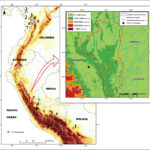
Found primarily across parts of Guatemala, Belize, and southeastern Mexico, Bocourt’s Toad thrives in diverse, humid tropical settings. Its habitat spans from lowland rainforests to subtropical moist forests, frequently inhabiting wet woodland areas near streams, ponds, and puddles. Deep within these lush labyrinths of vegetation, delicate balance reigns supreme—each species meticulously adapted to its specific nook within nature’s intricate web of life.
Dense leaf litter carpeting the forest floor provides ideal shelter conditions and an endless buffet of arthropods. Enshrouded beneath ferns and decaying logs, Bocourt’s Toad remains hidden, its cryptic coloration seamlessly blending with damp foliage and textured soils. Seasonal rainfall shapes its reproductive cycle, with breeding predominantly occurring in temporary water bodies formed during the rainy months when habitats teem with aquatic life.
Physical Characteristics#
At mid-size relative to other Bufonidae, adult Bocourt’s Toads typically measure between 5 to 8 centimeters in length. Their sturdy yet agile build, combined with robust limbs, facilitates effortless movement through varying forest substrates and undergrowth.
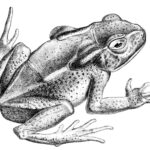
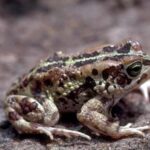
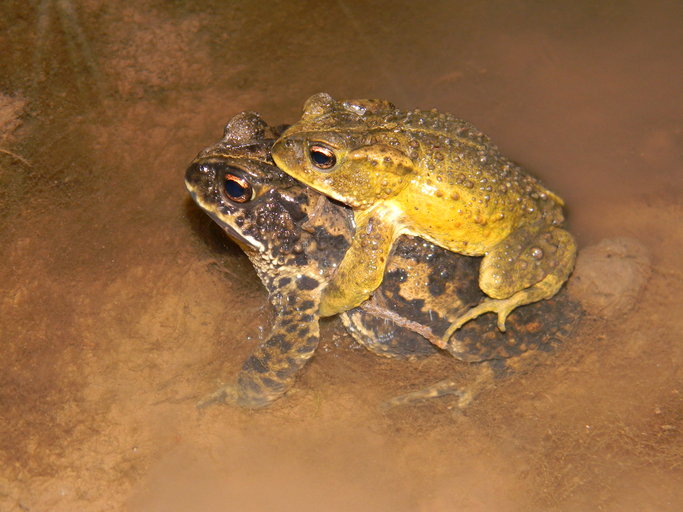
The paths of forest wanderers often cross unknowingly over Bocourt’s Toad, so expertly camouflaged is its body. Its skin, exhibiting earthy hues of olive-brown to richly mottled dark patterns, mirrors perfectly the dappled shadow-light of underbrush. Prominent wart-like skin glands furnish their bodies, ironically soft to the touch but capable of secreting defensive toxins potent enough to deter many potential predators. Behind each eye, conspicuous swollen parotoid glands release a milky substance that serves as both antimicrobial protection and an effective chemical defense mechanism.
Eyes wide and expressive, often burnished copper or vibrant gold hues, punctuate the toad’s expressive faces, perfectly adapted for nocturnal explorations. These physical adaptations, elegantly balancing form and function, underscore how Bocourt’s Toad has harmonized itself intricately within the demanding ecosystems it inhabits.
Behavior and Life Cycle#
Feeding Habits and Predation Techniques#
As nighttime engulfs the tropical forest, Bocourt’s Toad emerges from daytime hideaways beneath thick foliage. Equipped with exceptional nocturnal vision and acute auditory perception, it approaches dietary endeavors strategically. Insects, spiders, beetles, and other small invertebrates commonly fall victim to its voracious appetite. Prey drawn to moist areas become unwitting participants in this hidden drama of predator and prey.
Utilizing an effective ambush-style strategy, it waits patiently, almost immobile within the leaf litter. The toad’s sticky, lightning-fast tongue enables swift capture of prey species—a tactic refined through evolutionary time. Feeding mostly calculatedly yet occasionally opportunistically, Bocourt’s Toad embodies adaptability vital to successful survival in saturated ecosystems.
Reproductive Rituals and Tadpole Development#
When tropical downpours bathe the forest, initiating a symphony of sound, Bocourt’s Toad embarks on its annual mating season ritual. Compelled by nature’s innate rhythms, males assemble at waterbody edges emitting resonant mating calls—low-pitched melodious trills echoing across humid landscapes. Female toads respond by approaching suitable mates, engaging briefly before laying strings of gelatinous eggs anchored strategically to aquatic vegetation or shallow-water substrates.
Within days, tiny tadpoles emerge, breathing through delicate gills and feasting on algae and microorganisms proliferating throughout temporary watery habitats. Gradually, metamorphosis begins, limb buds sprouting tenderly from delicate bodies as subtle changes lead them toward terrestrial adaptation. Over several weeks, transformation culminates in miniature terrestrial juveniles venturing onto forest floors to begin lives mirroring their parents, cyclic harmony restored.
Ecological Role#
Though humble and enigmatic, Bocourt’s Toad remains undeniably pivotal within its native ecosystem. Predating heavily upon insect populations ensures ecological equilibrium, controlling pests that might otherwise inflict extensive harm upon plants or agriculture. Serving as prey themselves for larger animals—including snakes, birds, and small mammals—these amphibians anchor essential trophic connections, enabling energy flow and nutrient recycling vital to ecological integrity.
Additionally, amphibians are sensitive environmental indicators, often alerting ecologists to unnoticed environmental stressors, habitat degradation issues, or lurking chemical contaminants. Monitoring Bocourt’s Toad populations grants conservationists keen-eyed vigilance regarding ecosystem health, facilitating prompt remedial measures when threats manifest subtly or suddenly.
Threats and Conservation Status#
While currently classified as Least Concern by the IUCN, walls of complacency should never surround Bocourt’s Toad conservation. Mortally threatened by habitat destruction due to expanding human settlements, deforestation, and agriculture, its survival depends intimately on protected, intact ecosystems. Beyond habitat loss, climate change heralds uncertain challenges—shifting rainfall patterns alter breeding cycles profoundly impacting population stability.
Outbreaks of devastating amphibian diseases, notably the fungal infection chytridiomycosis, pose additional threats. Ecologists and conservation biologists maintain vigilant monitoring and research programs aimed at detecting declines rapidly, motivating timely intervention. Continued viability of Bocourt’s Toad hinges undeniably upon diversified conservation strategies, encompassing protected habitat creation, community-driven awareness, and disease mitigation initiatives combined cohesively toward shared objectives of preserving amphibian biodiversity.
Cultural and Scientific Significance#
Within Central American folklore, amphibians symbolize transformative energies—embodiments linking worlds of water, land, and spirit realms. While not as prominently featured as more iconic species such as frogs in indigenous cultures, Bocourt’s Toad maintains importance, contributing richly to local biodiversity and integral ecological relationships that underpin cultural biodiversity.
Scientifically, studies exploring toxins produced in the glands of Bufonid toads unlock potential medicinal uses, inspiring innovation such as anti-microbial compounds and novel therapeutic agents. Research involving Incilius bocourti enriches humanity’s collective knowledge regarding biological intricacies awaiting discovery in tropical forests.
Conclusion: Guardians of Subtle Vitality#
Bocourt’s Toad teaches us profound lessons—true beauty and importance often lie hidden in subtlety. Preserving species like Incilius bocourti transcends mere protection of one animal; it sustains the fragile ecological balance upon which numerous life forms rely, ultimately safeguarding vibrant ecosystems essential for global biodiversity.
Join ongoing conservation efforts, advocate awareness, and delve deeper into knowledge. Every step contributes meaningfully, empowering us collectively to cherish, understand, and ensure the survival of captivating yet gentle residents of our remarkable planet.