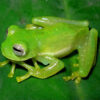
- Incilius aurarius: Exploring the Golden Toad of Biodiversity's Hidden Gems
- Taxonomy and Classification
- A Habitat Cloaked in Mist: Where Does the Golden Toad Live?
- Appearance and Adaptations: A Living Golden Jewel
- Fascinating Behavior and Intricate Life Cycles
- The Quiet Ambassador: Incilius aurarius's Role in the Ecosystem
- Threats, Challenges, and Conservation Efforts
- Cultural and Scientific Significance: Beyond Mere Survival
- Protecting a Golden Treasure: What You Can Do
Incilius aurarius: Exploring the Golden Toad of Biodiversity’s Hidden Gems#
It is twilight deep in the moist montane forests of Central America. Mist floats languidly through the trees, beading gently upon a latticework of vines and ferns. Delicate bursts of sound punctuate the brimming darkness—a gentle chorus that calls to life an ancient ritual enacted yearly by a species scarcely known, yet radiant in its singularity: Incilius aurarius, the Golden Toad of Guatemala’s cloud forests.
Golden frogs and toads often symbolize fortune in diverse cultures, their vaulted hues signifying special wisdom or good luck. But nestled amongst leaf litter and moss-covered logs in Guatemala’s rich greenery hides a treasure known by science since relatively recent times, formally described only in the early 21st century. Yet despite its wondrous precision of form and coloration, I. aurarius remains elusive, enchanting wildlife enthusiasts and researchers alike. Its discovery and continuous study give us critical glimpses into evolutionary biology, ecological balance, and even the sensitive pulse of climate change.
Taxonomy and Classification#
Incilius aurarius belongs to the Bufonidae family, also commonly known as the “true toads.” Within this diverse amphibian family, members of the genus Incilius are primarily distributed throughout Central and North America, extending down to parts of northern South America. First described scientifically in 2012 by biologists Mendelson, Mulcahy, Snell, Acevedo, and Campbell, this intriguing toad quickly intrigued herpetologists due to its unique morphological traits and sharply constrained geographic range.
Often confused initially with other closely related toads such as Incilius holdridgei, the subtle differences in skin textures, coloration, and vocalization patterns have cemented its status as a distinct species. Genetic analyses have further confirmed aurarius‘s place within the Incilius group, displaying precise evolutionary markers that set it apart from its amphibian cousins.
A Habitat Cloaked in Mist: Where Does the Golden Toad Live?#
The habitat of Incilius aurarius is spellbinding in its mystery and complexity. Primarily endemic to the mist-shrouded montane forests and cloud forests of central Guatemala, this amphibian revels in moist, temperate environments. Most commonly found around altitudes ranging from approximately 1,500 to 2,500 meters above sea level, its very life cycle is intimately entwined with moisture, precipitation, and the luscious undergrowth of these primary forests.
Within this enchanting world of perpetual dampness, sunlight shyly filters through dense foliage, warming occasional patches on the forest floor. Here, the golden-hued skin of I. aurarius refracts fleeting rays of sunshine. It navigates confidently the leaf litter, moss-covered logs, and hidden pools where it finds sustenance, shelter, and partners during its limited breeding season. The fragile balance of humidity and cloud cover ensures its delicate skin remains moist and healthy, crucial for respiration and thermoregulation in an amphibian reliant on environmental conditions for survival.
Appearance and Adaptations: A Living Golden Jewel#
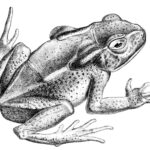
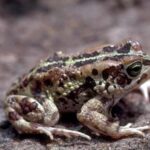
At first glance, Incilius aurarius captivates observers with its radiant coloration—a vivid golden-orange, sometimes interspersed with subtle brown-red mottling or finely-textured spots that grant it perfect camouflage amid vibrant forest floor foliage. Typically compact and sturdy, males generally range from 48mm to 60mm, while females may measure slightly larger. Their robust limbs end in slender toes, possessing slight webbing adapted ideally for their semi-terrestrial lifestyle near streams and still ponds where they mate and reproduce each year.
One of the toad’s most distinguishing traits lies in its skin texture—pebbly to moderately rough with distinctive glandular pads, known as parotid glands, located just behind its eyes. These glands serve a dual purpose: they secret toxins to deter predators and are used during amplexus (the mating embrace) to maintain a secure grip on their partners. The golden toad’s coloration also plays a role beyond simple aesthetics; the intense pigmentation’s precise evolutionary purpose is believed to be an aposematic warning, signaling predators about its toxin-secreting glands. This duality of beauty and hazardous defense represents a masterstroke of evolutionary adaptation.
Fascinating Behavior and Intricate Life Cycles#
The rhythm of life for Incilius aurarius closely follows the cycles of precipitation and seasonality. On cool, damp evenings during the onset of rainy season, males descend toward quiet streams or woodland pools, their calls—a soft, melodious trilling—echoing gently through the green canvas. These calls are carefully tuned, helping females pinpoint eligible partners amidst the dense foliage and under-story vegetation.
When females respond, pairs enter into amplexus, the male securely clasping the female from above. Females subsequently lay gelatinous strands of eggs, numbering from dozens to hundreds, delicately deposited in shallow, temporary woodland pools or gently flowing streams. Here the embryonic development unfolds rapidly, influenced greatly by water temperature, oxygenation, and predator pressure.
From Tadpole to Terrestrial Wanderer#
Once hatched, the tiny tadpoles, characteristically dark-bodied and streamlined, survive by grazing algae and organic detritus. After completing metamorphosis, young toadlets, often just a few millimeters in length, begin to disperse across their forest home, marking the beginning of a terrestrial phase that dominates their adult life. While adults primarily consume invertebrates—ants, beetles, spiders, and small worms—juveniles maintain a preference for smaller prey, gradually shifting toward larger prey as they grow.
The Quiet Ambassador: Incilius aurarius’s Role in the Ecosystem#
The hidden yet crucial ecological role of Incilius aurarius could be easily overlooked, yet it significantly contributes to the health of its forest habitat. Predominantly insectivorous, it serves as a natural form of pest control, ensuring insect populations remain balanced. Conversely, it acts as critical prey for diverse forest inhabitants, including avian species, snakes, spiders, and small mammals. The complexity of these ecological interactions ensures stability in the intricate web of life, highlighting the interconnectedness of every organism within this delicate montane environment.
Moreover, amphibians like I. aurarius act as sentinel species—living indicators of environmental health whose population fluctuations can swiftly signal broader changes, such as pollution levels, climate shifts, habitat degradation, or disease outbreaks. Monitoring their presence and health can offer invaluable insights to conservationists aiming to protect the region’s extensive biodiversity.
Threats, Challenges, and Conservation Efforts#
Though relatively recently described scientifically, Incilius aurarius faces threats reminiscent of many other amphibians across Central America: habitat degradation and fragmentation primarily driven by agricultural expansion, illegal logging, mining activities, and rapid climate fluctuations impacting rainfall patterns. This combination of anthropogenic pressures and natural vulnerabilities raises substantial concerns over future sustainability.
Currently, the IUCN Red List classifies this unique species as “Endangered,” emphasizing the urgent need for conservation intervention. Efforts are underway—albeit limited—focusing heavily on habitat conservation, corridor creation, and sustainable forest management, in accord with local communities striving to balance ecological protection with socioeconomic realities.
Cultural and Scientific Significance: Beyond Mere Survival#
Historically, golden-hued amphibians like I. aurarius held prominence in Central American culture, symbolizing wealth, fertility, and good fortune. Contemporary significance shifts to science: biologists study these organisms not only to understand evolutionary patterns but also to glean critical information regarding toxin properties that can inform biomedical applications.
Protecting a Golden Treasure: What You Can Do#
Incilius aurarius illuminates the incredible intricacy present within seemingly humble creatures, compelling us toward deeper appreciation and action. Protecting this golden jewel—alongside its lush habitat—demands increased awareness, stewardship, and support for conservation initiatives.
Take a step further: share the toad’s story, support local conservation programs financially or through active involvement, and advocate for sustainable policies. Together, let us ensure this mesmerizing golden toad continues serenely living within its cloud forest home—captivating generations to come.