- Introduction: Discovering Incilius aucoinae
- Taxonomy and Classification: Understanding Its Place in Nature
- Natural Habitat: Thriving in Tranquil Forest Floors
- Physical Characteristics: Concealed Beauty and Adaptation
- Behavior and Life Cycle: The Quiet Rhythm of Forest Life
- Ecological Role: Guardians of the Tropical Forest Balance
- Threats and Conservation Status: Fragility in an Evolving World
- Cultural and Scientific Significance: Linking Nature and Humanity
- Conclusion: Embracing Our Responsibility Toward Incilius aucoinae
Introduction: Discovering Incilius aucoinae#
Within the lush greenery and ambient humidity of the tropical forests, a mysterious amphibian quietly resides, largely unknown beyond a handful of dedicated herpetologists and conservationists. This special creature is the Incilius aucoinae—a unique species of toad enchanting enough to captivate any nature enthusiast’s imagination.
Incilius aucoinae, a member of the Bufonidae family, is a testament to nature’s capacity for subtlety and beauty. Though inconspicuous at first glance, once discovered, this species unravels a myriad of fascinating behaviors and adaptations intricately woven into the dynamic web of ecological interactions. Surprisingly, despite their significance as environmental indicators, species like Incilius aucoinae often remain overlooked in worldwide conservation dialogues.
Taxonomy and Classification: Understanding Its Place in Nature#
Incilius aucoinae belongs to the extensive Bufonidae family, commonly known as true toads. Within this diverse family, Incilius aucoinae is situated in the genus Incilius, renowned for species adapted exquisitely for moist, tropical habitats. The scientific name honors dedicated naturalists and researchers who first described the species, revealing its existence to the scientific community and reinforcing the importance of documenting biological diversity.
Relatives such as Incilius coniferus and Incilius valliceps share physical traits and behaviors, yet Incilius aucoinae’s distinct adaptations clearly distinguish it within its genus, reflecting evolutionary pathways intricately shaped by its specialized habitat.
Natural Habitat: Thriving in Tranquil Forest Floors#
Incilius aucoinae favors humid, lush tropical forests, primarily distributed within specific regions of Central America, notably Panama and Costa Rica. Gracefully camouflaged among leaf litter and moss-covered stones, this toad thrives within dense terrestrial vegetation near slow-moving streams and ephemeral pools.
A Life Within Leaf Litter#
Under the verdant canopy, dappled sunlight filters through gently rustling leaves, creating mosaic-like patterns on the forest floor. Here, hidden beneath the layers of decomposing foliage, Incilius aucoinae finds refuge and hunting grounds. The humid environment provides optimal moisture for their delicate amphibian skin, essential for respiration, temperature regulation, and protection against dehydration.
The leaf litter ecosystem supports an abundance of invertebrate prey, making it the ideal habitat for Incilius aucoinae to forage discreetly beneath the sheltering vegetation. The complex microhabitat provides not only food but also critical shelter from predators such as snakes, birds, and larger amphibians, making stealthy camouflage one of their key survival adaptations.
Physical Characteristics: Concealed Beauty and Adaptation#
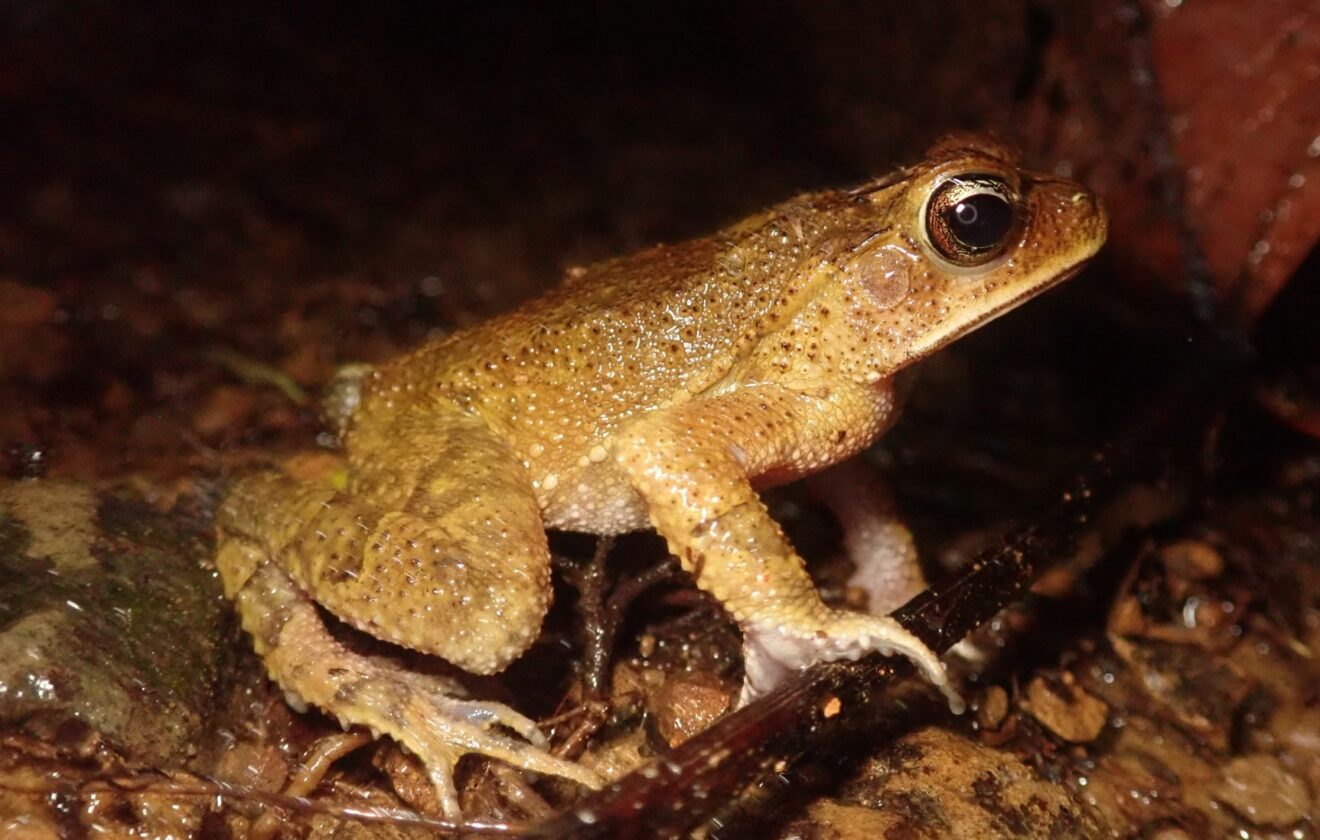
Adult Incilius aucoinae typically measures between 3 to 5 centimeters in length, with females slightly larger than males. Their patterned skin displays an earthy mosaic, blending seamlessly with their leafy surroundings. Shades of olive-green, brown, gray, and hints of bronze scatter like leaf shadows across their rough-textured backs. This cryptic coloration acts as an essential camouflage technique, enabling them to avoid predators and stealthily approach prey.
Prominent parotoid glands positioned behind the eyes secrete toxins as defense mechanisms. When threatened, these glands produce secretions deterring potential predators, safeguarding their continued survival. Particularly distinctive are the bright gold flecks around their eyes, a subtle yet enchanting marker indicating their species.
Behavior and Life Cycle: The Quiet Rhythm of Forest Life#
An observant wanderer exploring the dense tropical understory at twilight might encounter the soothing yet purposeful chorus of male Incilius aucoinae. Calling from secluded perches and stream banks, males emit short, melodious notes that blend harmoniously into the nocturnal symphony.
Breeding and Lifecycle Patterns#
Following the onset of annual rains, male frogs become particularly vocal, calling gently to attract potential mates. Females, drawn by these intricate acoustic displays, select mates based on both call quality and strategic positioning. Mating pairs eventually move toward shallow pools or gently flowing streams to lay eggs.
Eggs, often numbering in the hundreds, are deposited in gelatinous strings carefully concealed amidst vegetation or submerged under fallen leaves. Over the following days, tiny tapholes hatch and commence metamorphosis journeys. Surviving tadpoles navigate various predation pressures—from aquatic insects and fishes to birds—emerging cautiously into land-bound juveniles and eventually maturing into fully terrestrial adults.
Ecological Role: Guardians of the Tropical Forest Balance#
Incilius aucoinae occupies a critical ecological niche, serving as both predator and prey within its finely balanced tropical habitat. As insectivorous hunters, these toads feed predominantly on ants, beetles, termites, and small spiders, significantly controlling populations of these arthropod populations throughout the forest floor ecosystem.
Conversely, as reliable prey sources themselves, Incilius aucoinae supports countless predators, contributing integral energy transfers within their native food webs. Beyond this, amphibian communities are vital bioindicators, often the first groups to reflect changes such as climate shifts, habitat degradation, or pollution levels, thereby signaling broader ecological implications.
Threats and Conservation Status: Fragility in an Evolving World#
Despite their ecological significance, populations of Incilius aucoinae are increasingly threatened. Habitat fragmentation driven by deforestation and expanding agriculture reduces their available ecology, disrupting breeding-ground availability and fragmenting local populations. Climate change further exacerbates threats, altering rainfall patterns and moisture levels essential for their amphibian life cycle.
Another critical threat is chytridiomycosis, a fungus-based disease devastating amphibians globally. Localized outbreaks significantly reduce populations, underscoring the urgency for proactive ecological monitoring.
Conservation Measures and Research Efforts#
Listed on the IUCN Red List, continuous evaluations suggest the species requires deliberate conservation management. Initiatives to protect forest habitats and maintain connectivity among breeding sites ensure sustainable populations. Conservationists advocate practical actions such as forest corridor protections, strategic land-use policies, and educational community involvement. Researchers monitor populations to detect early signs of disease outbreaks, implementing measures to limit spread and protect vulnerable populations.
Cultural and Scientific Significance: Linking Nature and Humanity#
Local indigenous cultures, intricately attuned to natural cycles, have traditionally acknowledged amphibians such as Incilius aucoinae as heralds of seasonal changes. Folklore narratives emphasize their signaling role, associating their calls with the arrival of rains or the onset of agricultural planting seasons.
Scientifically, researchers recognize Incilius aucoinae as sensitive bio-indicators within tropical ecosystems. Their health or decline frequently mirrors broader ecological changes, enabling researchers to proactively identify and address environmental disruptions. Their defensive secretions are also of significant biological interest, with potential research leading toward new pharmaceutical compounds.
Conclusion: Embracing Our Responsibility Toward Incilius aucoinae#
Though outwardly modest, the story of Incilius aucoinae illustrates the often-hidden complexity and significance embedded within tropical biodiversity. These small, discreet amphibians carry profound ecological, cultural, and research implications, spotlighting the interconnected nature of life within fragile forest ecosystems.
Recognizing, appreciating, and safeguarding species like Incilius aucoinae—no matter how inconspicuous—remains crucial. Conservation vigilance can ensure its calls continue resonating through tropical forests, inspiring future generations to appreciate the lively intricacies of forest floors that sustain biodiversity. As nature enthusiasts and global citizens, our proactive engagement today determines tomorrow’s ecological heritage. Let the nuanced charm of Incilius aucoinae remind us all of our shared responsibility to protect Earth’s diverse, remarkable wildlife.