Ghatophryne ornata: The Ornate Toad of the Western Ghats#
Nestled amid the verdant hillsides and lush rainforests of southern India’s Western Ghats is a creature quietly navigating moss-covered rocks, hidden streams, and shadowy leaf litter—a unique amphibian known as Ghatophryne ornata, or the Ornate Toad. Though modest in size, this species captivates naturalists and researchers alike, not merely because of its striking appearance but due to its intricate relationship with this extraordinary ecosystem. A rare sight even to diligent nature-lovers, this vividly patterned toad invites a closer look and sparks curiosity into its mysterious life story and fragile existence within one of India’s most treasured biodiversity hotspots.
So, let’s embark on an immersive exploration of the enigmatic world of the Ornate Toad, discovering its hidden habits, captivating adaptations, and the conservation challenges it faces in an ever-changing world.
Taxonomy and Classification#
The Ornate Toad, scientifically recognized as Ghatophryne ornata, belongs to the Bufonidae family—a diverse and widespread family of toads often characterized by their thick, dry, warty skins. Within this family, Ghatophryne ornata finds its precise placement in the recently described genus Ghatophryne, named after the Western Ghats themselves to reflect its strong tie and endemism to this region. Until recent confirmations through molecular techniques, this species was previously placed under broader generic labels, illustrating how ongoing scientific inquiry continues to shape our understanding of amphibian biodiversity.
This taxonomic journey underscores the complexity and subtlety of the region’s amphibian diversity. Closely related to species such as Ghatophryne rubigina, it also highlights the Western Ghats as a living laboratory of evolution, with unique forms evolving in relative isolation throughout its thick forests and mountainous landscapes.
Natural Habitat#
As we venture into the heart of the Western Ghats, we find ourselves amid prime Ornate Toad habitat—humid, lush evergreen forests interspersed with rocky streams and glistening rivulets. Primarily restricted to elevations ranging between 200 and 1,300 meters above sea level, this species favors pristine, undisturbed areas of dense vegetation and cascading streams—a symphony of trickling water and murmuring forest leaves forming a perfect stage for their secretive lives.
During daylight hours, finding a wild Ornate Toad might be challenging for even seasoned enthusiasts. The dense undergrowth, cloaked in damp foliage and moss-encrusted stones, provides these toads their preferred hiding places. With evening’s transition to twilight, however, they emerge cautiously, their presence heralded more by gentle rustlings and soft calls than by sight alone. These shaded landscapes tap into a timeless tranquility, perfecting an amphibian niche marked by moisture, shade, and protection from predators.
Physical Characteristics#
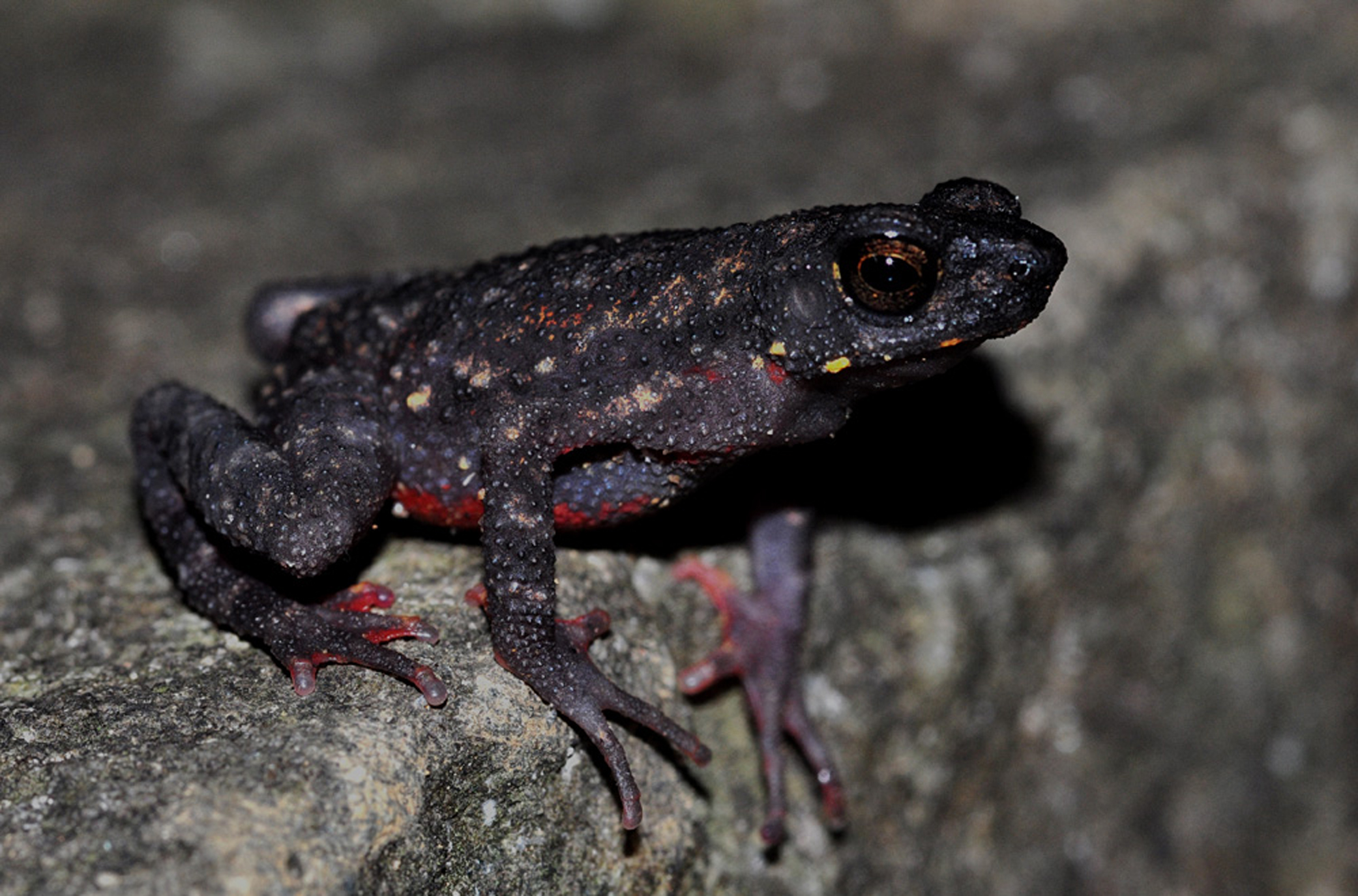
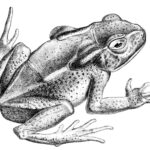
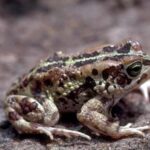
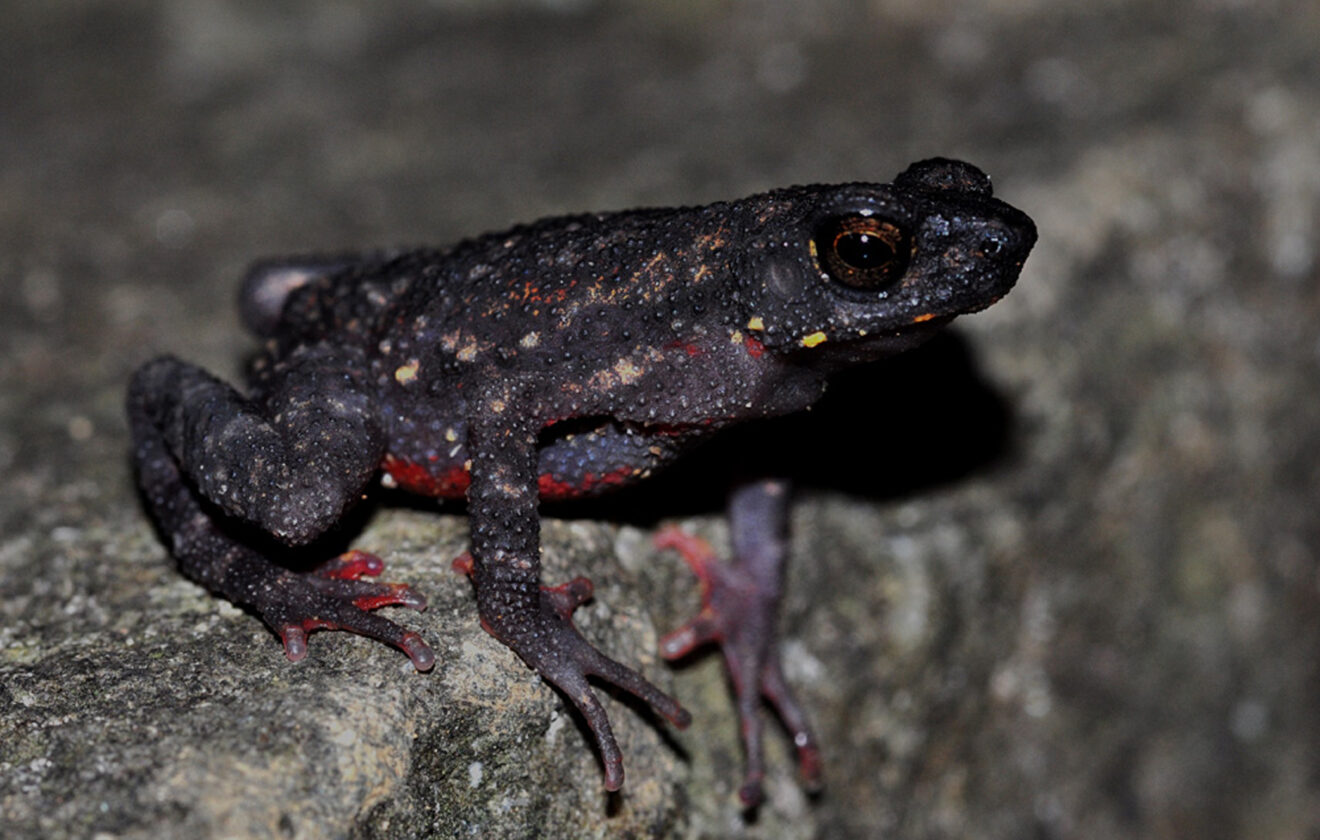
Cloaked in intricate patterns and subdued yet striking colors, Ghatophryne ornata never ceases to amaze with its meticulous natural detail. Mature Ornate Toads typically measure between 25 to 40 millimeters in body length, their compact forms well-adapted to life in dense, leaf-litter-dominated habitats. One cannot help but marvel at the exquisite contrast provided by their coloration—a complex tapestry of reddish-brown, olive-green, or gray, masterfully interwoven with darker mottled patches. This coloration isn’t just visually striking; it offers superb camouflage amidst leaf litter and moist moss, cloaking the toad among fallen leaves and rocks.
Their skin, distinctly warty, houses tiny elevations and granular bumps, each one an evolutionary detail aiding concealment by scattering reflections and shadows when concealed among forest debris. Beyond the subtle beauty, these physical traits have profound survival implications—Ghatophryne ornata can seamlessly blend in with its surroundings to avoid unwanted attention from predators such as snakes, birds, and small mammals.
Behavior and Life Cycle#
Feeding Habits and Predatory Behaviors#
As nocturnal ambush predators, Ornate Toads position themselves strategically amidst plentiful leaf litter and patiently await invertebrate prey—primarily ants, termites, beetles, and springtails. Equipped with excellent vision and a quick flick of their sticky tongues, they feast upon the bustling insect life beneath the cover of darkness. This diet not only sustains their modest metabolisms but also places them squarely in the ecosystem’s food webs as critical regulators of insect populations—highlighting the delicate balance within these fragile forest ecosystems.
Reproduction and Breeding Behaviors#
With the monsoon’s seasonal rhythms that transform the Western Ghats landscape into a watery paradise, the life cycle of Ornate Toads enters a dynamic and fascinating phase. The arrival of rains—a cue both acoustic and chemical triggers—piques the male toads’ urgency to find a mate. Males congregate near gently flowing forest streams or shallow pools, producing subtle yet persistent mating calls, resonating softly within forest clearings.
Following a successful courting, females deposit clusters of tiny eggs—numbering hundreds draping plant stems or submerged vegetation. Remarkably adapted to swift-flowing streams, the tadpoles hatch quickly and grasp tightly to submerged rocks using specialized mouthparts, ensuring they avoid being washed downstream. Gradually, the gilled, aquatic larvae metamorphose into miniature replicas of their terrestrial parents, embarking on their lifelong adventure within these moist and shaded habitats.
Ecological Role#
Every organism, irrespective of size, has an integral niche within its ecosystem, and Ghatophryne ornata is no exception. As predator and prey, Ornate Toads sit at an influential ecological position—acting as natural pest controllers that regulate insect populations while simultaneously providing vital sustenance to higher-level predators like snakes, birds, and mammals. Their population well-being reflects both ecosystem health and serves as an accurate indicator species—wherever these sensitive amphibians thrive or falter, they provide telling clues about the broader environmental condition of their habitats.
Threats and Conservation Status#
Unfortunately, beneath whispers of rustling leaves and trickling streamlets lies a stark conservation reality starkly contrasting their tranquil habitats. Habitat destruction looms as the most immediate threat to Ghatophryne ornata. Rampant deforestation for agriculture, plantation crops such as tea and coffee, infrastructure development, and increased human settlements carve away critical forested habitats piece by piece.
Currently labeled by the International Union for Conservation of Nature (IUCN) as Endangered, the Ornate Toad faces tangible risk of extinction if conservation measures are left unaddressed. Furthermore, climate change may exacerbate their vulnerability—shifting rainfall patterns threaten crucial breeding waters and challenge the delicate reproductive timeframe that Ornate Toads rely upon.
Cultural and Scientific Significance#
Although relatively unknown culturally outside scientific circles, Ghatophryne ornata captures growing attention among researchers due to its specific endemicity and nuanced adaptations to ephemeral freshwater habitats. Moreover, the intricate web of ecological interdependencies it reveals garners increased appreciation for tropical biome complexity—sparking conversations about biodiversity conservation amidst informed scientific audiences.
The Western Ghats region, designated as a UNESCO World Heritage Site, underscores the immense global value of the biodiversity residing here. Species such as the Ornate Toad symbolize the rich ecological tapestry found in these forests and reinforce urgent international conversations concerning conservation actions for this endangered hotspot of life.
Conclusion: A Call to Conservation Action#
Ghatophryne ornata, through its quiet existence and ecological value, imparts critical lessons regarding habitat connectivity, ecological balance, and conservation efforts needed to support the diversity of life in the Western Ghats. Amplifying awareness about these little-known toads and their plights urges us all—naturalists, conservationists, locals, and global citizens—to act. Protection of pristine habitats, supporting sustainable ecotourism, and advocating responsible agricultural practices are collective actions that can ensure Ornate Toads continue their secretive, valuable lives amid the shadows and streams of southern India’s majestic mountain ranges.
Indeed, protecting these toads safeguards far more than one species—it safeguards our future biodiversity heritage and reminds us of the intrinsic value and wonder of nature’s smallest inhabitants.