Dendrophryniscus imitator: Unveiling the Secrets of Nature’s Tiny Forest Mimic#
Deep within the lush, humid realms of the Atlantic Forest in Brazil, a tiny inhabitant, often overlooked amid the verdant foliage, quietly thrives. Known scientifically as Dendrophryniscus imitator, this fascinating amphibian captures attention not through its size but its extraordinary ability to blend seamlessly into its surroundings. Barely measuring more than a coin, this diminutive toad embodies nature’s incredible artistry through perfect mimicry and adaptation.
Bearing the intriguing common name “Imitator Toadlet,” the species earns its moniker from its remarkable resemblance to certain toxic poison dart frogs, cleverly discouraging predators by advertising a danger deceptively absent. Yet beyond this intriguing deception lies an essential story of ecological balance, survival mechanisms, and why this small amphibian plays a critical role in maintaining the health of its rainforest home.
Taxonomy and Classification#
The Imitator Toadlet, Dendrophryniscus imitator, belongs to the diverse amphibian family Bufonidae, a group encompassing true toads. Within this extensive family, the genus Dendrophryniscus represents smaller species that specialize in inhabiting the forest understory, leaf litter, and humid microhabitats.
Officially described and named by Brazilian herpetologists Mirco Solé and associates in 2011, Dendrophryniscus imitator quickly captured scientific attention due to its unique adaptive appearance and ecological significance. Its close relatives within the genus, like Dendrophryniscus brevipollicatus and Dendrophryniscus berthalutzae, exhibit similar lifestyles, yet none display the degree of mimicry exhibited by the Imitator Toadlet, making this species particularly fascinating for researchers and conservationists.
Natural Habitat#
Imagine a realm of perpetual twilight, where sunbeams filter sparingly through dense overhead vegetation, bathing the forest floor in muted greens and browns—a mosaic of leaf litter, moss-covered trunks, and lingering moisture after a rain shower. This is precisely the environment that Dendrophryniscus imitator calls home. Known only from specific locales within Brazil’s Atlantic Forest, particularly in the mountainous regions of the Bahia State, this elusive amphibian thrives in one of the world’s biodiversity hotspots, a region tragically imperiled by ongoing deforestation and habitat degradation.
Microhabitat Specialization#
Unlike more versatile amphibians, the Imitator Toadlet’s survival hinges dramatically on microhabitat specificity. It prefers habitats characterized by high humidity and consistent rainfall, particularly within the leaf litter and lower vegetation strata surrounding forest streams and pools. The presence of pristine, unpolluted water bodies is crucial for breeding and development, making preservation of these microhabitats a critical conservation priority.
The rainforest floor presents both opportunities and challenges for these tiny frogs. It provides abundant resources, shelter, and perfect concealment, protecting them from predators. Yet, being so adapted to this niche environment leaves D. imitator vulnerable when its habitat is disturbed or fragmented, highlighting the delicate ecological balance that sustains the species.
Physical Characteristics#
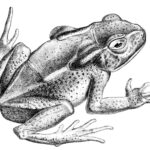
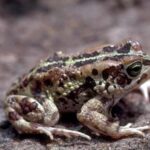
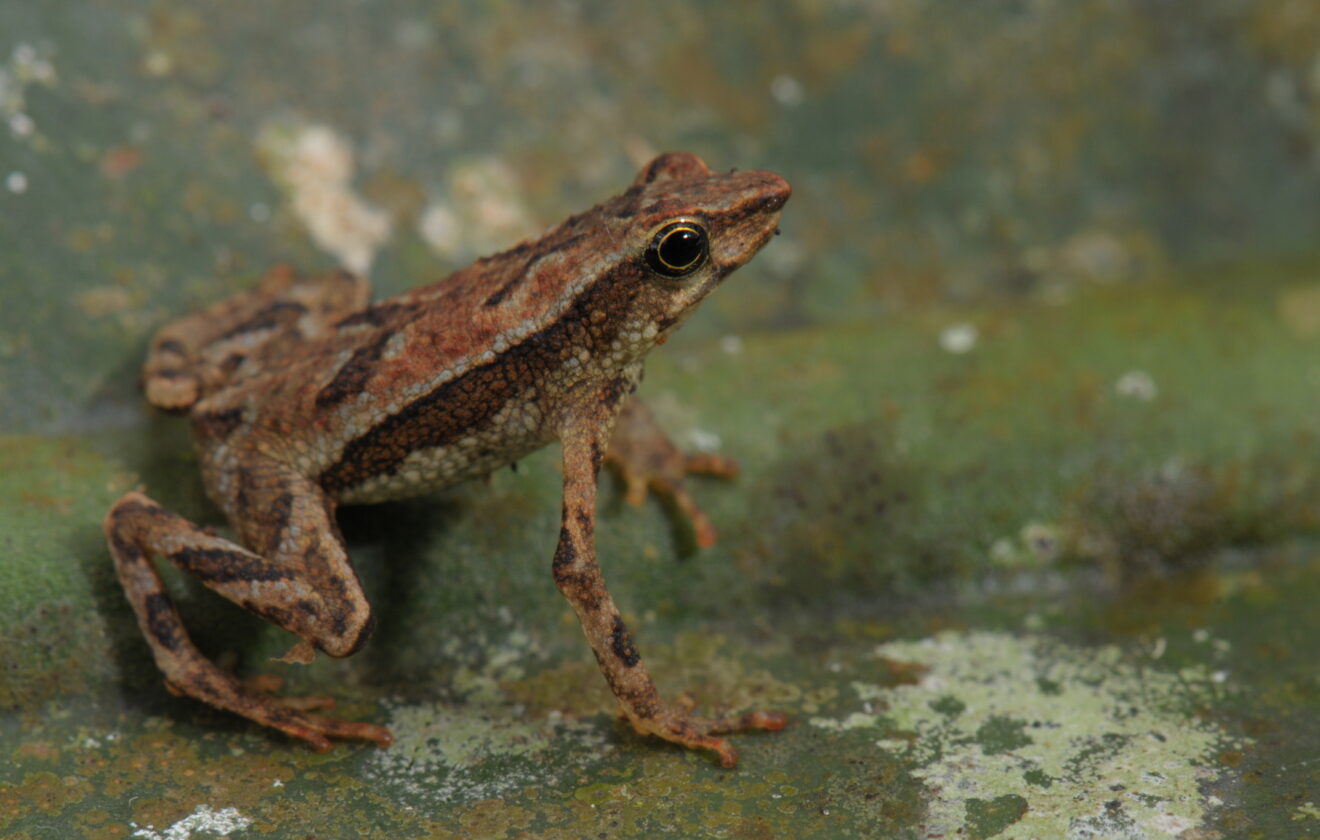
Sizing up at only about 16 to 20 millimeters in adult length, Dendrophryniscus imitator can easily be overlooked by casual observers. However, closer inspection reveals strikingly vibrant coloration patterns, notably bright yellows, blacks, and shades of brown—characteristics boldly proclaiming danger at first glance. Yet there’s a twist: despite its poison dart frog-like appearance, the Imitator Toadlet possesses little to no toxin at all. It’s a display of Batesian mimicry, nature’s cunning method of protection by visually impersonating a genuinely harmful organism.
Colors and Patterns: Nature’s Visual Deception#
The Imitator Toadlet has evolved to resemble poison dart frogs like species from the genus Adelphobates, dangerous amphibians whose skin toxins deter predators effectively. By mimicking colors and patterns nearly identical to its toxic model, D. imitator convinces potential predators that it is unsafe prey—an evolutionary adaptation refined over countless generations.
Aside from coloration, its small, agile build allows quick retreats into hiding spots amid leaf litter. Large, expressive eyes positioned toward the sides of its rounded head provide superb peripheral vision, essential for spotting insects to eat and evading potential danger. These physical adaptations collectively form a remarkable survival toolkit finely tuned to the constraints of life within humid rainforests.
Behavior and Life Cycle#
Diet and Feeding Habits#
The tiny size of Dendrophryniscus imitator necessitates diets consisting mainly of similarly small prey, primarily tiny arthropods like ants, mites, small beetles, and collembolans. Employing ambush and stalking strategies, it patiently positions itself amidst detritus, remaining immobile until a suitable meal ventures into striking range. A swift flick of its adhesive tongue secures its meal, followed by rapid consumption—a momentary pause in an otherwise cautious life style.
Breeding Behavior and Tadpole Development#
Breeding often coincides with the rainy season, leveraging seasonal flooding and abundant temporary pools ideal for egg laying. In these tranquil waters bordered by lush vegetation, pairs indulge in brief courtship rituals, during which males emit soft, chirping calls to attract mates.
Females lay relatively few eggs compared to larger amphibians, depositing them singly or in small clusters onto submerged vegetation or logs partially immersed in water. Tadpoles hatch after a brief incubation, demonstrating rapid developmental times to capitalize on limited temporary water sources. Within mere weeks, this rapid metamorphosis produces fully terrestrial juveniles prepared to tackle life on land.
Ecological Role#
Though diminutive, Dendrophryniscus imitator serves several significant ecological functions. Primarily a predator of small insects and arthropods, it contributes notably to the regulation of insect populations in forest ecosystems. Keeping populations of ants and mites in check helps maintain ecological balance and forest health.
Prey and Predator Relationships#
In nature’s complex web, however, the roles constantly shift. While hunting insect prey, the Imitator Toadlet itself faces predation by larger frogs, snakes, small mammals, and numerous insectivorous birds. Their effective mimicry dissuades many predators, permitting the delicate balance essential to ecosystem equilibrium to persist.
Additionally, amphibians like D. imitator serve as bioindicators, sensitive to environmental changes within their habitats. Healthy, thriving populations tend to signify intact, balanced ecosystems, whereas their sudden decline denotes environmental disturbances, signaling potential ecological emergencies.
Threats and Conservation Status#
Currently, Dendrophryniscus imitator faces numerous challenges, foremost including habitat loss. Brazil’s Atlantic Forest suffers extensive fragmentation and deforestation due to urban expansion, agriculture, and logging activities. Habitat disruption raises the risk of extinction for specialized microhabitat users, and the Imitator Toadlet tragically epitomizes that vulnerability.
While not yet broadly assessed by the International Union for Conservation of Nature (IUCN), local conservationists and scientists advocate increased habitat protection. Establishing nature reserves and promoting habitat restoration can shield vulnerable locations from human encroachment, agricultural runoff, and climatic stress factors.
Cultural and Scientific Significance#
While its tiny stature prevents it from prominently occupying traditional folklore, the unique ecological strategies of Dendrophryniscus imitator offer significant scientific value. Studying mimicry evolution contributes crucial insights into predator-prey dynamics, evolutionary biology, and adaptive radiation theories.
Additionally, the species’ fragility makes it invaluable as an ecological sentinel. Researchers emphasize the importance of monitoring amphibian populations to detect subtle environmental shifts before they manifest as broader ecological crises. As barometers of ecosystem health, frogs like the Imitator Toadlet become critical focal points for understanding and responding to environmental changes.
Conclusion#
Dendrophryniscus imitator, the tiny forest mimic of Brazil’s Atlantic Forest, encapsulates a powerful conservation narrative, vividly demonstrating how even the smallest creatures significantly influence biodiversity and ecosystem stability. Its remarkable adaptations underscore evolution’s ingenuity and highlight the urgent necessity of targeted conservation.
As guardians of nature, each of us bears responsibility for safeguarding this extraordinary amphibian and its fragile habitat. By nurturing an appreciation for biodiversity’s smaller inhabitants, supporting conservation initiatives, and remaining informed about ecological challenges, we might yet secure a thriving future for Dendrophryniscus imitator and countless species dependent upon healthy forest ecosystems.