Dendrophryniscus carvalhoi: Exploring Brazil’s Enigmatic Rainforest Toad#
Deep within the lush rainforests of coastal Brazil, hidden among the leaf litter and mossy crevices, resides a diminutive amphibian whose brightly patterned skin belies a cryptic lifestyle. Meet Dendrophryniscus carvalhoi, an extraordinary species of toad whose existence weaves neatly into the vibrant tapestry of Brazil’s biodiversity. Though small in stature, this fascinating amphibian offers significant ecological insights and raises important conservation awareness.
Notable for its striking markings and secretive behaviors, Dendrophryniscus carvalhoi often goes unnoticed by casual observers. Yet, its presence is crucial, signaling the health of its delicate woodland ecosystem—a living indicator species whose fate resonates with the fate of the rainforest itself.
Taxonomy and Classification#
Dendrophryniscus carvalhoi belongs to the family Bufonidae, a diverse group widely known as true toads. Within this family, it fits neatly into the genus Dendrophryniscus, a unique assemblage of small, colorful, arboreal-oriented toads. The genus name derives from Greek roots, dendro meaning ‘tree’, and phryniscus meaning small toad, highlighting their typically tree-associated habitats and diminutive size.
First described scientifically by Izecksohn in 1994, the species name honors prominent Brazilian herpetologist Professor Antenor Leitão de Carvalho, whose research made significant contributions to understanding Brazilian amphibians. Though little-known and under-studied relative to more famous tropical species, this toad provides important insights into the evolutionary adaptations and ecological interplay among rainforest amphibians.
Natural Habitat#
Exclusive to Brazil, Dendrophryniscus carvalhoi inhabits the richly vegetated Atlantic Rainforest regions, primarily along coastal areas in Southeastern Brazil. Within this dense, biodiverse environment, they prefer microhabitats characterized by moist substrates—forested slopes blanketed by leaf litter, moss-covered logs, rocky outcrops, and areas adjacent to pristine mountain streams.
The Atlantic Rainforest offers a uniquely nourishing environment, where high humidity, moderate temperatures, and abundant leaf debris provide essential shelter and breeding grounds. The toad is most frequently encountered at elevations ranging from sea level to approximately 700 meters, thriving under the thick rainforest canopy where sunlight filters softly to the forest floor.
Adapting to such a densely vegetated environment, they rely heavily upon microhabitat structures and specific moisture levels to regulate their sensitive amphibian skin. This level of habitat fidelity makes them exceptionally vulnerable to alterations caused by human encroachment, climate shifts, and deforestation, highlighting their value as indicators of environmental change.
Physical Characteristics#
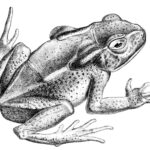
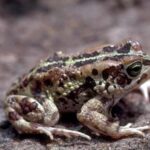
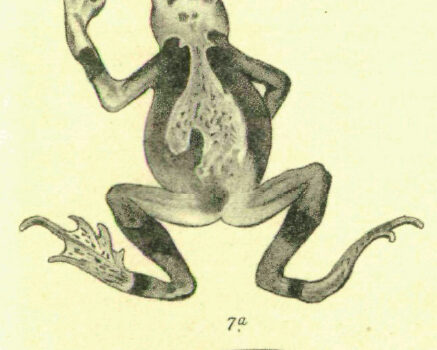
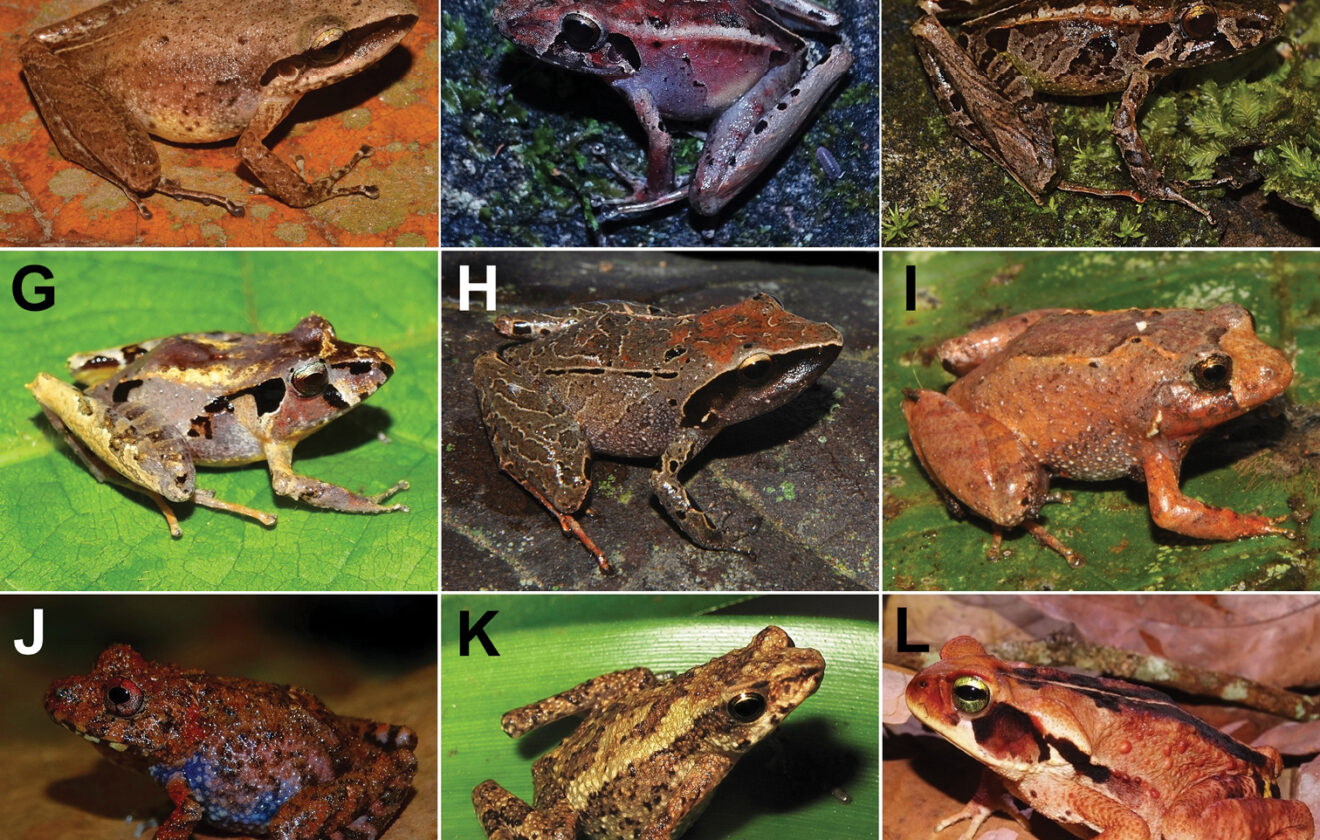
Dendrophryniscus carvalhoi is unmistakable once observed closely, boasting vibrant and distinct coloration that sets it apart from more cryptic amphibian species. Adults rarely exceed a total length of 20 millimeters—a size small enough to rest comfortably on a Brazilian ten-cent coin—making them one of the smallest true toad species.
The skin texture is granular with conspicuous warts, their vibrant colors typically ranging from yellowish-orange and red hues interspersed with dark spots or blotches. These loud and contrasting color patterns, uniquely evolved in such small amphibians, serve a critical adaptive purpose, communicating clearly to potential predators: “I am toxic, do not eat me.”
Indeed, their vivid appearance signals chemical defenses harbored within specialized skin glands, typical to the Bufonidae family. These toxins, while mild compared to larger poison dart frogs, serve effectively as deterrents to local predators such as birds, rodents, and snakes.
Behavior and Life Cycle#
Despite its vibrant coloration, Dendrophryniscus carvalhoi remains an elusive presence within its habitat, finding safety in stealth and secrecy. Primarily diurnal, individuals spend daylight hours navigating expertly through the leaf litter, preying mainly on small arthropods such as ants, mites, springtails, and tiny beetles.
Feeding behaviors are remarkably precise, with rapid tongue strikes capturing minuscule prey often invisible to the human eye. This efficient hunting effort is aided by their keen sense of movement detection, a necessity when hunting tiny prey in a dense, shadowy environment.
Breeding Habits and Tadpole Development#
Rainfall deeply influences the reproductive cycle of Dendrophryniscus carvalhoi, dictating the timing and location of breeding activities. During the wet season, normally between December and February, males begin their chorus, emerging from secluded hiding spots to deliver short, high-pitched, melodious calls designed to attract receptive females.
Egg clutches are typically small, laid directly into shallow streams or moist terrestrial pockets. Upon hatching, tadpoles rely heavily on these pristine forest waters filled with organic matter, providing nourishment essential for successful metamorphosis. Their tadpole stage is comparatively brief, achieving metamorphosis within a few weeks due to the favorable tropical humidity and abundance of nutrients.
Ecological Role#
This species exemplifies the important niche roles fulfilled by amphibians in tropical ecosystems: they help regulate insect populations, contribute nutrients through waste and decay, and more profoundly, serve as ideal bio-indicators of overall ecosystem health. Sensitive skin permeable to pollutants and water quality disruptions makes Dendrophryniscus carvalhoi profoundly susceptible to environmental degradation. Consequently, their health and population stability can serve as canaries of the rainforest, signaling quickly when ecological balances are disrupted.
Threats and Conservation Status#
Unfortunately, many amphibian species globally face escalating threats, and Dendrophryniscus carvalhoi is no exception. Listed by the International Union for Conservation of Nature (IUCN) as “Data Deficient,” the species remains under considerable uncertainty, lacking comprehensive population surveys or trend data. However, known threats to most Atlantic Rainforest amphibians include habitat loss due to logging and agricultural expansion, pollution of waterways, the spread of invasive species, and climate-related temperature fluctuation and rainfall variability.
At present, targeted conservation actions specific to this species remain sparse. Protecting their fragile, limited habitats—including strengthening protected areas and reducing deforestation—represents perhaps the most effective current conservation strategy. Future targeted research is critical, enhancing understanding around population size, specific threats, and ecological adaptations required to drive effective preservation strategies.
Cultural and Scientific Significance#
While less popularly recognized internationally, locally within Brazilian communities and scientific circles, species like Dendrophryniscus carvalhoi symbolize rainforest health and biodiversity heritage. Amphibians, more broadly, feature prominently in local legends and culture as harbingers of rain, fertility, and renewal.
From a scientific standpoint, decoding the secrets behind this frog’s toxin composition, adaptive responses to humidity fluctuations, and life-cycle intricacies offer insights into evolutionary biology, pharmacology, and environmental monitoring. Narrow endemics like Dendrophryniscus carvalhoi are often hidden treasures for future scientific discoveries that could contribute significantly to medicine or ecological sustainability.
Conclusion: A Window Into the Health of Brazil’s Rainforests#
Small, vibrant, yet remarkably sensitive, Dendrophryniscus carvalhoi personifies the alluring mystery and vulnerability of Brazil’s Atlantic Rainforests. This engaging amphibian reminds us of the interconnectedness of ecosystems and the importance of protecting the intricate webs of life within them. Awareness of lesser-known species like this charismatic rainforest resident can inspire deeper personal commitments to conservation, philanthropically and ecologically.
Through education, advocacy, and sustained field research, we can help ensure that future generations continue to marvel at the hidden wonders of nature, embraced beautifully by species like Dendrophryniscus carvalhoi. After all, understanding—and protecting—this intriguing toad advances our collective stewardship of the world’s irreplaceable natural heritage.