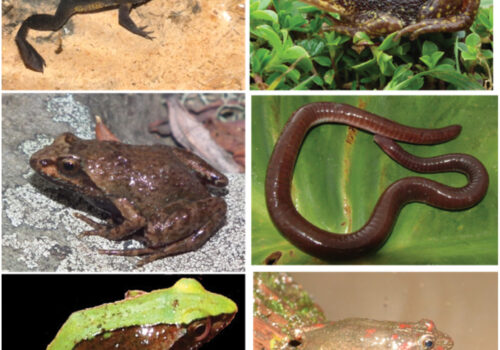
- Dendrophryniscus brevipollicatus: Discovering the Enigmatic Leaf-Litter Guardian
Dendrophryniscus brevipollicatus: Discovering the Enigmatic Leaf-Litter Guardian#
Deep within the hidden shades and lush greenery of Brazil’s Atlantic Rainforest, a tiny creature moves silently among the leaf-litter. Its world retreats from the harsh rays of the tropical sun, hidden beneath the endless carpet of fallen leaves and rotting twigs. This secretive dweller, measuring no more than a thumb’s width, is none other than Dendrophryniscus brevipollicatus—a captivating amphibian whose diminutive size masks its immense ecological significance and enchanting lifestyle.
Colloquially known as the short-thumbed dwarf toad, Dendrophryniscus brevipollicatus is as intricate in behavior and ecological adaptation as it is inconspicuous. With its richly patterned skin and specialized limbs adapted for navigating dense forest litter, this small amphibian holds a unique niche that underscores the intricate interconnectedness of rainforest ecosystems.
Taxonomy and Classification#
Dendrophryniscus brevipollicatus belongs to the family Bufonidae, one of the most diverse families within the order Anura (frogs and toads). The genus Dendrophryniscus, comprising small, forest-specialist toads, reflects a fascinating evolutionary leap into niche specialization, diverging distinctively from its larger terrestrial relatives.
Described scientifically for the first time by Günther in 1945, the species name “brevipollicatus” literally translates to “short-thumbed,” a nod to the species’ distinctive morphological trait. Closely related to other dendrophryniscus toads, this species shares many habitats and ecological roles with its relatives, yet boasts various adaptations finely tuned to its precise leaf-litter domain.
Natural Habitat#
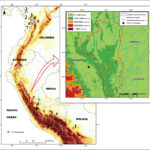
Native exclusively to the southeastern regions of Brazil, Dendrophryniscus brevipollicatus thrives beneath the dense canopy of the Brazilian Atlantic Rainforest, particularly within the states of São Paulo, Rio de Janeiro, and Paraná. This rainforest, a biodiversity hotspot teeming with life, provides an ideal haven of moisture-rich microclimates, ensuring the species’ survival year-round.
A Life Among the Leaves: The Microhabitat Specialist#
Unlike many of its more conspicuous amphibian counterparts, the short-thumbed dwarf toad avoids open areas and instead dwells in contours of dense leaf-cover at the forest floor. Here, the humidity and temperature remain constant, creating pockets of ideal microclimates beneath fallen foliage and decaying plant matter. Active mostly during humid and rainy nights, this small amphibian navigates its labyrinth-like world, absorbing moisture directly through its permeable skin, an adaptation well-suited to its lifestyle.
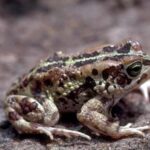
In the leaf-litter habitat, the frog exhibits remarkable camouflage, blending seamlessly with its surroundings through its mottled brown, olive, and grey coloration. Finding one amidst the mosaic of leaf shapes and fungal growth is akin to seeking a needle in a complex, ever-shifting haystack.
Physical Characteristics#
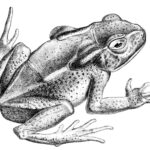
Though small in stature—rarely surpassing 2 to 3 centimeters in length—the physical characteristics of Dendrophryniscus brevipollicatus are finely honed adaptations mirroring its specialized niche. Its robust but tiny physique is ideally suited to scramble swiftly beneath complex layers of leaf-litter, evading predators and locating minuscule prey.
Pattern and Pigmentation: Nature’s Perfect Camouflage#
At first glance, its earthy-toned coloration, dotted with intricate patterns of dark brown, reddish highlights, and occasional pale lines along its flanks, appear unremarkable. Yet, upon close inspection, each patterned marking mirrors forest-floor textures—an evolutionary masterpiece crafted through millennia of natural selection.
Feet Adapted to a Leafy Realm#
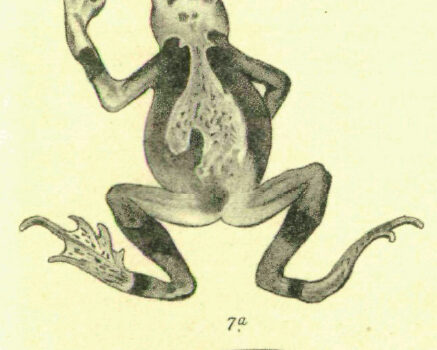
Its limbs, especially its short thumb, from which the species derives its name, equip it with notable strength and maneuverability to negotiate compact, uneven terrain. Powerful hind legs facilitate rapid hopping and scuttling movements beneath dense vegetation during encounters with predators or while hunting prey.
Behavior and Life Cycle#
Hidden in its secretive microcosm, Dendrophryniscus brevipollicatus displays subtle yet fascinating behaviors. As primarily nocturnal feeders, these amphibians emerge under cover of darkness, exploiting twilight hours when humidity peaks.
A Hunter in Miniature: Diet and Feeding Strategy#
Highly specialized invertebrate predators, these toads consume small insects, arachnids, and other tiny forest-floor creatures. With remarkably precise eyesight suited for their dimly lit world and a lightning-fast tongue, these amphibians ambush prey from beneath leaf cover, demonstrating an economy of motion perfected through generations.
Life Cycle and Reproduction#
During the rainy seasons, males call softly yet persistently, hidden beneath layers of leaf litter, producing a subtle chorus barely audible to human ears. Once mating occurs, females deposit eggs delicately among damp leaf litter, shallow pools, or muddy depressions. Unlike many species whose eggs are released directly into clear bodies of water, Dendrophryniscus brevipollicatus exemplifies reproductive adaptability to their leaf-litter realm. The resulting tadpoles, remarkably well-camouflaged themselves, develop in these shallow, ephemeral waters, rapidly transitioning to terrestrial juveniles before the next dry spell.
Ecological Role#
Though diminutive, the short-thumbed dwarf toad plays an enormously significant role within the Atlantic Rainforest ecosystem. Acting as both predator and prey, it occupies a key position at the intersection of invertebrates, predators such as birds and snakes, and even larger amphibians and mammals.
More importantly, its presence—and absence—directly indicate ecosystem health. Like amphibians worldwide, its permeable skin makes it sensitive to pollutants, climate shifts, and habitat alterations. Hence, this small amphibian acts as a proverbial “canary in the coal mine,” alerting conservationists to ecological imbalance or degradation.
Threats and Conservation Status#
Despite its adaptive lifestyle, Dendrophryniscus brevipollicatus faces mounting threats. Habitat fragmentation and urbanization in southeastern Brazil have steadily stripped the Atlantic Rainforest of its integrity, leaving isolated fragments and disrupted ecosystems in their wake. Climate change, manifesting in shifting weather patterns and altered precipitation, further exacerbates the species’ reproductive and feeding cycles.
Classified by the International Union for Conservation of Nature (IUCN) as “Least Concern,” primarily due to its relatively widespread distribution, researchers agree that vigilance remains essential. Continuous habitat restoration, targeted research, and educational outreach provide promising pathways toward safeguarding this species amidst continuing environmental pressure.
Cultural and Scientific Significance#
On cultural grounds, Dendrophryniscus brevipollicatus symbolizes the intricate hidden beauty of Brazil’s rich rainforest heritage. Though not highly visible in human folklore, its ecological utility and resilience exemplify nature’s profound capacity for niche specialization amidst pressures of natural selection.
Scientifically, these small amphibians aid researchers investigating broader environmental phenomena, including climate-driven habitat shifts and amphibian population dynamics. Furthermore, due to their highly sensitive skin and ecological roles, amphibians like this species provide integral insights for biomonitoring programs and environmental impact assessments, bridging gaps between scientific inquiry, conservation action, and public awareness.
Conclusion: Protecting a Secret Jewel of Brazil’s Rainforests#
As we conclude our journey into the secretive life of the short-thumbed dwarf toad—Dendrophryniscus brevipollicatus—one truth resonates clearly: the future of this small amphibian and its dense, enigmatic habitat rests squarely within our responsibility as stewards of Earth’s biodiversity.
We invite every curious reader, wildlife enthusiast, student, and conservation advocate to better understand, respect, and raise awareness about the remarkable life hidden within the leaf litter. In protecting habitat for species such as Dendrophryniscus brevipollicatus, we protect intricate webs of biodiversity upon which our global ecosystem depends, inspiring a collective call toward environmental awareness and preservation.