- Discovering Frostius pernambucensis: Brazil's Hidden Jewel of the Forest Floor
- Understanding the Taxonomy and Classification of Frostius pernambucensis
- Natural Habitat: Among the Fallen Leaves
- Adapting to the Forest’s Shadows: The Physical Traits of Frostius pernambucensis
- Life Among the Leaves: Behavior and Breeding of the Pernambuco Frost Toad
- Ecological Importance: Small Size, Big Impact
- Threats Looming in the Shadows: Conservation Challenges
- A Subtle Yet Significant Presence: Cultural and Scientific Value
- Protecting a Hidden Treasure: The Call to Conserve Frostius pernambucensis
Discovering Frostius pernambucensis: Brazil’s Hidden Jewel of the Forest Floor#
Beneath the lush, verdant canopy of Brazil’s rainforests, among moss-covered rocks and glistening foliage, exists a small, cryptic living treasure: Frostius pernambucensis. Often overlooked due to its elusive nature and subdued coloration, this tiny amphibian holds secrets waiting patiently to be unveiled. Known to science as the Pernambuco Frost Toad, Frostius pernambucensis isn’t your everyday backyard frog. Instead, it represents a uniquely adapted member of Brazil’s rich amphibian fauna, possessing both fascinating physiological adaptations and precarious conservation status. Like many species thriving quietly in the understory shadows, most remain unaware of its existence—yet this miniature toad plays a crucial role in preserving ecological balance within its limited niche.
Discovered relatively recently and categorized as a species of conservation concern, Frostius pernambucensis’ story is one of intrigue, adaptation, and vulnerability. Unravelling this amphibian’s secrets not only provides insights into the complex forest ecosystems it inhabits but also shines a crucial spotlight on the urgent conservation efforts required to protect such invaluable biodiversity.
Understanding the Taxonomy and Classification of Frostius pernambucensis#
Scientifically classed within the Bufonidae family, Frostius pernambucensis belongs to a highly diverse group of amphibians commonly referred to as true toads. Unlike their treefrog or poisonous dart frog cousins, true toads usually have rough, dry skin, prominent parotoid glands, and a distinct body shape adapted primarily for life on or near the forest floor.
Genus Frostius itself comprises only a handful of known species, all endemic to Brazil’s Atlantic Forest biome—a globally recognized biodiversity hotspot. Frostius pernambucensis, specifically named after the Brazilian state of Pernambuco where it was first discovered, was formally described as a unique species by Boasref and colleagues in 2007. Its discovery was met with vibrant interest, highlighting how much remains unknown within the diminishing forests of northeastern Brazil.
Natural Habitat: Among the Fallen Leaves#
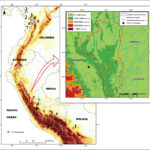
Frostius pernambucensis makes its home predominantly within Atlantic Forest fragments scattered throughout northeastern Brazil, specifically in Pernambuco state. This incredibly biodiverse environment—characterized by dense vegetation, humid microclimates, and a thick understory of leaf litter and organic debris—provides the perfect refuge for these shy amphibians.
Within the forest, Frostius pernambucensis prefers relatively undisturbed areas featuring plenty of organic material, such as moist fallen leaves, shaded rocky outcrops, and decaying logs. Such microhabitats maintain stable humidity and temperatures vital to their survival. These sheltered niches offer both protection from predators, as well as abundant prey items, predominantly consisting of small invertebrates like ants, beetles, and other forest floor insects.
Adapting to the Forest’s Shadows: The Physical Traits of Frostius pernambucensis#
In the world of amphibians, bright colors often symbolize danger through the presence of callously potent toxins. Frostius pernambucensis, however, employs different survival tactics—its physical characteristics are subtle, yet ingeniously fine-tuned to its environment.
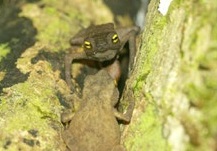
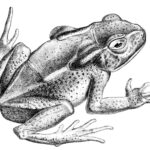
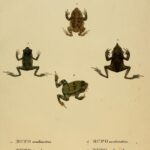
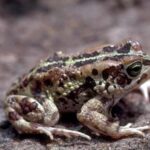
Measuring a mere 20–30 millimeters from snout to vent, this tiny frog exhibits colors ranging from gentle earth-browns to subtle moss-greens, accented occasionally with hidden speckles of darker pigmentation. Its textured, granular skin provides exceptional camouflage amid the moist leaf litter, moss-covered rocks, and shaded understory vegetation of its rainforest home.
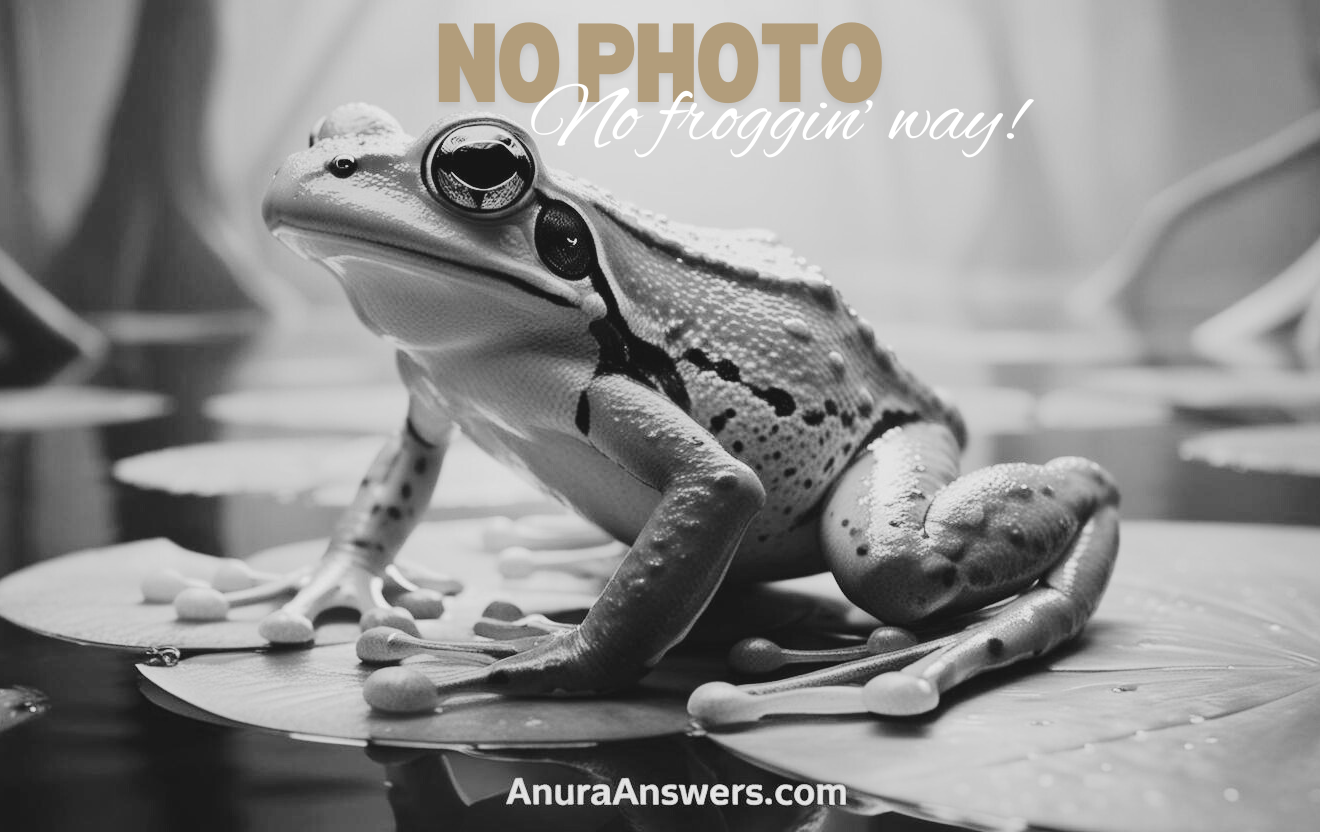
A pair of prominent dark eyes, proportional and reflective, rest upon a short yet broad head—ideally suited to observing movement in an otherwise visually complex habitat. Each limb, slender but surprisingly effective, matches this humble lifestyle, adapted more for cautious creeping and careful maneuvering through thick vegetation than leaping acrobatics often associated with other frogs or tree-dwelling cousins.
Anatomically indispensable to survival, Frostius pernambucensis possesses modest but characteristically defined parotoid glands located behind the eyes. These glands secrete mild toxins, an effective deterrent against certain predators while otherwise remaining harmless to humans.
Life Among the Leaves: Behavior and Breeding of the Pernambuco Frost Toad#
Feeding and Foraging Habits#
Primarily nocturnal, Frostius pernambucensis emerges from the protective shadows of leaf molds and crevices after dusk. In the shadowy silence, it cautiously hunts tiny arthropods, carefully stalking ants, beetle larvae, and small spiders moving unaware across the damp forest floor. Its hunting strategy is patient and opportunistic, capitalizing on stealth and surprise rather than flashy tactics.
Mating Rituals and Tadpole Development#
Similar to many amphibians, breeding coincides closely with rainfall patterns in northeastern Brazil’s wet season. Subtle and gently resonant more than loud and boisterous, the males’ vocalizations consist of careful calls drifting softly through evening air—a gentle hum that helps females locate their potential partners in the dimly lit leaf-littered landscape.
After mating, females deposit clusters of eggs in small and shallow water-filled hollows or temporary puddles formed after rains. Within days, tadpoles emerge from these jelly-like glistening clusters, undertaking their transformation in water drops pooled inside leaf axils, mossy depressions, or temporary rain-fed puddles. This rapid development safeguards tadpoles from predatory fish or larger amphibians lurking in permanent water bodies, ensuring survival to adulthood remains a viable possibility despite the fragile circumstances of their rainforest existence.
Ecological Importance: Small Size, Big Impact#
Though small and relatively secluded, Frostius pernambucensis quietly fulfills critical roles within its ecosystem. Predominantly insectivorous, this frog species helps regulate populations of small forest floor insects, thus participating actively in nutrient cycling. Concurrently, they provide essential nourishment for larger predators, including birds, small mammals, and snakes adapted to feeding on amphibians.
More significantly, amphibians like Frostius pernambucensis are essential bioindicators. Their permeable skin and precise habitat requirements make them uniquely sensitive to environmental disturbances. Consequently, their population health can indicate ecosystem integrity effectively, often serving as an early alarm to biologists and conservationists signaling environmental degradation or threats.
Threats Looming in the Shadows: Conservation Challenges#
Despite their ecological importance, Frostius pernambucensis faces formidable threats, primarily stemming from ongoing habitat fragmentation and deforestation. Rapid urbanization, conversion of forests into agricultural land, and infrastructural development continue unmitigatedly across Brazil’s Atlantic Forest biome, reducing suitable habitats and isolating frog populations in shrinking fragments.
Climate change poses additional concerns, altering rainfall patterns crucial for breeding and survival, while increasing temperatures and dryness threaten precise microhabitats these amphibians depend upon. Currently classified as “Data Deficient” under the International Union for Conservation of Nature (IUCN) classification system, synthesizing comprehensive research and ongoing monitoring remains requisite to implement robust protective measures and strategies.
A Subtle Yet Significant Presence: Cultural and Scientific Value#
Although obscure relative to more popularly known wildlife, Frostius pernambucensis stands as a remarkable reflection of local biodiversity heritage. Amphibians regularly feature in indigenous folklore across the Atlantic Forest region as symbols of fertility, renewal, or ecological balance. Each species discovered enriches human appreciation and understanding, reinforcing efforts towards environmental conservation and sustainable development.
Scientifically, the discovery and continued research into Frostius pernambucensis provide critical insights into evolutionary biology, amphibian diversity, ecological resilience, and how sensitive organisms adapt within rapidly changing ecosystems confronted by human activity.
Protecting a Hidden Treasure: The Call to Conserve Frostius pernambucensis#
In protecting the understated yet fascinating Frostius pernambucensis, we champion biodiversity’s quiet heroes—species whose significance belies their humble, inconspicuous lifestyles. Raising awareness, fostering research, and supporting habitat preservation become crucial responsibilities shared across humanity. Embracing the humble Pernambuco Frost Toad signifies hope, inspiration, and the collective will to maintain nature’s delicate balance, a balance on which every species, no matter how small or hidden, ultimately depends.