- Duttaphrynus brevirostris: Discovering the Remarkable Short-Snouted Frog of the Western Ghats
- Taxonomy and Classification: Understanding the Short-Snouted Frog's Heritage
- Natural Habitat: Wandering Through the Frog's Forest Kingdom
- Physical Characteristics: The Unassuming Beauty of Duttaphrynus brevirostris
- Behavior and Life Cycle: A Dance Beneath the Forest Canopy
- An Integral Part of Ecology: Why the Short-Snouted Frog Matters
- Conservation Challenges and Ongoing Efforts
- Cultural and Scientific Significance: Bridging Nature & Humanity
- Conclusion: Conserving a Hidden Treasure in the Western Ghats
Duttaphrynus brevirostris: Discovering the Remarkable Short-Snouted Frog of the Western Ghats#
In the lush undergrowth and gently babbling forest streams of India’s Western Ghats, a curious amphibian quietly makes its home, largely unnoticed by the casual observer. With a gently rounded snout, fascinating behavior, and an understated yet beautiful coloration perfectly adapted for survival, this frog—known scientifically as Duttaphrynus brevirostris—reveals the hidden wonders of one of Earth’s most diverse ecosystems. Affectionately nicknamed the “short-snouted frog,” this conservation-dependent species provides valuable insight into the health of its forest realm.
Despite its relatively modest size and understated presence, the short-snouted frog’s distinctive appearance and behaviors tell a remarkable tale about biodiversity, adaptation, survival, and the fragile interconnectedness of nature’s design. Join us as we journey deep into this species’ intriguing natural history, ecological role, current threats, and importance in conservation conversations.
Taxonomy and Classification: Understanding the Short-Snouted Frog’s Heritage#
The short-snouted frog, Duttaphrynus brevirostris, belongs to the family Bufonidae, the true toads. This large and varied amphibian family comprises numerous species known for their sturdy build, warty appearance, and remarkable adaptability, spanning diverse habitats from deserts to tropical rainforests. Within this broad family, the genus Duttaphrynus, a South Asian endemic group, houses a suite of frogs specially adapted to tropical and subtropical environments, primarily concentrated in India’s incredibly biodiverse Western Ghats.
Named in honor of Bengali naturalist Dutta, the genus Duttaphrynus represents a vital lineage within amphibian biodiversity. Unique both behaviorally and physically, Duttaphrynus brevirostris stands apart from other closely related species within its genus, distinguishable through subtle yet significant differences in morphology and calls. Its specific epithet brevirostris, derived from Latin (“brevi” meaning short and “rostris” meaning snout), succinctly highlights the species’ most recognizable physical attribute—its notably short and rounded snout.
Natural Habitat: Wandering Through the Frog’s Forest Kingdom#
The Western Ghats of India, considered one of the world’s premier biodiversity hotspots, are the singular natural abode of Duttaphrynus brevirostris. Running almost parallel to the Indian west coast, this chain of lush mountains and dense tropical forests hosts an unparalleled explosion of life, featuring countless plant and animal species found nowhere else. Within these ancient evergreen forests, gently flowing streams wind their way through towering trees, supporting a vibrant ecological web of organisms including rare orchids, butterflies, birds, mammals, reptiles, and amphibians.
For the short-snouted frog specifically, habitat preferences center around moist forest floors and shaded stream banks. These habitats, characterized by abundant leaf litter, decaying logs, rocks, and moss, provide ideal environments to maintain consistent humidity, hiding places from predators, and excellent opportunities for feeding and breeding activities.
A Life Among Moisture and Shadows#
Duttaphrynus brevirostris shows marked affinity for habitat patches near shallow forest streams, ephemeral pools formed after monsoon rains, and gently seeping marshy areas. Like many amphibians, these frogs are sensitive to environmental factors, particularly temperature and humidity, relying heavily on moist microhabitats for their survival.
The dense canopy overhead reduces sunlight while simultaneously retaining moisture beneath, creating conditions that allow the frog to thrive. Amidst these shadowy nooks, this diminutive creature spends most daylight hours concealed beneath leaves, logs, or stones, actively emerging during twilight and overnight hours when temperatures cool, moisture rises, and forest invertebrates—its primary prey—become more abundant.
Physical Characteristics: The Unassuming Beauty of Duttaphrynus brevirostris#
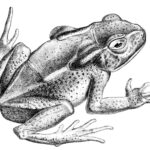
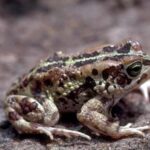
The short-snouted frog, measuring approximately 30 to 45 millimeters in adult body length, showcases a discreet charm reflective of its secretive lifestyle. From snout to vent, its body features subtle design and color variations ideally adapted for camouflage on the dark, leaf-laden forest floor. Shades of dull brown, grey, olive-green, or occasionally reddish tones, often mottled or speckled, adorn its skin—providing beautiful yet functional camouflage amidst fallen foliage and forest debris.
Its defining feature, the short and rounded snout, gives it a slightly stocky, lovable appearance—uniquely adapting it to forage efficiently within leaf litter, moss beds, and beneath fallen logs. Prominent ridges or slight bony parotid glands behind the eyes contain toxins that, although mild, protect from potential predators, a common defense mechanism among bufonids.
Adaptations Built for Survival#
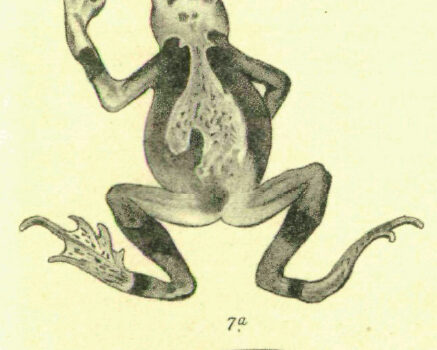
Highly adapted skin textures, marked by small but prominently raised bumps or warts, aid in providing moisture retention and additional camouflage. Their fingers and toes, non-webbed or minimally webbed, further enable maneuverability on the complex terrain of forest floors rather than aquatic environments. These thoughtful adaptations speak to a lifestyle intimately connected with humid terrestrial microhabitats, where standing water and damp soil are always near at hand, but solely aquatic life is not mandatory.
Behavior and Life Cycle: A Dance Beneath the Forest Canopy#
Life in the dense and verdant habitat of the short-snouted frog revolves around discreet adaptation and quiet industriousness. An insectivorous diet, predominantly feeding on various insects and arthropods such as ants, beetles, termites, and spiders, underscores a crucial connection within the forest’s food web. These nocturnal foragers utilize their sensitive tongues expertly to latch onto unsuspecting prey amidst the underbrush and leaf litter.
Secrets of Breeding and Reproduction#
With the onset of monsoon rains, usually between June to September, the Western Ghats burst into lively growth. This seasonal abundance signals the frogs’ prime time to breed. Male frogs congregate around shallow streams and ephemeral pools, where their gentle yet persistent mating calls—a series of soft, intermittent chirps or croaks—echo delicately throughout the forest night. These calls guide females to breeding sites, facilitating successful mating and egg deposition.
Females carefully lay gelatinous egg masses attached to rocks, submerged vegetation, or disturbed water margins within temporary pools or slowly moving stream waters. After eggs hatch, the resulting tadpoles remain in waterbodies, gradually undergoing metamorphosis to transition from aquatic larvae into terrestrial adult frogs that then journey forth into the surrounding forest.
An Integral Part of Ecology: Why the Short-Snouted Frog Matters#
Every species forms a vital thread in ecological tapestries, and Duttaphrynus brevirostris is no exception. Insect predation by these frogs contributes effectively to controlling insect populations, helping maintain ecological equilibrium. Each frog individual is both predator and prey—feeding insects while providing nourishment for other forest predators, such as snakes, birds, small mammals, and large invertebrates, thus sustaining intricate food web relationships.
Additionally, as amphibians have permeable skin profoundly sensitive to environmental pollutants and changes in climate or habitat quality, this species serves as an indispensable indicator of ecosystem health. Careful scientific monitoring of this frog’s abundance, distribution, and health can reveal deeper environmental dilemmas long before they become evident through other assessments.
Conservation Challenges and Ongoing Efforts#
Currently assessed under the IUCN as a species of “Least Concern,” Duttaphrynus brevirostris still faces localized threats including forest habitat degradation through agricultural expansion, logging, pollution, and climate change-induced alterations in rainfall patterns. Accelerating habitat fragmentation further isolates populations, increasing their vulnerability and reducing genetic diversity.
Scientists and conservationists continue advocating for preserving the biodiverse streams and forests of the Western Ghats through habitat protection initiatives, community education, sustainable tourism practices, and enforcement against deforestation.
Cultural and Scientific Significance: Bridging Nature & Humanity#
Within local communities, amphibians like the short-snouted frog represent insightful narrators of environmental well-being—subtle messengers whose presence, or absence, speaks impressive volumes about habitat health. Furthermore, ongoing herpetological research deepens understanding about frog biodiversity, amphibian evolution, conservation biology, and ecology, turning this diminutive creature into a biological ambassador vital to our broader understanding of nature and biodiversity protection.
Conclusion: Conserving a Hidden Treasure in the Western Ghats#
Deep within the shaded underbrush and ephemeral ponds of India’s extraordinary Western Ghats lives the remarkable short-snouted frog, an amphibian whose quiet existence illuminates broader truths about ecological balance, evolutionary importance, and conservation urgency. Each frog encountered whispers quietly to human observers a compelling call to protect biodiversity and natural habitats.
Through deepening our knowledge, raising awareness, and active conservation advocacy, we can ensure this beautiful species, Duttaphrynus brevirostris, continues to thrive, narrating nature’s enduring story well into the future.