- Encountering Didynamipus sjostedti: Uncovering the Mysterious Four-Digit Toad of West Africa
- Taxonomy and Classification: Navigating the Amphibian Family Tree
- The Natural Habitat: A Symphony of Forest Life in West Africa
- Physical Characteristics: An Amphibian Masterpiece of Adaptation
- Behavior and Life Cycle: Subtle Strategies of an Elusive Amphibian
- The Ecological Role: Quiet Custodians of Forest Health
- Threats Facing Sjöstedt's Four-digit Toad: Navigating Modern Challenges
- Cultural and Scientific Significance: Appreciating the Under-Appreciated Amphibian
- Conclusion: Preserving the Hidden Treasures of West Africa
Encountering Didynamipus sjostedti: Uncovering the Mysterious Four-Digit Toad of West Africa#
Hidden deep within the lush and vibrant forests of Western Africa resides a creature so uniquely adapted and notoriously elusive that few people, even avid nature enthusiasts, know it exists. Meet Didynamipus sjostedti—familiarly known as Sjöstedt’s Four-digit Toad—a small yet extraordinary amphibian whose secretive life continues to captivate those fortunate enough to encounter it. This diminutive creature, named fittingly due to its four rather than the typical five front digits, offers an intriguing glimpse into both the wonder and fragility of tropical biodiversity.
Far beyond the well-trodden pathways and familiar wildlife classics, Sjöstedt’s Four-digit Toad exemplifies the remarkable adaptations evolution can forge. It invites fascination not only through its anatomy but also its ecological significance and the pressing conservation lessons we can learn. In the shifting landscapes of global conservation, understanding a creature as fascinating and rare as Didynamipus sjostedti is both a privilege and a responsibility.
Taxonomy and Classification: Navigating the Amphibian Family Tree#
Didynamipus sjostedti is classified within the family Bufonidae, commonly referred to as true toads. Within this family, the genus Didynamipus stands remarkably isolated, containing no other currently recognized species aside from Sjöstedt’s fascinating subject. It was first scientifically described in 1903 by renowned Swedish zoologist Einar Lönnberg, who honored fellow scientist Bror Yngve Sjöstedt with its specific epithet.
In historic terms, Sjöstedt’s Four-digit Toad presents particular interest due to its placement in the evolutionary timeline. Its monotypic status—being the only species within its genus—presents an evolutionary puzzle. Scientists theorize that it diverged significantly long ago from closely related genera, carving itself a unique niche among Western Africa’s amphibian fauna. Understanding Didynamipus sjostedti‘s taxonomy aids in revealing the broader evolutionary narrative of the region’s biodiversity, providing clues about prehistoric climatic shifts and geographical barriers that influence amphibian diversity.
The Natural Habitat: A Symphony of Forest Life in West Africa#
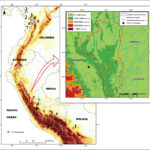
Sjöstedt’s Four-digit Toad is endemic primarily to the dense, humid lowland forests and subtropical moist shrublands of West Africa, including well-documented populations within Cameroon, Nigeria, and Equatorial Guinea. These regions, especially Cameroon’s montane rainforests and Nigeria’s Cross River basin, provide a sanctuary of misty canopies, tangled vines, and leaf-littered forest floors, forming an environment perfectly tailored to the reclusive lifestyle of this amphibian species.
Immersed in perpetual twilight beneath thick forest canopies, Didynamipus sjostedti makes its home in leaf litter and beneath decaying logs, where moisture retention and microclimate stability provide ideal living conditions. Here, the toad moves silently, concealed among the shadows and subtle movements of insects and spiders, its primary prey. The damp, stable climate ensures that moisture-kissing skin remains sufficiently wet, a physiological necessity fundamental to amphibians’ survival.
However, navigating this finely tuned habitat becomes more challenging as these forests face deforestation, fragmentation, and encroaching human settlement. A closer examination of the specific microhabitats reveals an ecosystem built upon balance and fragile interconnections between plant growth, water cycles, and biodiversity—each reciprocating to sustain the amphibian’s survival.
Physical Characteristics: An Amphibian Masterpiece of Adaptation#
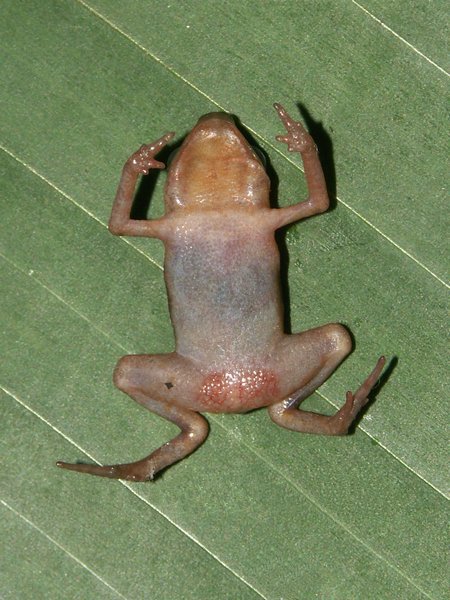
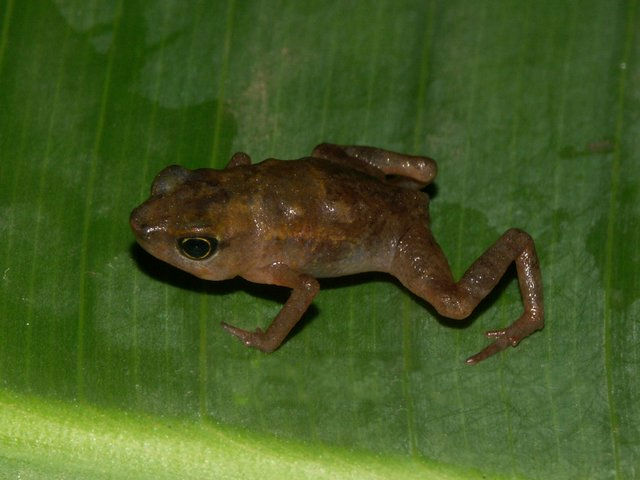
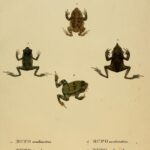
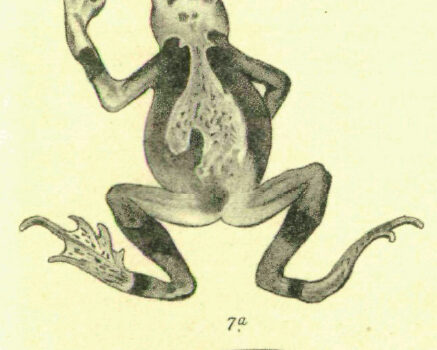
Though diminutive at an adult length typically ranging between 25 to 35 millimeters, Sjöstedt’s Four-digit Toad commands immediate fascination through its singular appearance. The most obvious—and compelling—trait setting it apart from most other toads is the presence of merely four digits on its front limbs, a distinctly uncommon feature among amphibians. The purpose or evolutionary advantage behind losing one digit remains a subject of speculation; it highlights the enigmatic nature of this remarkable toad.
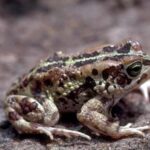
The coloration of Didynamipus sjostedti perfectly complements its clandestine lifestyle—a mosaic of rich earth tones ranging from deep, rusty-brown to subtle olive-green and mottled with darker patterns and speckles. Its camouflaged skin texture further blends seamlessly with decaying leaves, offering impeccable protection against predators.
In addition, Sjöstedt’s Four-digit Toad exhibits granular skin characteristic of many toads, aiding in both camouflage and respiration, as they partially absorb oxygen directly through their permeable skin. This physiological trait—which requires a consistently moist environment—cements its ecological dependence upon humid forest floors.
Behavior and Life Cycle: Subtle Strategies of an Elusive Amphibian#
Dietary Habits and Predation Techniques#
Sumptuously hidden beneath layers of decaying litter, Didynamipus sjostedti quietly specializes in consuming small invertebrates, insects, and arachnids. Primarily nocturnal, it emerges cautiously under cover of darkness, preying on spiders, beetles, termites, and other arthropods. Leveraging its cryptic coloration and refined stealth, it silently awaits prey, conducting ambush tactics perfected over millions of evolutionary years.
Breeding and Reproduction#
Awakened by seasonal rains that permeate the dense foliage, Sjöstedt’s Four-digit Toad embarks on its complex reproductive journey. Breeding primarily coincides with periods of heavy rainfall, ensuring adequate freshwater pools and puddles suitable for laying eggs. Male Didynamipus sjostedti typically attracts mates through subtle yet distinctive calls—a series of soft throaty clicks—carefully balancing the need for reproductive signaling against revealing their location to predators.
Females deposit eggs in small, secluded temporary pools, leaf ponds, or particularly moist depressions, providing safer surroundings for the emerging tadpoles. As larvae, their diet consists primarily of aquatic microorganisms and algae, transforming gradually over weeks into miniature replicas of their terrestrial adult form. Fascinatingly, adults provide no parental care subsequent to egg laying—a common strategy among amphibians—showcasing a contrasting survival strategy rooted in quantity over parental investment.
The Ecological Role: Quiet Custodians of Forest Health#
Each amphibian species serves a pivotal ecological niche, and Sjöstedt’s Four-digit Toad proves no exception. As proficient insectivores, they regulate insect populations significantly, preventing outbursts of insect-borne disease vectors and agricultural pests—silent custodians diligently fulfilling vital environmental services.
Moreover, their sensitivity to environmental shifts positions them as prominent bioindicators, informing conservationists about potential ecological imbalances. Changes or declines in amphibian communities, including rare species like Didynamipus sjostedti, often signal deeper ecological disturbances such as pollutants, habitat degradation, or climate disruptions beneath otherwise subtle surface symptoms.
Threats Facing Sjöstedt’s Four-digit Toad: Navigating Modern Challenges#
The International Union for Conservation of Nature (IUCN) currently lists Sjöstedt’s Four-digit Toad as “Critically Endangered.” The species faces mounting risks from habitat fragmentation, forest clearance for agriculture, logging, and uncontrolled human settlement expansions. Coupled with these pressures, climate change-induced alterations to rainfall patterns could drastically disrupt breeding cycles and jeopardize larval habitats.
Additionally, emerging amphibian diseases, such as chytridiomycosis—a fungal disease sweeping through amphibian populations worldwide—pose profound concerns for scientists and conservationists. Protecting this fragile species demands immediate habitat conservation initiatives, targeted awareness campaigns, and expanded scientific monitoring to detect and mitigate emerging threats.
Cultural and Scientific Significance: Appreciating the Under-Appreciated Amphibian#
Although lesser-known among indigenous folklore traditions compared to other flamboyant amphibians, Sjöstedt’s Four-digit Toad is deeply valued scientifically. Naturalists and ecologists alike recognize the species’ significance in forging a deeper understanding of amphibian diversity, evolution, and freshwater ecosystem dependence. Their rarity and uniqueness further galvanize efforts to conserve and restore biodiversity-rich, tropical ecosystems.
Conclusion: Preserving the Hidden Treasures of West Africa#
By discovering and intimately understanding species like Didynamipus sjostedti, we illuminate critical aspects of ecological balance, evolutionary adaptation, and environmental stewardship. It calls us—as scientists, conservationists, and everyday enthusiasts—to deliver proactive protection and foster coexistence with our planet’s extraordinary wildernesses. Engaging with the quiet mystery of Sjöstedt’s Four-digit Toad helps us appreciate the beauty and fragility in the hidden corners of our world. Let’s choose action, appreciation, and immersion in nature, ensuring this quietly enchanting amphibian persists for generations to come, continuing its secretive, unpretentious symphony of life.